

• हिन्दीEnglishमराठीবাংলাதமிழ்മലയാളംગુજરાતીతెలుగుಕನ್ನಡଓଡ଼ିଶାZ BharatPHHBusinessWION
  • facebookyoutubetwitterwhatsapp
Zee News English
  • news
  • Live Blog
  • photos
Add Zee Business As A Preferred Source
App
  • Live TV
  • Latest News
  • India
  • World
  • Entertainment
  • Sports
  • Business
  • Lifestyle
  • Astrology
  • Auto
  • Education
  • Technology
  • News
  • /Consumer Connect
  • /Why India’s salaried class is driving the next wave of formal personal credit

Why India’s salaried class is driving the next wave of formal personal credit

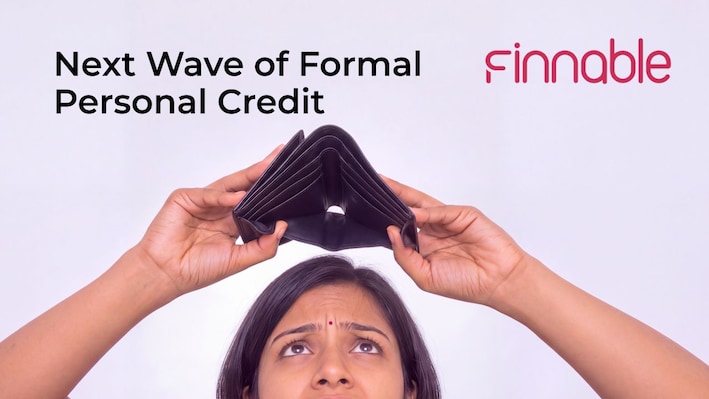
India’s young salaried workforce is driving the growth of formal personal credit, with technology-led lenders like Finnable making borrowing more accessible through digital assessments, responsible lending, and disciplined credit management.

Edited ByZee Media Bureau
Published: Nov 27, 2026, 18:37 IST|Updated: Nov 28, 2026, 10:23 IST
joinshare
Why India’s salaried class is driving the next wave of formal personal credit

About the Author

    Zee Media Bureau

    Zee Media Bureau

    Zee Media Bureau is the editorial news desk of Zee Media Corporation, one of India’s leading news networks.The bureau represents a collective of experienced journalists, editors, and correspondents who work across television, digital, and social platforms to deliver timely, accurate, and wide-ranging news coverage. Zee Media Bureau's coverage spans politics, business, economy, technology, health, entertainment, and global affairs. The bureau follows a collaborative newsroom model, where stories are researched, verified, and published by a team. This ensures speed, editorial consistency, and adherence to journalistic standards, particularly for breaking news and developing stories.
    Read More

    Trending

    • News
    • Photos
    Four days after Tamil Nadu failed to follow SC order, Deepam lit at Thiruparankundram

    Four days after Tamil Nadu failed to follow SC order, Deepam lit at Thiruparankundram

    2

    Australia drop Nathan Lyon for New Zealand Test series; Two uncapped players called up

    3

    Delimitation Bill has provision for PoK: What happens to J&K's 24 vacant seats if Pakistan's occupation ends

    4

    Sonia Gandhi's name on 1980 voter list; citizenship came in 1983, police tell court

    5

    EPFO SWP facility: How retirees can withdraw PF savings in monthly instalments

    logo
    • contact us
    • privacy policy
    • legal
    • investor info
    • advertise with us
    © 1998-2026 Indiadotcom Digital Private Limited, All Rights Reserved.

    For much of the past two decades, personal loan in India carried an unspoken stigma. In middle-class households, borrowing without an asset attached was often viewed as a last resort. It was done in dire times when savings ran dry during a medical emergency or an unexpected family obligation. But today, India’s young salaried workforce is rewriting that script. Across metros and fast-growing urban hubs, working professionals increasingly treat formal personal credit not as an emergency crutch, but as a practical financial tool to manage cash flows, fund career upskilling, and bridge planned life milestones without liquidating long-term investments.

    A Behavioral Shift in Household Finance

    India’s overall retail credit market grew 18.8 percent year-on-year to Rs 185.2 lakh crore by September 2026, with personal loans the strongest sub-sector. Critically, the profile of those seeking personal credit has changed in comparison to previous periods of retail credit growth. Young professionals in their 20s and 30s, particularly those working in urban and emerging business centres, are becoming an important segment of the formal credit market. With regular monthly incomes, access to digital banking, and greater awareness of financial products, they increasingly expect lending services to offer convenience, transparency and timely decisions.

    Unfortunately, conventional banks have not always been adept at effectively meeting the requirements of this particular group. Although a young software engineer in Bengaluru or an operations manager in Pune may possess considerable financial resources and professional flexibility, a lack of extensive historical credit information and/or an atypical employment background can hinder credit assessments. In-branch application and documentation processes, which are typically used for credit, do not sit well with working professionals who are busy almost 5–6 days a week. As a result, this group frequently either disengages from the physical credit-seeking process or resorts to expensive and poorly understood informal credit sources.

    This creates an opportunity for technology-led lenders, including Non-Banking Financial Companies (NBFCs), to complement conventional credit assessment methods. They simplify creditworthiness assessment through verifiable digital income information, live bank account data analysis, and examination of an individual’s financial flow. This diverges from the conventional process of seeking a personal loan, which relies on largely static assessment criteria.

    Digital Agility Tailored to Modern Earners

    With increasing digital accessibility, the expectations of India’s salaried workforce are constantly evolving. Responsible lending ensures that loan durations and repayment levels remain appropriate for an individual’s available income. Coupled with compassionate internal support and recovery procedures, this promotes good repayment behaviour and stops young professionals from becoming excessively indebted.

    Combining technology-driven assessments with disciplined underwriting and effective risk management, lenders can expand access to formal credit while maintaining portfolio quality and strengthening borrower confidence.

    Driving Sustainable Growth

    The expansion of formal personal credit also highlights the importance of balancing business growth with portfolio quality. Finnable's growth offers an example of how technology-led underwriting and disciplined credit management can support this approach.

    Utilising innovative digital credit evaluation techniques and in-house collections, the company increased its Assets Under Management to over Rs 4,600 crore in October 2026. It generated Profit After Tax of Rs 51 crore for the first half of FY27, higher than the full-year FY26 figure of Rs 46 crore. Finnable maintained impressively low late-stage default rates, with a 6-month PAR 90 figure of just 0.2 percent.

    This disciplined execution subsequently underpinned Finnable’s recent Series C round of investment worth Rs 405 crore. New investors to the round included Bharat Value Fund (a constituent of Pantomath Group), Pratithi Investments, and NKSquared, as well as continuing investors TVS Capital, Claypond Capital, and Z47. This additional investment will enable the company to further develop its diverse range of credit offerings and widen structured credit availability throughout India.

    Building the Future of India’s Formal Credit Market

    With India’s structured labour force continuing to develop, the salaried sector will continue to form its core. Technology-led underwriting, transparent lending practices, and responsible repayment structures can help bridge existing credit gaps and bring more eligible borrowers into the formal financial system.

    (Disclaimer: This article is from the Brand Desk. User discretion is advised. This article is for information purpose only and does not constitute professional, financial advice. Zee Media advises its readers to conduct their own research and due diligence before making any decisions based on the information.)

    Stay informed on all the latest news, real-time breaking news updates, and follow all the important headlines in india news and world news on Zee News English.

    Add Zee News as a Preferred Source