• हिन्दीEnglishमराठीবাংলাதமிழ்മലയാളംગુજરાતીతెలుగుಕನ್ನಡଓଡ଼ିଶାZ BharatPHHBusinessWION
  • facebookyoutubetwitterwhatsapp
Zee News Hindi
  • news
  • Live Blog
  • photos
Add Zee Business As A Preferred Source
App
  • Live TV
  • Latest News
  • India
  • World
  • Entertainment
  • Sports
  • Business
  • Lifestyle
  • Astrology
  • Auto
  • Education
  • Technology
  • News
  • /Entertainment
  • /Bollywood
  • /Exclusive: Pyre Director Vinod Kapri on almost casting Naseeruddin Shah and why he dropped the idea

Exclusive: Pyre Director Vinod Kapri on almost casting Naseeruddin Shah and why he dropped the idea

In an exclusive conversation with Zee News Digital, National Award-winning director Vinod Kapri reflects on his 18-award-winning film Pyre, sharing how veteran actor Naseeruddin Shah inspired him to cast real Himalayan villagers for an authentic portrayal of love and ageing.

Written ByAhana Tiwari
Published: Oct 27, 2026, 01:16 PM IST|Updated: Oct 27, 2026, 02:34 PM IST
joinshare
Exclusive: Pyre Director Vinod Kapri on almost casting Naseeruddin Shah and why he dropped the idea
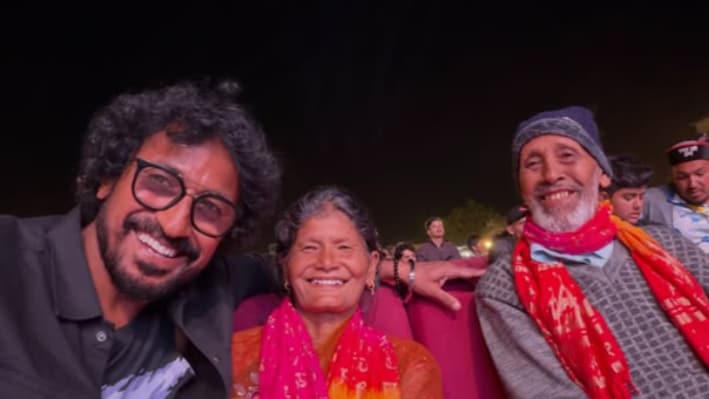
Image Credit: Vinod Kapri-directorial Pyre cast (@vinodkaprii/Instagram)

About the Author

Ahana Tiwari

Ahana Tiwari

Ahana Tiwari is a sub-editor with a keen eye for storytelling, performances, and cultural nuance. She has reviewed films and series, including Mahavatar Narsimha, Clayface, and Stranger Things. Always seeking to bridge the gap between audiences and celebrities, Ahana has conducted interviews with artists such as Shehnaaz Gill, Adah Sharma, and even engaged with Kangana Ranaut during the Team India Jersey Paralympian Launch.She has attended high-profile events like the Kantara success party, giving her firsthand exposure to industry trends and the entertainment landscape. This is her first professional role in media, where she continues to build a reputation as a sharp, perceptive voice in journalism. She can be reached at Ahana.Tiwari@india.com.  
Read More

Trending

  • News
  • Photos
'Don't know what cricket he was playing': Abhishek Sharma reacts to Yuvraj Singh's playful dig after 113-run carnage

'Don't know what cricket he was playing': Abhishek Sharma reacts to Yuvraj Singh's playful dig after 113-run carnage

2

Hockey Asian Champions Trophy 2026: India make dominating start to title defence with 13-0 win over Bangladesh

3

Commonwealth Kabaddi Championship 2026: Indian men storm into semifinals with 48-20 win over Tanzania

4

AI bubble warning: Microsoft swings axe on 60,000 jobs as sector losses mount

5

IPL 2027: Zaheer Khan set for crucial meeting with MS Dhoni before CSK retention deadline

logo
  • contact us
  • privacy policy
  • legal
  • investor info
  • advertise with us
© 1998-2026 Indiadotcom Digital Private Limited, All Rights Reserved.

Ahead of its nationwide theatrical release on October 30, 2026, National Award-winning filmmaker Vinod Kapri’s feature film Pyre has already forged a deeply emotional connection across the globe. Armed with 18 international awards, the single feature film brings to life a quiet, poignant reflection on love, ageing, and endurance set against the fading heart of a Himalayan village.

Enriched by an evocative musical score from Academy Award winner Michael Danna and heartfelt lyrics by the legendary Gulzar, Pyre carries a rare, gentle honesty.

In an exclusive conversation with Zee News Digital, director Vinod Kapri opens up about the soul of his film, the advice from veteran actor Naseeruddin Shah that changed its course, and why he chose to let the true, unvarnished lives of two real-life villagers guide the narrative.

Below is the transcript of the conversation:

Q1. Cinema is a source of comfort for many viewers. Knowing that lead actress Hira Devi pushed for a gentler ending in Pyre, why did you decide against it?

"I completely understood why Hira ji wanted a gentler ending. She was living the story in her own way, and perhaps, like most of us, she wanted life to be kinder to her characters. But I felt that giving the audience comfort at the cost of the story’s truth would be unfair to the film and to the people whose lives inspired it.

Pyre is rooted in the realities of a dying Himalayan village, where people are left behind, families disappear, and old age can be incredibly lonely. I didn’t want to manufacture hope simply because it would make the ending easier to accept. Sometimes, the most honest stories are also the most painful. And I believe cinema must have the courage to let us sit with that pain."

Q2. How did working with first-time actors like Padam Singh and Hira Devi shape your directing style?

"It changed my understanding of directing. Padam Singh ji and Hira ji were not trained actors. They had never faced a camera before. They brought their own lives, habits, silences and experiences to the film. My job was not to teach them how to act, but to ensure that the camera did not take away their naturalness.

Anup Trivedi, an actor trained at the National School of Drama (NSD), was instrumental in preparing and coaching them. His contribution was very important in helping these first-time performers feel comfortable and find their way into the world of the film. But once we were on set, I was careful not to let that preparation turn into something artificial.

I had to unlearn a lot of what we conventionally understand as acting. Sometimes, a pause or a glance told me more than a perfectly delivered line ever could. I tried to create an environment where they felt safe enough to be themselves, rather than perform what I wanted them to be.

The biggest lesson was that authenticity cannot be manufactured. You can direct a performance, but you cannot manufacture a lifetime of lived experience. With Padam Singh ji and Hira ji, that experience was already there."

Q3. You initially considered casting veteran actors like Naseeruddin Shah for Pyre. How would the film’s emotional weight and texture have shifted if seasoned stars played these roles instead of real-life villagers?

"I have enormous respect for Naseeruddin Shah. In fact, the idea of considering actors from the Himalayas rather than established performers was something Naseer sahab himself encouraged.

When I struggled to find the right actors from the Himalayan region, I eventually decided to approach Naseer sahab.

During our conversations, he suggested that if I could find people from the Himalayas themselves, the film might feel rawer and more authentic. I took his advice very seriously because I respect him enormously.

That advice stayed with me, and I continued looking until I found Padam Singh ji and Hira ji

Also Read | Ramayana advance booking: Ranbir Kapoor film earns Rs 13.30 cr in India pre-sales

Pyre needed something very specific. I was looking for faces that carried the geography, the weather and the history of the mountains within them. Padam Singh ji and Hira ji had lived the kind of lives that the film was trying to capture. Their bodies, their silences, their way of walking and looking at each other came from decades of living together, not from an actor’s preparation.

A trained actor might have created a remarkable interpretation of these characters. But the texture would inevitably have been different. With Padam Singh ji and Hira ji, there was no visible distance between the people on screen and the lives they were portraying. That gave the film a particular kind of intimacy and unpredictability.

For me, the greatest achievement was not that two non-actors performed well. It was that they allowed us to forget the idea of performance altogether."

Q4. The film has won numerous international awards before its commercial theatrical release. Did foreign audiences connect with the core themes of Pyre differently than Indian viewers?

"What has moved me most is how consistently audiences across cultures have responded to the film’s emotional core. Pyre comes from a very specific place in the Kumaon Himalayas, and its landscape, language and social realities are deeply rooted in that region. Yet audiences in Europe, North America and Asia have connected with its themes of love, loneliness, ageing and waiting.

I have noticed that viewers sometimes bring different experiences to the film, depending on their own cultures and lives. But the emotions themselves don’t seem to need translation. The relationship between an elderly couple, the fear of being forgotten, and the longing for someone who may never return are not uniquely Indian experiences.

I would be careful about saying that foreign audiences understand the film differently or respond more strongly than Indian audiences. Every audience is different. I am particularly curious to see how people in India respond when the film opens in cinemas, because the story belongs to our own landscape and to a reality that many of us may have encountered without really stopping to look at it.

Ultimately, the awards are encouraging, but what matters most to me is whether the film stays with someone after they leave the theatre. If it makes them think about their parents, their grandparents, or an elderly couple in a forgotten village, then I feel the film has done something meaningful."

PYRE releases in Indian cinemas on 30 October 2026.

Stay informed on all the latest news, real-time breaking news updates, and follow all the important headlines in india news and world news on Zee News.

Add Zee News as a Preferred Source