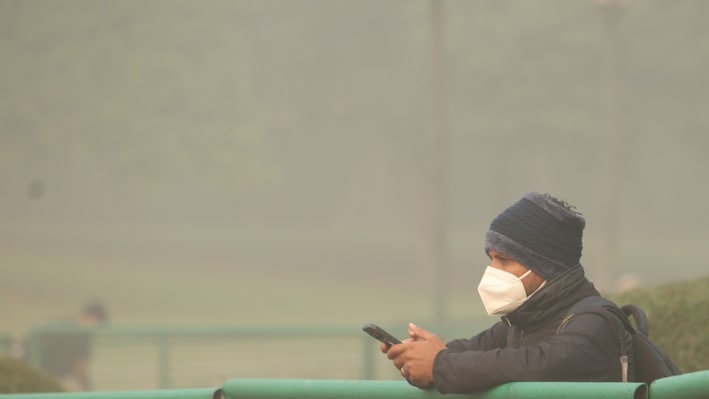
The Commission for Air Quality Management (CAQM) has set a target of reducing annual average air pollution levels across Delhi-NCR by 15-20 per cent in 2027, introducing district-level action plans for the first time to strengthen accountability and improve implementation of pollution-control measures.
The Commission has asked the Delhi Government and other National Capital Region (NCR) states to prepare comprehensive annual action plans for 2027 at the State, district and Municipal Corporation levels.
The plans must include measurable targets, clear timelines and monitoring mechanisms, with specific officers assigned responsibility for each action.
CAQM has also begun ranking Delhi and the NCR states on their performance in tackling pollution from various sources.
Its 2026 report card, covering performance up to October, has been prepared. The final report card for the year will be released in January 2027.
The Commission said governments still have time to improve their rankings by stepping up pollution-control efforts during the remaining weeks of 2026.
CAQM has commenced ranking of the States and Delhi Govt in terms of their performance on the front combating pollution casued by various factors. Report Card for year 2026- upto October 2026, has been prepared. The final Report Card for 2026 will be out in January2027. States and Delhi Govt have the opportunity to improve their ranking by accelerating their efforts during the remaining time of the year 2026.
— ANI (@ANI) November 22, 2026
Under the new framework, district-level action plans will become an integral part of the existing State and Municipal Corporation-level planning process.
The initiative is aimed at ensuring that pollution-control measures translate into measurable improvements on the ground, rather than remaining limited to a list of proposed activities.
Each action point must specify the responsible department or agency, along with the name, designation and contact details of the officer overseeing its implementation and monitoring.
“For the year 2027, Annual Action Plans shall also be prepared at the District level, in addition to the State and Municipal Corporation (MC) levels,” the CAQM said in its communication.
The plans must target a 15-20 per cent reduction in annual average pollution levels, including the Air Quality Index (AQI), PM2.5 and PM10, compared with 2026.
The proposed plans will cover major sources of pollution, including vehicle emissions, road dust, industrial pollution, construction and demolition activities, municipal waste, crop residue burning, diesel generator sets and crematoria.
Pollution-control measures involving urban development authorities will also be included in the respective Municipal Corporation action plans.
CAQM will communicate additional measures to States, districts and municipal bodies for inclusion in the 2027 plans, drawing on previous experience and emerging requirements.
The action plans will be submitted and monitored through the Commission’s online portal, as was done for the 2026 framework. States have been asked to direct district commissioners, district magistrates, municipal corporations and other agencies to begin preparations without delay.
All 2027 action plans must be finalised and submitted to the Commission by December 5, 2026.
CAQM said it would continue reviewing the implementation of existing pollution-control measures, identifying gaps and facilitating coordination between agencies.
“Dealing with air pollution requires sustained and concerted efforts based on airshed approach,” the Commission said, underlining the need for coordinated action across Delhi-NCR and adjoining areas.
(with ANI inputs)
Stay informed on all the latest news, real-time breaking news updates, and follow all the important headlines in india news and world news on Zee News English.