

• हिन्दीEnglishमराठीবাংলাதமிழ்മലയാളംગુજરાતીతెలుగుಕನ್ನಡଓଡ଼ିଶାZ BharatPHHBusinessWION
  • facebookyoutubetwitterwhatsapp
Zee News English
  • news
  • Live Blog
  • photos
Add Zee Business As A Preferred Source
App
  • Live TV
  • Latest News
  • India
  • World
  • Entertainment
  • Sports
  • Business
  • Lifestyle
  • Astrology
  • Auto
  • Education
  • Technology
  • News
  • /India News
  • /India announces over $1.5 billion in aid as Nepal PM Balen Shah visits Delhi

India announces over $1.5 billion in aid as Nepal PM Balen Shah visits Delhi

The assistance is intended to help Nepal rebuild after devastating floods in August 2026. The floods caused extensive damage and, according to the script, left 1,500 people dead, thousands missing and losses worth billions of dollars.

Written ByZee Media Bureau
Published: Nov 23, 2026, 22:45 IST|Updated: Nov 23, 2026, 22:54 IST
joinshare
India announces over $1.5 billion in aid as Nepal PM Balen Shah visits Delhi

About the Author

    Zee Media Bureau

    Zee Media Bureau

    Zee Media Bureau is the editorial news desk of Zee Media Corporation, one of India’s leading news networks.The bureau represents a collective of experienced journalists, editors, and correspondents who work across television, digital, and social platforms to deliver timely, accurate, and wide-ranging news coverage. Zee Media Bureau's coverage spans politics, business, economy, technology, health, entertainment, and global affairs. The bureau follows a collaborative newsroom model, where stories are researched, verified, and published by a team. This ensures speed, editorial consistency, and adherence to journalistic standards, particularly for breaking news and developing stories.
    Read More

    Trending

    • News
    • Photos
    Bangladesh rejects Hasina’s December 16 return, rules out her comeback

    Bangladesh rejects Hasina’s December 16 return, rules out her comeback

    2

    'He was my everything': Hema Malini pays emotional tribute to Dharmendra on his first death anniversary

    3

    Happy Guru Nanak Jayanti: Rajat Bedi reflects on childhood memories and staying grounded in Bollywood

    4

    BJP-SAD alliance ahead of 2027 Punjab polls exposes Sukhbir Badal: Congress

    5

    BJP-SAD reunite after six years, but numbers show an uphill battle: Can old allies revive Punjab fortunes in 2027?

    logo
    • contact us
    • privacy policy
    • legal
    • investor info
    • advertise with us
    © 1998-2026 Indiadotcom Digital Private Limited, All Rights Reserved.

    India announced assistance worth 24,000 crore Nepali rupees, or more than $1.5 billion, for Nepal during Prime Minister Balendra Shah’s first bilateral overseas visit, as the two countries agreed to deepen cooperation in connectivity, energy, security and trade.

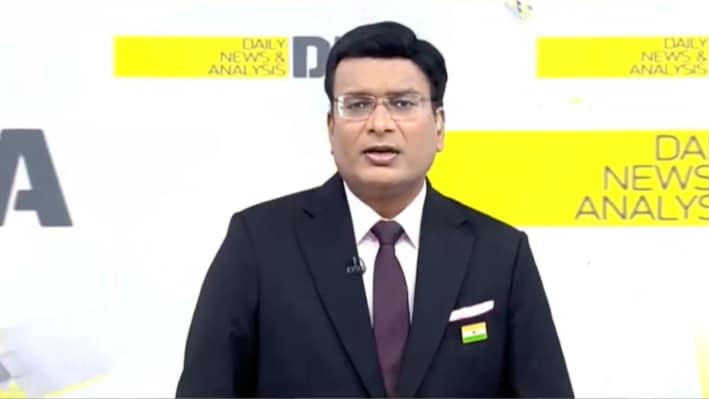
    In today’s episode of DNA, Rahul Sinha, Managing Editor of Zee News, conducted a detailed analysis of the visit, the agreements reached and the longstanding ties between India and Nepal.

    Shah, also known as Balen Shah, visited India 240 days after taking oath as Prime Minister. His 25-hour visit was shorter than expected, but included talks with Prime Minister Narendra Modi, the signing of eight agreements and the launch of several projects.

    The assistance is intended to help Nepal rebuild after devastating floods in August 2026. The floods caused extensive damage and, according to the script, left 1,500 people dead, thousands missing and losses worth billions of dollars. Nepal had sought India’s support for reconstruction.

    Projects to strengthen connectivity

    Modi and Shah jointly inaugurated the Saryu-Kamala Express, which will connect Ayodhya, associated with Lord Ram, with Janakpur, the birthplace of Mata Sita. The service is expected to make travel easier for pilgrims from both countries.

    The two leaders also virtually inaugurated the Chharchhum International Friendship Motor Bridge over the Kali River. It will link Dharchula in Uttarakhand’s Pithoragarh district with Darchula in Nepal, saving residents on both sides of the border an additional journey of around 200 kilometres.

    They inaugurated Phase 2 of the Motihari-Amlekhgunj petroleum pipeline, which will strengthen fuel supplies from India to Nepal and reduce the time and cost involved in transporting oil by road.

    The foundation stone was laid for the Banbasa Integrated Check Post, a modern border facility that will bring customs, security checks and paperwork under one roof. The project is expected to reduce waiting times for trucks and travellers crossing the border.

    The leaders also laid the foundation stone for the Lower Arun Hydropower Project. Once completed, it is expected to increase Nepal’s electricity generation, meet domestic demand and allow the country to sell surplus power. India will also gain another source of hydropower.

    India will provide Nepal access to the ports of Kandla in Gujarat and Paradip in Odisha, which Nepal can use for trade with third countries.

    Eight agreements signed

    Modi and Shah held a meeting lasting around 100 minutes, after which the two countries signed eight agreements.

    A memorandum of understanding was signed between the National Forensic Sciences University in Gandhinagar, Gujarat, and Nepal Police’s Crime Investigation Department to support education and research. The cooperation is expected to improve investigations into cybercrime and cross-border offences, and strengthen the investigative capacity of around 80,000 Nepal Police personnel.

    India will also train hundreds of Nepali police officers each year. The two countries agreed to train Nepal’s government officials, with the aim of improving the delivery and transparency of public services for Nepal’s 30 million citizens.

    The agreements also provide for cooperation in Ayurveda and other traditional treatments, including research into and trade in Himalayan herbs.

    The Indian Space Research Organisation and Nepal’s Ministry of Information and Communications agreed to work on a satellite communication network, which could help Nepal receive early warnings of disasters.

    India and Nepal will also cooperate in healthcare and medicine, urban development and animal husbandry. The health partnership is expected to reduce costs for people living along the border and Nepali patients who travel to India for treatment.

    Cultural ties and the ‘roti-beti’ relationship

    The visit also highlighted the cultural links between the two countries. Shah presented Modi with prasad from Pashupatinath Temple, along with a decorative wooden box containing rudraksha, shaligram and sandalwood. Modi gifted Shah a vessel filled with Gangajal.

    The Saryu-Kamala Express will cover the 604-kilometre distance between Ayodhya and Janakpur Dham in 19 hours. The 17-coach train is scheduled to run once a week in both directions. The service is expected to make it easier for Nepali devotees to visit Ram Lalla in Ayodhya and for pilgrims to visit Mata Janaki in Janakpur.

    The report also pointed to the longstanding “roti-beti” relationship between the two countries. An estimated 6 to 8 million Nepali citizens live and work in India, including in hotels, agriculture and industry, and in the Indian Army. Nepali workers in India send around 12,000 crore rupees to Nepal each year, providing significant support to its economy.

    Around 600,000 Indian citizens also work in Nepal in trade, education and other fields. Cross-border marriages remain common in Bihar, eastern Uttar Pradesh, Uttarakhand and Nepal’s Terai region. The marriage of Lord Ram of Ayodhya and Mata Sita of Janakpur is described as a historic foundation of these ties.

    Why Shah chose India first

    Shah’s decision to make India his first overseas destination came after Nepal suffered major flood damage and sought assistance for reconstruction. The visit also marked a return to the longstanding practice of Nepali prime ministers visiting India first after taking office, which the report said former Prime Minister Oli had departed from by visiting China first.

    India is Nepal’s largest trading partner. Bilateral trade between the two countries exceeds $9 billion and accounts for more than 60 per cent of Nepal’s total trade. More than 80 per cent of Nepal’s exports go to India.

    Nepal’s trade with China is more limited by geography, and the floods further damaged routes used for that trade. The report said the August 2026 floods badly affected the Rasuwagadhi-Kerung corridor, through which Nepal sends around 11 per cent of its goods to China and receives more than half of its imports from China.

    China’s influence in Nepal

    The report said China accounts for around 48 per cent of Nepal’s total foreign investment, compared with India’s share of around 18 per cent. It also described trade between China and Nepal as heavily imbalanced: in 2025, China’s exports to Nepal were worth around $2.5 billion, while Nepal’s exports to China were valued at about $37 million.

    China has been accused of putting pressure on Nepal’s former communist government through its embassy. Beijing has also sought to link Nepal’s economy to its own through the Belt and Road Initiative (BRI).

    According to the report, China has complained that Shah’s government does not want to mention the BRI and has alleged that the Pokhara airport is being discredited. The report said Nepal’s damaged trade route had exposed the limits of China’s ability to provide the country with affordable, reliable and year-round economic access.

    India, meanwhile, is seeking to strengthen its relationship with Nepal as China works to expand its influence in India’s neighbourhood.

    Stay informed on all the latest news, real-time breaking news updates, and follow all the important headlines in india news and world news on Zee News English.

    Add Zee News as a Preferred Source