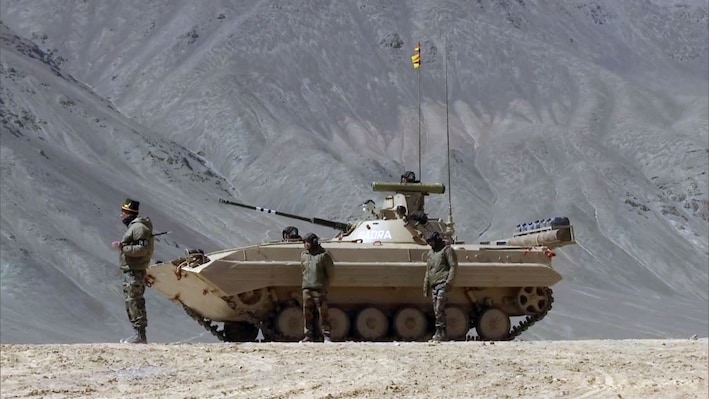
India has blamed changes in Chinese troop patrols for renewed tension along the Line of Actual Control, days after reports of fresh face-offs in Arunachal Pradesh. The foreign ministry said on Friday that peace at the disputed border was necessary for better relations with Beijing, even as both countries pursued military talks and sought to restore trade and travel ties.
At a briefing on 23 October, Ministry of External Affairs (MEA) spokesperson Randhir Jaiswal said the border situation becomes unsettled when Chinese forces move away from established patrolling practices. His comments came after the ITBP chief openly spoke about ongoing face-offs with Chinese troops.
“As we have noted in the past, the situation in the India-China border areas gets disturbed from time to time when Chinese forces diverge from established patrolling patterns,” Jaiswal said.
ITBP chief reports continuing face-offs in Arunachal Pradesh
ITBP director general Shatrujeet Kapur while speaking to personnel at Alwar in Rajasthan on Thursday said Indian and Chinese forces had faced each other at several locations in Arunachal Pradesh and that some confrontations were continuing. He said the force's newly raised Shaurya commando teams had been involved in handling these situations.
Reports of an earlier encounter centred on Taksing, a remote area of Arunachal Pradesh’s Upper Subansiri district, where Indian and Chinese patrols came into contact in late July. Further tensions were reported in August. Details of the reported troop movements have not been independently confirmed.
Military talks continue after September border meetings
India and China held their first senior military commander-level flag meetings in the eastern sector on September 6 and 7, at Wacha on the Indian side and Damai on the Chinese side. The meetings followed diplomatic consultations aimed at improving communication along the border.
Jaiswal said both countries were continuing to use military and diplomatic channels to settle outstanding matters and prevent misunderstandings. He added that they had agreed to discuss ways to improve their understanding of the LAC in appropriate areas. No new disengagement agreement was announced on Friday.
ITBP Expands Drone Units and Training
Alongside the diplomatic and military efforts, the ITBP has also been strengthening its preparedness along the frontier. ITBP director general Shatrujeet Kapur said the force had established drone platoons in border units and introduced a course called "Strike" to improve frontline tactics after the deadly Galwan Valley clash in 2020, in which 20 Indian soldiers were killed.
The force is also developing underground infrastructure along the frontier as part of its broader plan to improve border security.
Congress Seeks Answers From Government
Kapur’s comments triggered a political row, with the Congress questioning the government’s handling of the border situation. Congress general secretary Jairam Ramesh accused Prime Minister Narendra Modi and his government of maintaining a “deafening silence” over the Arunachal incidents while making concessions to Beijing.
Congress president Mallikarjun Kharge also demanded answers from Modi, calling the developments "deeply alarming". He asked whether Indian patrols had lost access to any areas and why the government had not given a fuller account of the situation along the border.
Stay informed on all the latest news, real-time breaking news updates, and follow all the important headlines in india news and world news on Zee News.