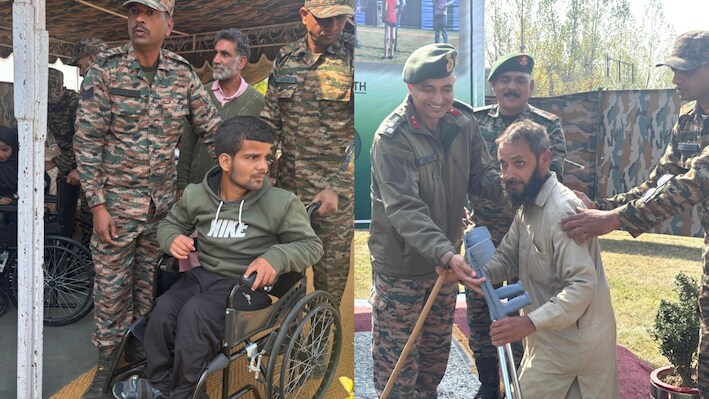
In a sustained effort to support local communities alongside its security responsibilities, the Indian Army has organised specialised community assistance initiatives in Kashmir, providing free artificial limb fitment and rehabilitation support to disabled civilians. These outreach programmes have brought prosthetic care to remote and underserved areas, helping amputees and people with limb disabilities regain mobility, independence and a renewed sense of purpose.
The Indian Army, a key counter-insurgency formation operating in parts of Kashmir, has long combined its operational duties with initiatives aimed at building trust and improving the quality of life of local residents. Among these efforts, artificial limb fitment camps have had a direct impact on beneficiaries by providing comprehensive services at no cost, in collaboration with specialised medical teams, prosthetists and supporting agencies.
During the camps, medical personnel screen beneficiaries and assess their residual limbs, overall health, and functional needs. Eligible individuals, including those who have lost limbs in accidents or due to medical conditions such as diabetes-related complications, undergo detailed measurements and casting.
Custom-fitted prosthetic limbs, including below-knee, above-knee and, in some cases, upper-limb devices, are then fabricated or adjusted on-site or through partner facilities. The limbs are fitted during the camp or in follow-up sessions.
Beyond the fitting process, the programmes provide training on the proper use and maintenance of prosthetic limbs, basic physiotherapy guidance to strengthen residual limbs and improve walking, and counselling to help beneficiaries adjust psychologically and socially.
Follow-up arrangements are also made to address the need for adjustments, repairs or replacements as residual limbs change over time or as children grow.
These free outreach initiatives have been particularly valuable in areas where access to specialised orthopaedic and prosthetic services is limited by geographical barriers, costs or inadequate infrastructure. By bringing these services closer to residents, the Army has helped families avoid long and expensive journeys to distant hospitals and private clinics.
Beneficiaries include farmers, labourers, students, homemakers and elderly residents who previously faced significant difficulties with mobility, employment, education and everyday activities.
Army personnel involved in the camps assist with logistics, crowd management, the transportation of equipment and beneficiaries, and post-camp follow-up. Specialised prosthetic technicians handle the clinical and technical aspects of the process.
Watching beneficiaries take their first unaided steps after years of relying on crutches, family support or remaining confined to their homes has highlighted the impact of these initiatives and the Army's role in community development.
The artificial limb fitment programmes are part of the Army's wider civic action efforts, which include medical camps, educational support, youth engagement and infrastructure assistance. Officials associated with the formation have emphasised that such initiatives help strengthen ties between security forces and local communities, contributing to a more stable and progressive environment.
Beneficiaries and their families have expressed gratitude for the assistance, describing the prosthetic limbs as more than medical devices. For many, they represent restored dignity, greater self-reliance and the opportunity to contribute more actively to household and community life.
Through these specialised community assistance initiatives, the Indian Army continues to demonstrate that its role in the region extends beyond operational duties to include support for the well-being and rehabilitation of local residents.
Stay informed on all the latest news, real-time breaking news updates, and follow all the important headlines in india news and world news on Zee News.