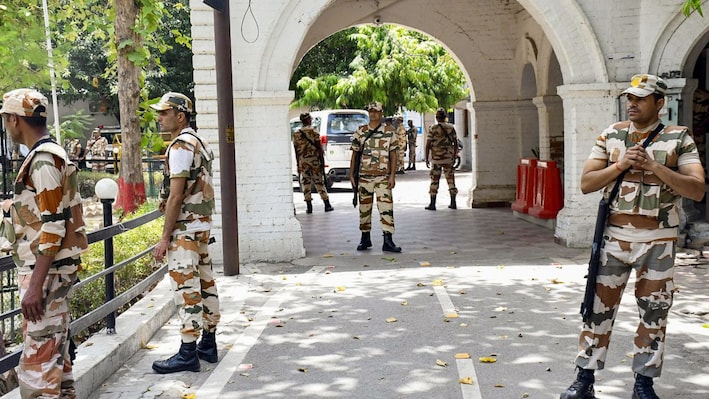
A political row erupted on Friday after Indo-Tibetan Border Police (ITBP) chief Shatrujeet Kapur said face-offs between Indian and Chinese troops had occurred at several locations in Arunachal Pradesh and were still continuing, prompting Congress to question Prime Minister Narendra Modi over the situation along the Line of Actual Control.
What did the ITBP Chief say?
The ITBP director general made the remarks at a felicitation ceremony in Alwar, Rajasthan, on Thursday, saying the force's Shaurya commando teams had handled the confrontations "exceedingly well".
Kapur said that in recent days there had been a situation in Arunachal Pradesh where face-offs took place at different locations and that the situation was still continuing.
He praised the recently formed Shaurya commando teams for their work along the frontier, saying they had dealt with the confrontations effectively.
Although Kapur did not name China in that part of his speech, the ITBP guards stretches of the Line of Actual Control, the disputed boundary between India and China.
Video of the speech circulated on social media. According to reports, the ITBP posted footage of the remarks on Thursday night before deleting it. The force had not publicly explained why the video was removed.
Congress Seeks Answers From Government
Congress general secretary Jairam Ramesh criticised the Centre after Kapur's comments became public. In a post on X, he accused PM Modi and his government of maintaining a "deafening silence" over the Arunachal incidents while making concessions to Beijing.
Congress president Mallikarjun Kharge also demanded answers from PM Modi, calling the developments "deeply alarming". He asked whether Indian patrols had lost access to any areas and why the government had not given a fuller account of the situation along the border.
Why Is the Arunachal border under scrutiny?
The remarks come amid reports of a standoff involving Indian and Chinese personnel near Taksing in Arunachal Pradesh’s Upper Subansiri district since July.
India and China held Corps Commander-level talks at the Wacha-Damai border meeting point on September 6 after discussions between local military officers. Indian troops have continued to be deployed in the area to prevent any escalation, according to reports.
In August, Ministry of External Affairs spokesperson Randhir Jaiswal said peace along the border was essential and that developments there would affect the wider relationship between India and China. He said both countries were using established channels to manage their differences.
The tension persists despite efforts to improve ties. Prime Minister Modi met Chinese President Xi Jinping in New Delhi on September 12 during the BRICS summit. An official Indian statement said the two leaders agreed that peace in border areas was essential for the development of bilateral relations.
ITBP Plans Stronger Border Security
At the Alwar event, Kapur also spoke about plans to expand the Shaurya units and strengthen border infrastructure.
He said the force would invest in drones, anti-drone systems and protected border facilities to improve security along the frontier.
Kapur also advised personnel to be cautious on social media, avoid sharing information with strangers and remain alert to online attempts to trap them. He further urged them to avoid alcohol.
Stay informed on all the latest news, real-time breaking news updates, and follow all the important headlines in india news and world news on Zee News.