New Delhi: When three young men aged between 18 and 22 were tracked down to Kota in Rajasthan for allegedly opening fire at Bollywood actor Tiger Shroff in Mumbai’s Juhu area on Sunday (October 18), investigators were confronted with a troubling pattern in organised crime. Young men are purportedly recruited to carry out dangerous assignments for established gangsters, often at enormous personal cost. They are the underworld’s “disposable infantry”.
According to them, India’s crime syndicates use young men as foot soldiers to carry out criminal operations while gang bosses direct activities from behind the scenes. From local outfits operating out of Haryana and Delhi to internationally operating networks such as those run by Goldy Brar and the Lawrence Bishnoi cartel, major criminal syndicates have restructured their operations around a low-cost and high-turnout model – recruiting youth not through traditional gang initiations, but as blind and compartmentalised contractors.
The compartmentalised contractor model
Unlike traditional criminal gangs where recruits worked their way up a hierarchy, modern syndicates treat young operatives like gig-economy workers. Most of them never meet the mastermind, nor do they know the full blueprint of the hit.
Tasks are fragmented across different actors. Logistics handlers are given Rs 10,000 to Rs 20,000 to drop an unmarked package or rent an apartment under a false name. Shooters are provided with a target’s photograph, a weapon drop location and a promised payout, often around Rs 5 lakh, along with status symbols such as a Mahindra Scorpio or Tata Thar. Meanwhile, escape assets are tasked merely with picking up a runner at a designated intersection.
"Babu, tu ye kar de. Do mahine mein bahar (Just do it, son. You will be out on bail in two months)” has become the standard line handlers use to downplay the consequences. For an 18-year-old with no criminal record, the offer can seem tempting because it promises instant prestige, quick cash and only a short stay in jail. But in reality, the moment a trigger is pulled, the syndicate cuts all communications and leaves the youth to face full legal liability. The handler then moves on to the next recruit.
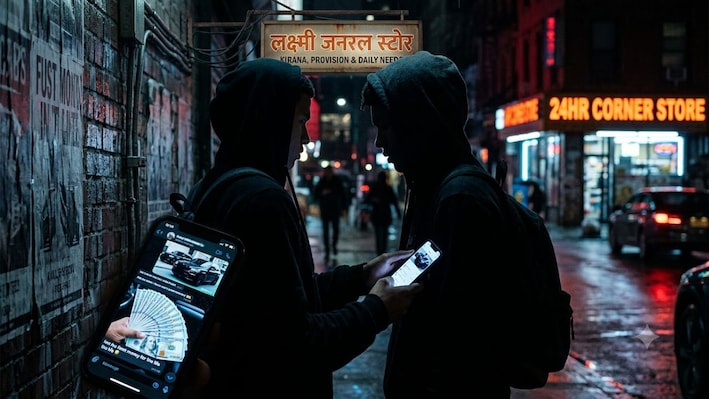
The recruitment pipeline makes extensive use of short-form video platforms and algorithmic reach. Visuals of luxury SUVs, high-end firearms, bold Punjabi/Haryanvi tracks and displays of raw dominance create an illusion of invincibility.
The path often begins with local peer groups or school rivalries, where young men encounter social media feeds showcasing guns, SUVs and wealth. Some then take up small tasks involving transport or logistics. Their first arrest can expose them to prison networks and bring them into closer contact with established gangs.
Teenagers aged 16 to 18 gain instant social clout by associating themselves with this image. The entry point is rarely a request to commit violence. It starts with hanging around local gang leaders, driving branded SUVs or showing off access to illegal country-made arms (desi kattas). By the time they receive an assignment, they are deeply invested in the gang’s online image and reputation.
Prisons as talent accelerators
When young offenders end up in custody, rehabilitation can take a back seat to prison networking. High-profile incidents, such as the murder of gangster Tillu Tajpuriya in Delhi’s Tihar Jail, show how strongly gang rivalries persist behind bars.
In high-security prisons, senior gang members offer newly arrived youths basic protection, access to banned goods or financial help with legal fees. This creates a sense of obligation. After release, the young men can become part of the gang’s network and get pulled into ongoing rivalries with rival groups.
This recruitment strategy has also spread to other countries.Classified intelligence assessments reveal that overseas handlers leverage similar tactics against young Indian migrants, particularly students and contract workers in countries like Canada.
Isolated by financial stress, tuition debt and strict work constraints, vulnerable young migrants become targets for extortion support, surveillance or tactical assignments. Individuals like Abhijeet Kingra, who entered Canada on a student visa before being accused of involvement in gang-directed shootings, illustrate how handlers thousands of miles away can exploit the financial struggles of young people abroad.
While gang leaders operate behind encrypted channels and foreign addresses, the real burden lands squarely on the recruits' families.
After incidents such as the attack near singer Guru Randhawa’s gym in Delhi, allegedly involving the Bishnoi and Anil Pandit networks, the parents of accused youths (Sagar and Sahil) faced lengthy court battles, high legal fees and social isolation.
"They don’t make criminals, they rent children," said a senior police officer in Delhi.
Until law enforcement breaks the algorithmic charm of social media recruiters and disrupts prison-level onboarding, syndicates will continue to find an endless supply of young and disposable hands ready to take the fall.
Stay informed on all the latest news, real-time breaking news updates, and follow all the important headlines in india news and world news on Zee News.