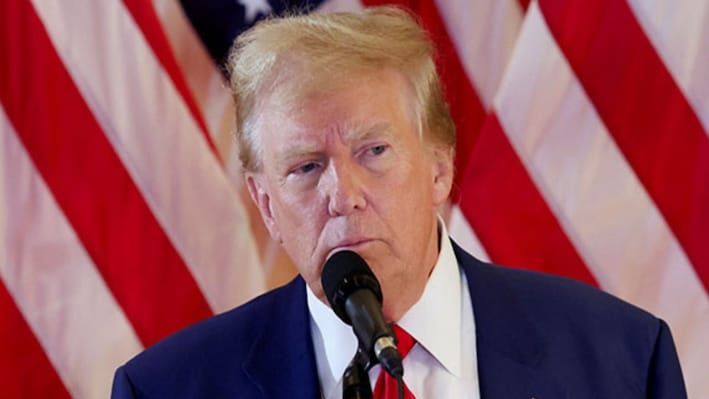
US President Donald Trump has indicated that he is prepared to use his veto powers extensively if Democrats take control of Congress following the November 3 midterm elections. The Republican Party's possible loss of its congressional majority could make it difficult for Trump to push his legislative agenda through Congress during the remaining two years of his presidency.
Trump has openly described himself as a potential "Mr Veto", suggesting that he could reject legislation passed by a Democratic-controlled Congress before eventually considering negotiations.
The US Constitution gives the president the authority to reject bills passed by Congress. However, lawmakers also have a constitutional mechanism to challenge a presidential veto.
What are the veto powers of the US President?
The US President's veto authority comes from Article I, Section 7 of the US Constitution. It allows the president to reject a bill passed by both the House of Representatives and the Senate.
Once a bill reaches the president, there are three possible outcomes:
- Approval: The president signs the bill, and it becomes law.
- Regular veto: The president rejects the bill and returns it to the chamber where it originated, along with the reasons for the decision.
- Pocket veto: The president does not sign the bill within 10 days (excluding Sundays), and Congress adjourns before the deadline, preventing its return. In this situation, the bill does not become law.
The president must accept or reject the entire bill. The US Supreme Court struck down the line-item veto mechanism in 1998, ruling that the president cannot independently remove selected provisions from legislation after signing it.
Can Congress override Trump's veto?
Yes. The US Constitution allows Congress to override a presidential veto, but the process requires substantial support from lawmakers.
To overturn a veto, a bill must receive a two-thirds majority in both chambers:
- House of Representatives: At least 290 votes out of 435 members.
- Senate: At least 67 votes out of 100 members.
If both chambers meet the required threshold, the bill becomes law despite the president's objections.
This makes it difficult for a president's opponents to overturn a veto, particularly when the president still enjoys support from a significant number of lawmakers belonging to his own party.
According to historical figures cited in the Congressional Research Service data, Congress has overridden only 112 of the 2,599 presidential vetoes issued since 1789. Pocket vetoes are excluded from the override process.
What options will Democrats have if they control Congress?
A Democratic majority in the House and Senate could give the party greater influence over legislation, government spending and investigations into the Trump administration.
However, passing bills may not be straightforward. Most legislation in the Senate faces the filibuster, a parliamentary procedure that allows the minority to delay or block a vote.
Ending debate on most bills requires 60 votes in the 100-member Senate. Democrats are not expected to have enough seats to meet that threshold on their own.
There are, however, certain exceptions that allow lawmakers to proceed through a simple-majority vote.
- Resolutions seeking to withdraw US forces from military hostilities.
- Measures aimed at ending a national emergency declared by the president.
- Resolutions seeking to overturn certain federal regulations.
Even these measures could face a presidential veto, requiring lawmakers to secure a two-thirds majority in both chambers to override it.
Stay informed on all the latest news, real-time breaking news updates, and follow all the important headlines in india news and world news on Zee News.