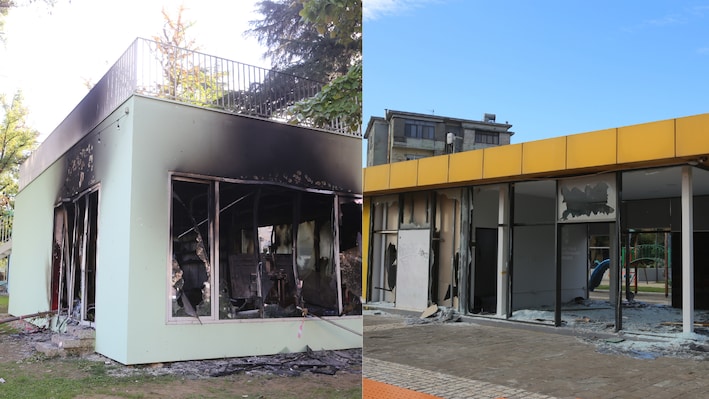
A small European country, Albania, is being tested as a rising European economy by a wave of protests fuelled by youth discontent, corruption allegations, and a controversial resort project linked to US President Donald Trump’s son-in-law, Jared Kushner. As demonstrators take to the streets and questions mount over the government’s response, the unrest has exposed a deeper fault line between economic progress and public expectations.
But is Albania really on the brink, or is the turmoil a more complex story of a young democracy grappling with the demands of development, accountability and its ambition to join the European Union by 2030?
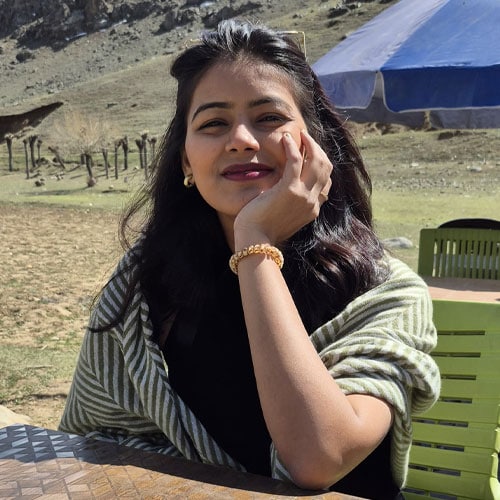
In an exclusive interview with Zee News, Dikshu Kukreja, Honorary Consul General for the Republic of Albania in India, defended the government’s handling of the demonstrations, describing them as a reflection of a vibrant democracy undergoing rapid transformation.
He argued that the involvement of anti-social elements had compounded legitimate student concerns over education costs and employment opportunities.
However, reports present a broader picture of the movement, which has expanded from opposition to a controversial coastal development to include demands for better education, action against alleged corruption and greater political accountability.
The question facing Albania is whether its institutions can address these grievances while sustaining economic growth and keeping the country on course for EU membership.
Why are Albanians protesting?
The recent unrest has brought together several strands of public discontent. Student-led demonstrations have raised concerns about education standards, costs and employment prospects, while opposition to the Kushner-linked resort has fuelled a wider debate over environmental protection, transparency and the use of public land.
Reuters reported in June that thousands of Albanians had taken to the streets of Tirana to oppose a proposed €1.4 billion luxury resort associated with Kushner’s investment firm, Affinity Partners.
The development involves Sazan Island and a stretch of coastline near the Vjosa-Narta protected landscape, an environmentally sensitive area that provides habitat for flamingos, seals and nesting sea turtles.
Environmentalists have warned that construction could damage coastal habitats, while the developer has defended the project, citing environmental stewardship, job creation and benefits for local communities.
The movement has since widened to encompass grievances over corruption, unemployment and education.
Reuters reported on October 18 that student-led demonstrations had spread beyond Tirana, with protesters also demanding Rama’s resignation.
Meanwhile, Kukreja acknowledged the economic concerns behind the demonstrations but argued that the unrest had escalated as other elements became involved.
“One sees that in a democracy, a protest is always welcome and is a very healthy sort of representation of people’s desires, needs and aspirations,” he said.
He added that anti-social elements sometimes took advantage of demonstrations, contributing to tensions witnessed in Albania over the preceding days.
His assessment reflects the Albanian government’s argument that genuine grievances should be distinguished from acts of violence.
Economic growth meets rising expectations
Albania’s transformation since the early 1990s provides important context for the unrest. Following the end of communist rule, the country embarked on a transition towards democracy and a market economy, with successive governments pursuing closer integration with Europe.
Kukreja described Albania as one of Europe’s fastest-growing economies, citing annual growth of around 4% and saying the country’s gross domestic product had tripled over the past decade.
International Monetary Fund figures provide a more specific measure of that growth. In its December 2025 assessment, the IMF projected real GDP growth of 3.5% in 2025 and 3.6% in 2026, following growth of 4% in 2024.
IMF also identified the need to improve education and skills, generate higher-quality jobs and strengthen governance.
The figures underline the distinction between economic expansion and the everyday experience of citizens. Growth can increase investment and employment, but it does not necessarily resolve concerns about affordability, job quality or access to opportunities.
Kukreja argued that Albania’s progress had raised expectations, particularly among young people seeking better prospects.
“These kinds of astonishing numbers obviously do two things. One, they set the aspirations of people or expectations of people even higher,” he said.
He also pointed to the wider European economic climate, including the consequences of the Russia-Ukraine war and conflict in the Middle East, as factors affecting opportunities and public sentiment.
The economic pressures are therefore part of the context, rather than a complete explanation for the protests. Allegations of corruption, concerns over public accountability and opposition to the resort project have also shaped the movement.
Police response under scrutiny
Kukreja defended the government’s handling of the demonstrations, describing its response as restrained and mature.
He argued that attacks on police officers and damage to public and private property were incompatible with peaceful democratic protest.
During the interview, he was also asked about people injured, including police officers.
“Protests in any democracy do not give a right for people to go about destroying or defacing public property or burning government institutions or even private properties,” Kukreja said.
He maintained that the government was taking steps to protect genuine protesters, including students and minors, and pointed to Rama’s calls for dialogue with students.
“The Prime Minister has repeatedly called for dialogue with the students to solve or to address, to understand and address their issues,” he said.
There has been scrutiny of the conduct of both demonstrators and security personnel. The European Union Delegation to Albania expressed concern on October 14 over escalating tensions and allegations of excessive police force against protesters and journalists. It called for proportionate policing, investigations into the allegations and de-escalation.
On October 18, the European Commission condemned violence, arson, attacks on state institutions and the destruction of public and private property.
It also stressed that the authorities’ response must remain within the law and be proportionate, while calling for peaceful assembly and constructive dialogue.
The EU’s position therefore combines condemnation of violence with demands for lawful policing and respect for fundamental rights. It does not amount to an unconditional endorsement of the government’s response.
Kushner-linked resort: Development versus environmental concerns
The proposed luxury resort has become one of the most contentious issues surrounding Albania’s recent protests.
Critics have questioned the transparency of the development process and raised concerns about the environmental consequences of building in an ecologically sensitive coastal area.
Kukreja rejected allegations of legal irregularities, saying the project was proceeding under Albanian law and that environmental concerns were being addressed.
“No law has been flouted on it,” he said.
He also said that the government had created a platform called Flamingo Mirror to allow people to raise concerns about the project and receive responses from the authorities.
On criticism from individual members of the European Parliament, Kukreja said, “An individual member of Parliament, every member of the European Parliament has their full right to express their views on anything else that’s happening anywhere in the world,” he said.
His distinction is relevant: statements by individual MEPs should not automatically be attributed to the EU as an institution. At the same time, criticism of a specific development can be reported on its merits without being treated as an official EU position.
What does the unrest mean for Albania’s EU membership?
Albania has set 2030 as its target for joining the European Union, making accession a central objective of its political and economic policy.
Kukreja expressed confidence that the country remained on course, arguing that the recent unrest would not define its long-term trajectory.
The IMF’s December 2025 assessment noted that Albania was advancing reforms aimed at securing EU membership by 2030. It also highlighted the need for stronger governance, improved education and skills, better-quality employment and continued efforts to uphold the rule of law.
The European Commission’s October 18 statement described Albania as a candidate country firmly committed to accession and making progress towards membership. It also urged the authorities to address grievances through constructive dialogue and peaceful means.
The 2030 date remains Albania’s target, rather than a guaranteed accession date. Progress will depend on meeting the EU’s requirements, including those relating to governance and the rule of law.
The protests do not automatically place accession out of reach. However, the way authorities respond to public dissent, investigate alleged misconduct and address concerns over transparency will remain relevant to the country’s reform process.
Kukreja also drew attention to Albania’s political history, describing its transformation from a highly restrictive communist state into a democracy over the past three and a half decades.
He argued that the current demonstrations should be understood against that background, as people express increasingly ambitious expectations of their government.
Are wider European pressures fueling discontent?
The unrest in Albania has unfolded against a backdrop of political and economic tensions elsewhere in Europe. Kukreja said the continent was facing a growing disconnect between government policies and public expectations, with the effects of war, energy disruption and rising costs adding to the pressure.
“I think in my personal capacity I would only say that yes, Europe is going through this major challenge of a clash between what the governments are driving and what are the people’s needs and expectations from the government,” he said.
He pointed to the Russia-Ukraine war and conflict in the Middle East as factors contributing to economic uncertainty.
However, wider European instability should be treated as context rather than a proven direct cause of the Albanian protests.
The country’s demonstrations have identifiable domestic triggers, including education concerns, allegations of corruption, demands for political accountability and opposition to the resort project.
Rama has referred to alleged “dark forces” in Europe and the United States, suggesting that radical elements had contributed to the unrest.
Kukreja interpreted those remarks as a reference to disruptive groups rather than foreign governments, stressing that Albania maintained close relations with the US and European countries.
That interpretation is Kukreja’s assessment. The remarks themselves do not establish who the alleged forces were or what role, if any, they played in the demonstrations.
Overall, Albania’s Flamingo protests have brought several unresolved tensions into focus: the relationship between economic growth and public expectations, environmental concerns surrounding major foreign-backed projects, and the demands of democratic accountability.
Kukreja maintains that the government is responding responsibly and that Albania’s economic progress and European ambitions remain intact.
Neither the consul’s defence nor the images of clashes alone provide a complete picture of the country.
The question is not simply whether Albania is going through unrest. It is whether the country can turn a period of unrest into an opportunity to strengthen public trust while maintaining its economic momentum and European ambitions.
Stay informed on all the latest news, real-time breaking news updates, and follow all the important headlines in india news and world news on Zee News.