• हिन्दीEnglishमराठीবাংলাதமிழ்മലയാളംગુજરાતીతెలుగుಕನ್ನಡଓଡ଼ିଶାZ BharatPHHBusinessWION
  • facebookyoutubetwitterwhatsapp
Zee News English
  • news
  • Live Blog
  • photos
Add Zee Business As A Preferred Source
App
  • Live TV
  • Latest News
  • India
  • World
  • Entertainment
  • Sports
  • Business
  • Lifestyle
  • Astrology
  • Auto
  • Education
  • Technology
  • News
  • /World
  • /US Congressional panel urges joint undersea surveillance with India, warns of growing China-Pakistan military nexus

US Congressional panel urges joint undersea surveillance with India, warns of growing China-Pakistan military nexus

The report described India as one of the few countries outside the US alliance system with the demographic, economic, military and geographical weight to influence the long-term balance of power with China.

Written ByZee Media Bureau
Published: Nov 21, 2026, 14:03 IST|Updated: Nov 21, 2026, 14:08 IST
joinshare
US Congressional panel urges joint undersea surveillance with India, warns of growing China-Pakistan military nexus
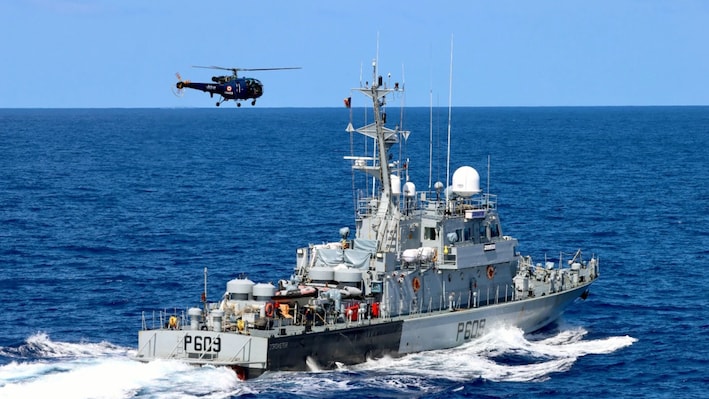
Image Credit: Representative Image IANS

About the Author

    Zee Media Bureau

    Zee Media Bureau

    Zee Media Bureau is the editorial news desk of Zee Media Corporation, one of India’s leading news networks.The bureau represents a collective of experienced journalists, editors, and correspondents who work across television, digital, and social platforms to deliver timely, accurate, and wide-ranging news coverage. Zee Media Bureau's coverage spans politics, business, economy, technology, health, entertainment, and global affairs. The bureau follows a collaborative newsroom model, where stories are researched, verified, and published by a team. This ensures speed, editorial consistency, and adherence to journalistic standards, particularly for breaking news and developing stories.
    Read More

    Trending

    • News
    • Photos
    Why is US President Donald Trump praising India after returning from China?

    Why is US President Donald Trump praising India after returning from China?

    2

    Delhi Police question 14-year-old over alleged sale of Agniveer data on dark web

    3

    'Skilled workers will be valued more than paper degrees': PM Modi in Lucknow

    4

    Anirudh Ravichander and Kavya Marans Chennai wedding reception draws Mahesh Babu, Rajinikanth and former SRH stars

    5

    ‘Brown’ fame actress Vaibhavi Malhotra to marry longtime beau Ansh Batra on December 6 in Jaipur

    logo
    • contact us
    • privacy policy
    • legal
    • investor info
    • advertise with us
    © 1998-2026 Indiadotcom Digital Private Limited, All Rights Reserved.

    China’s growing military cooperation with Pakistan is increasing the risk of India facing a two-front security challenge, with Beijing capable of supporting Islamabad during a conflict without directly entering hostilities, a US congressional commission has warned.

    The panel has urged Washington to deepen operational defence coordination with New Delhi, particularly in the Indian Ocean, to counter China’s expanding regional presence.

    In a chapter titled “China’s Other Front: India and the Future of US Strategy in the Indo-Pacific”, the US-China Economic and Security Review Commission (USCC) said Beijing’s growing security backing for Islamabad had made the possibility of a two-front scenario an increasingly pressing concern for India.

    The commission cited the May 2025 India-Pakistan conflict, which followed a Pakistan-backed terrorist attack in Pahalgam, Jammu and Kashmir, that killed 26 people. India launched Operation Sindoor in response.

    According to the report, the episode demonstrated how China could strengthen Pakistan’s position during a crisis without becoming a direct participant in the conflict, adding to the complexity of India’s military planning in the event of another confrontation.

    Why India matters in the US-China rivalry

    The report described India as one of the few countries outside the US alliance system with the demographic, economic, military and geographical weight to influence the long-term balance of power with China.

    It highlighted India’s position as the world’s most populous nation and largest democracy, its nuclear capabilities and its status as a country with one of the world’s largest militaries. New Delhi also shares a contested 2,100-mile border with Beijing and occupies a strategically important position along Indian Ocean shipping routes that carry a substantial share of China’s energy supplies and trade.

    While the Western Pacific remains the principal arena of US-China competition, the commission said India presents Beijing with a significant strategic challenge on both land and at sea.

    Beijing, the panel assessed, views India’s growing influence as a challenge and uses military, economic and maritime pressure to constrain its rise.

    For Washington, a stronger India could help create a more favourable balance of power in Asia while providing an alternative to Chinese manufacturing and supply chains. However, the commission cautioned against assuming that closer defence ties would translate into complete strategic alignment.

    India’s foreign policy remains guided by its own interests and commitment to “strategic autonomy”, meaning New Delhi may not necessarily support every broader American objective.

    China’s expanding presence in the Indian Ocean

    The commission also raised concerns about China’s growing naval and surveillance activities in the Indian Ocean, saying they were beginning to test India’s longstanding strategic advantages in the region and place additional operational pressure on its armed forces.

    According to the report, Beijing is developing infrastructure and logistical support to sustain longer naval deployments, while Chinese naval, surveillance and research vessels are operating increasingly close to India and strategically important sea lanes.

    The panel also alleged that China was applying elements of its approach in the South China Sea to the Indian Ocean. It pointed to Beijing’s references to historic rights and the renaming of undersea features, warning that such activities could establish the groundwork for more assertive actions or potential jurisdictional claims.

    What the US panel wants Washington to do

    To strengthen cooperation with India and counter China’s regional influence, the USCC recommended that Congress direct the US Secretary of Defence and the Chairman of the Joint Chiefs of Staff to work with their Indian counterparts on improving undersea and maritime domain awareness across the Indian Ocean.

    The commission called for cooperation to move beyond periodic military exercises towards sustained operational coordination. Its recommendations include regular intelligence and surveillance sharing, joint monitoring of Chinese naval and submarine movements, and better procedures for responding to maritime threats.

    It also proposed an Indo-American Strategic Leadership Exchange Programme to develop long-term relationships between emerging defence, government, business and academic leaders in both countries.

    India-China ties and the boundary question

    The US assessment comes against the backdrop of renewed diplomatic engagement between New Delhi and Beijing.

    In September, Prime Minister Narendra Modi and Chinese President Xi Jinping reaffirmed their commitment to finding a fair, reasonable and mutually acceptable resolution to the India-China boundary question during bilateral talks on the sidelines of the 18th BRICS Summit in New Delhi.

    The two leaders welcomed progress in bilateral relations since their previous meeting in Tianjin in August 2025 and agreed that ties should be approached from a strategic and long-term perspective.

    According to the Ministry of External Affairs (MEA), Modi emphasised that “differences should not become disputes” and said bilateral engagement must be guided by “mutual respect, mutual sensitivity and mutual interest”.

    He also stressed that peace and tranquillity along the border remained essential for the continued development of relations, calling on both sides to respect existing agreements and understandings on border-related matters.

    The MEA said the leaders had expressed their commitment to a settlement of the boundary question based on the overall political perspective of bilateral relations and the long-term interests of both countries.

    Xi, meanwhile, called for India and China to view their relationship from a strategic perspective, keeping its long-term development in mind. He said that despite their differences, the two countries had been able to “support and help each other to achieve common development”.

    The Chinese President also highlighted their position as the world’s two most populous countries and members of the Global South, saying both had important responsibilities in advancing a shared future for humanity.

    Stay informed on all the latest news, real-time breaking news updates, and follow all the important headlines in india news and world news on Zee News English.

    Add Zee News as a Preferred Source
    TAGS:
    India-US Relations