• हिन्दीEnglishमराठीবাংলাதமிழ்മലയാളംગુજરાતીతెలుగుಕನ್ನಡଓଡ଼ିଶାZ BharatPHHBusinessWION
  • facebookyoutubetwitterwhatsapp
Zee News English
  • news
  • Live Blog
  • photos
Add Zee Business As A Preferred Source
App
  • Live TV
  • Latest News
  • India
  • World
  • Entertainment
  • Sports
  • Business
  • Lifestyle
  • Astrology
  • Auto
  • Education
  • Technology
  • News
  • /Business
  • /Govt draws plan to support rabi sowing in 225 districts affected by erratic monsoon

Govt draws plan to support rabi sowing in 225 districts affected by erratic monsoon

“We are taking contingency planning to a new level with the development of a dynamic dashboard that will integrate the India Meteorological Department’s (IMD) weekly forecasts, data on water bodies and other relevant information to help officials make decisions based on local conditions,” Indian Council of Agricultural Research (ICAR) Director General ML Jat told journalists.

Reported ByIANS
Published: Nov 07, 2026, 05:16 PM IST|Updated: Nov 07, 2026, 05:22 PM IST
joinshare
Govt draws plan to support rabi sowing in 225 districts affected by erratic monsoon

About the Author

    IANS

    IANS

    Indo-Asian News Service (IANS) is a private Indian news agency. 
    Read More

    Trending

    • News
    • Photos
    NBCC cancels 49 luxury flat bids; buyers move Delhi High Court

    NBCC cancels 49 luxury flat bids; buyers move Delhi High Court

    2

    PM Modi extends Diwali greetings, says he will celebrate festival with Armed Forces

    3

    Festive feasting and brain health during Diwali: Why sweets and salty snacks pose a stroke risk for diabetes and BP patients

    4

    Karan Johar sends 'Shukrana' to the universe for completing him with kids Roohi & Yash

    5

    Govt draws plan to support rabi sowing in 225 districts affected by erratic monsoon

    logo
    • contact us
    • privacy policy
    • legal
    • investor info
    • advertise with us
    © 1998-2026 Indiadotcom Digital Private Limited, All Rights Reserved.

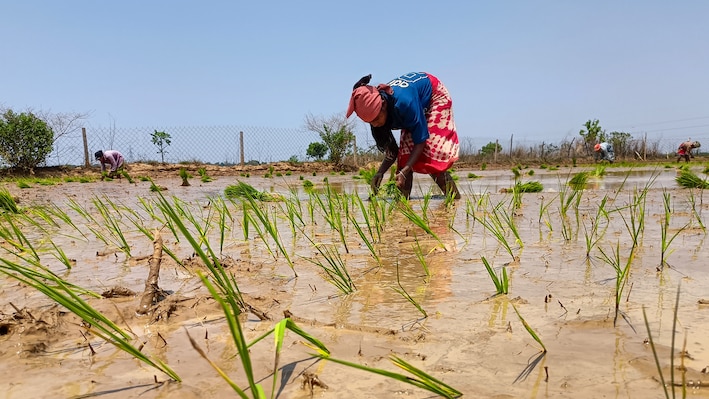
    New Delhi: The government has drawn up contingency plans to facilitate sowing in the current rabi season in as many as 225 districts across the country which have been affected due to the erratic monsoon this year in the wake of the El Nino weather pattern.

    “We are taking contingency planning to a new level with the development of a dynamic dashboard that will integrate the India Meteorological Department’s (IMD) weekly forecasts, data on water bodies and other relevant information to help officials make decisions based on local conditions,” Indian Council of Agricultural Research (ICAR) Director General ML Jat told journalists.  

    The proposed dashboard would allow users to access information at the district level, he added.

    The ICAR chief said a district initially identified as vulnerable to drought could move out of that category if it received adequate rainfall in the coming days. The assessment should therefore be revised using updated IMD forecasts and rainfall data, including projections for the following 15 days.

    Rabi crops, including wheat, have been sown in around 3.8 million hectares as of October 30, which is around 46 per cent less than the same period last year. However, this is also due to untimely rains in the wheat belt, due to which sowing has been delayed and is expected to accelerate now, a senior official explained.  

    The ICAR chief said that the new dashboard would cover the entire country, rather than just the 225 districts identified for contingency planning. He said the platform would not be restricted to contingency planning. It would also provide advisories for normal agricultural conditions, helping farmers and officials decide what action to take in different circumstances.

    He said ICAR ultimately intended to integrate the dashboard with the AgriStack initiative so that information from different agricultural sources could be brought together.

    Director General ML Jat said ICAR had also constituted a task force to examine opportunities to increase the cultivation of oilseeds and pulses in fallow areas left after the rice harvest. These areas offered considerable scope for crop diversification, he added.

    “In places where residual soil moisture was insufficient for wheat, farmers could consider growing suitable oilseed and pulse crops instead,” Jat observed.

    He also said a separate soil health policy was expected to be introduced in the next two to four months to enable farmers to plan efficient fertiliser use based on nutrient deficiency.
     

    Stay informed on all the latest news, real-time breaking news updates, and follow all the important headlines in india news and world news on Zee News English.

    Add Zee News as a Preferred Source