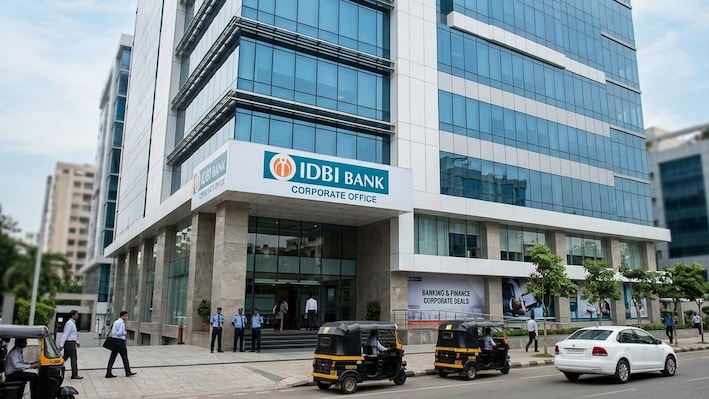
New Delhi: The IDBI Bank privatization deal with Fairfax Financial Holdings relies on a highly unusual financing structure, according to investigative reporting by Businessworld. BW says, the buyer plans to use the bank's own capital to purchase the buyer's private businesses. Or in other words, in the purchase deal, the money from the deal is generating the cash needed to fund more than half of the takeover.
The CCEA earlier approved the sale of a 60.72 per cent stake in IDBI Bank to Canada Inc., a subsidiary of Fairfax Financial Holdings, for Rs 52,878 crore. The transaction includes the sale of 30.48 per cent stake held by the Government of India and 30.24 per cent stake owned by the LIC. Following the transaction, the government will retain a 15 per cent stake, while LIC will continue to hold 19 per cent in the bank.
Businessworld said that it has reviewed the full transcript of an internal October 15 investor conference call which was held just one day after India's Cabinet approved the sale.
The transcript reveals that when an analyst from Raymond James asked if IDBI would use its excess cash to buy shares of Fairfax's insurer Go Digit at market price, Prem Watsa, Fairfax’s founder and chairman confirmed in the positive.
Explaining the self-financing strategy, Watsa reportedly said, "So the way it works is there's excess capital at IDBI Bank. And so they'll just pay cash... we see them paying cash at the time of the deal at market prices."
Earlier on that same call, Watsa outlined that Fairfax would fund the acquisition through cash on hand, insurance dividends, asset sales. Watsa also added that the contributions of Digit and IIFL Capital at their respective market prices, would also come into play.
BS said, Fairfax President Peter Clarke quantified these details for investors. The entire IDBI purchase requires $5.6 billion, while the contribution of Digit Insurance (including its Life operations) and IIFL Capital across those three companies is "approximately $3 billion on its own."
As Businessworld points out, this $3 billion represents 54% of the acquisition price (roughly ₹28,300 crore)—meaning the bank is essentially helping to pay for its own takeover.
This self-financing model is the fourth major structural concern Businessworld has uncovered regarding the privatization process. Together, their reporting connects four distinct elements:
Price Manipulation
Businessworld previously exposed a Department of Investment and Public Asset Management (DIPAM) internal note from August 13.
The document reveals that government officials opened Fairfax's bid, completely discarded the initial ₹94.42 reserve price, and only then ordered new valuations. These new benchmarks came in lower at ₹75.99, allowing the government to accept Fairfax's ₹81 per share final offer.
The business daily also tracked a major governance overlap. For seven months during the sale process, an LIC director sitting on LIC’s Investment Committee simultaneously served on the board of Thomas Cook India, a company controlled by the Fairfax.
LIC was responsible for selling a 30.24% stake in IDBI, and it remains unconfirmed if this director ever declared the conflict or stepped aside.
The day after Cabinet approval, Fairfax announced it would move its stakes in Go Digit and IIFL Capital into IDBI at market prices. However, Businessworld highlighted that Go Digit Life is entirely unlisted and has no public market price. IT further added that no independent valuations for these three businesses have been made public.
The "excess capital" Fairfax plans to extract was entirely rebuilt by Indian taxpayers and policyholders. Watsa acknowledged on the call that IDBI accumulated $6.4 billion in cumulative losses between 2016 and 2020, which were completely rescued by LIC and the Government of India (including a joint ₹9,300 crore infusion in 2019).
This public funding restored IDBI’s capital adequacy ratio to 27.10%—well above the regulatory minimum of 11.5%. Watsa explicitly told investors that because the bank is so well capitalized, future dividends "flows to us."
Businessworld's analysis reveals severe regulatory and minority shareholder hurdles that remain completely unexplained by the transacting parties:
Under the Reserve Bank of India’s (RBI) 2025 commercial banking directions, a bank's equity investment in a single financial services subsidiary "shall not exceed 10 percent of the bank's paid-up share capital and reserves". Total investments across all such companies combined "shall not exceed 20 percent."
Fairfax's $3 billion valuation vastly exceeds these legal limits. While Watsa admitted to investors that the deal requires clearances from the RBI, SEBI, and IRDAI, how the structure will legally bypass these caps remains unknown.
The August 13 internal DIPAM note reviewed by Businessworld explicitly records that the government chose a share purchase agreement because of "the transfer of management control in the IDBI Bank and the fact that no special rights are being contractually extended to the GOI and the LIC post-closing."
Even though the government and LIC will still hold a combined 34% minority stake, both entities will completely withdraw their nominee directors from IDBI’s board—leaving the remaining 39.28% of public and state shareholders with no voting say or protection against this massive cash transfer.
Central Govt's clarification on restructuring process of IDBI Bank
Meanwhile, the government has issued a clarification on the process of 'strategic restructuring' of IDBI Bank, saying the government of India and the LIC retain residual shareholdings to get further benefit from the “upside that is expected from the value enhancement following strategic restructuring of the IDBI Bank going forward in future”.
The Finance Ministry said in a fresh statement that the first or initial bid round was conducted in the financial year 2025-26 by DIPAM as per its internal practices, which are in the nature of indicative guidelines and not hidebound rules or regulations.
“The foreword itself states that the procedure suggested is not to be construed as a rigid, legal framework, which may require due adaptation/ modification in the best interest of successful execution of the transaction in a time bound manner. Given the complex nature of strategic transactions, the indicative guidelines give flexibility to ensure cost and time spent in lengthy processes is not wasted,” it explained.
The press note “dated 14.10.2026 clearly explains that there is not a-priori benchmark for bidding”.
The bidders do their own valuation and submit their bids in a confidential manner. Independent agencies are hired to do a fair valuation of the enterprise contemporaneously, which is then used as a comparator to assess the reasonableness of the bids submitted. The bid discovered price and the comparative valuation can, therefore, be above or below each other, the ministry statement further added.
To handle this situation, provision is ex-ante built into Para 5.3.6(iii) the RFP: “In the event the Financial Bid of the Highest Bidder is lower than the reserve price, the Gol will decide the further course of action and the QIPs shall not subsequently question any decision taken by the Gol in this regard.”
There is no procedure prescribed to handle this situation internally within DIPAM and special powers have been delegated to the Core Group of Secretaries on Disinvestment (CGD) by the Cabinet Committee of Economic Affairs (CCEA) for this purpose, said the ministry.
“In its meeting dated August 16, 2017, while approving the Note titled ‘Procedure and Mechanism for Strategic Disinvestment - Delegation Thereof’, the CCEA has empowered the CGD to remove all difficulties, including deviations from procedure, to ensure effective implementation of the strategic disinvestment transactions approved by the CCEA,” the statement explained.
The entire valuation methodology was reviewed by the CGD in April, 2026 before the invitation of best offer bids.
“Since the comparator used for valuation has to be contemporaneous with the bids received, and 31st March, 2026 closing financial accounts were released in the public domain in end-April, the independent valuation agencies had started working on the revised valuations in May, 2026 itself. The process remained double blind because the bidder did not know the valuation and the valuators did not see the bids. It is only the CGD which gets to see a complete picture and compares the bids with fair valuations to take a final call on the reasonableness of the bids submitted,” the statement further explained.
The valuation was carried out by two different advisers, independent of each other, using independent and distinct methodologies. The Asset Valuer also used robust and time-tested methodologies, including additional value for disputed tax demands, which were indemnified as a common demand of the qualified bidders to nudge the bid offer upwards, said the ministry.
“This remains a low probability event and revenue neutral for the government, as only the additional tax demand, if paid at all, will be eligible for reimbursement. The potential liability that could arise on this account was only Rs. 627 crores while the bid discovered price increased by Rs 3,917 crore enhancing the value of the transaction for the GoI and the LIC,” it noted.
With IANS Inputs
Stay informed on all the latest news, real-time breaking news updates, and follow all the important headlines in india news and world news on Zee News.