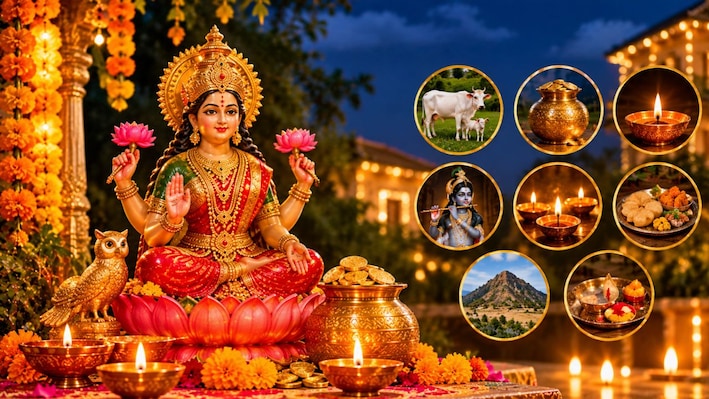
Diwali 2026 calendar: Diwali, also called Deepawali or Deepavali, is a festival of diyas, family get-togethers and the worship of Goddess Lakshmi, and it stands for the victory of good over evil. It is spread over several days, and each day has its own rituals and meaning. In some regions the celebrations begin with Govatsa Dwadashi and then move through Dhanteras, Kali Chaudas, Narak Chaturdashi and Lakshmi Puja, before ending with Govardhan Puja and Bhai Dooj. This year, the festivities run from November 5 to November 11.
Diwali 2026 calendar
| Festival | Date |
|---|---|
| Govatsa Dwadashi (Vasu Baras) | Thursday, November 5, 2026 |
| Dhanteras, Dhanvantari Trayodashi, Yama Deepam | Friday, November 6, 2026 |
| Kali Chaudas, Hanuman Puja | Saturday, November 7, 2026 |
| Narak Chaturdashi, Diwali, Lakshmi Puja, Kali Puja | Sunday, November 8, 2026 |
| Diwali Snan, Diwali Devpuja | Monday, November 9, 2026 |
| Govardhan Puja, Annakut, Bali Pratipada, Gujarati New Year | Tuesday, November 10, 2026 |
| Bhai Dooj, Bhau Beej, Chitragupta Puja | Wednesday, November 11, 2026 |
The main Diwali and Lakshmi Puja fall on Sunday, November 8. Amavasya runs into the next day, but the new moon tithi is in effect on the evening of November 8, and that is what decides the date of the puja.
Lakshmi Puja muhurat 2026
Lakshmi Puja is traditionally done during Pradosh Kaal, the period just after sunset, and Amavasya has to be in effect during that time. According to Drik Panchang, the Lakshmi Puja muhurat in New Delhi on Sunday, November 8, 2026, is 5:54 PM to 7:50 PM. Sunset and local Panchang calculations differ from city to city, so check the timing for your own location before you start the puja.
What each day means
Govatsa Dwadashi (November 5)
Also known as Vasu Baras, this day opens the Diwali celebrations in several parts of India, especially Maharashtra. Cows and calves are worshipped as symbols of nourishment, motherhood and prosperity, and people give thanks for the role cattle have played in farming life.
Dhanteras (November 6)
Also called Dhantrayodashi or Dhanvantari Trayodashi, it is dedicated to wealth, health and prosperity. Goddess Lakshmi and Lord Kuber are worshipped. Many families buy gold, silver, utensils or other household items on this day, as it is considered auspicious. Another tradition is lighting a lamp in the evening, known as Yama Deepam.
Kali Chaudas (November 7)
Observed the day before the main Diwali in many regions, it is also known as Narak Chaturdashi in some traditions, though the two can fall on different days depending on regional custom and the Panchang. Devotees worship Goddess Kali and Lord Hanuman, praying for protection from negative forces and obstacles. Rituals differ across communities.
Narak Chaturdashi and Lakshmi Puja (November 8)
Narak Chaturdashi, also called Choti Diwali, marks Lord Krishna’s victory over the demon Narakasura. The evening of November 8 is also the main Diwali night in 2026. Families light diyas, decorate their homes, exchange sweets and worship Goddess Lakshmi and Lord Ganesha.
Lakshmi Puja is the most important ritual of Diwali, with prayers for wealth, happiness, peace and prosperity. Some communities also observe Kali Puja, Chopda Puja and Sharda Puja.
Diwali Snan and Devpuja (November 9)
The day after the main Diwali evening is observed as Diwali Snan and Devpuja. Amavasya continues until around midday, after which Pratipada begins. People follow family and regional customs for ritual bathing, prayers and other observances.
Govardhan Puja (November 10)
Also known as Annakut, it recalls how Lord Krishna protected the people of Vrindavan by lifting Govardhan Hill. Devotees prepare a wide variety of food, arrange it as Annakut and offer it to Krishna. The day is also about gratitude to nature, farming and cattle. Bali Pratipada and the Gujarati New Year fall around this time in several communities.
Bhai Dooj (November 11)
Also known as Bhau Beej or Yama Dwitiya, the day celebrates the bond between brothers and sisters. Sisters put a tilak on their brothers’ foreheads and pray for their long lives and happiness, and brothers give gifts in return. Some communities also observe Chitragupta Puja on this day.
Why is Goddess Lakshmi worshipped on Diwali?
Lakshmi is regarded as the goddess of wealth, prosperity and good fortune, and her worship is at the heart of Diwali, especially for families and business communities. The main Lakshmi Puja is held on Kartik Amavasya. Homes and workplaces are cleaned and decorated beforehand, and diyas are lit to welcome prosperity and positivity.
Many traditional business families also perform Chopda Puja, in which new account books, called Bahi-Khate, are worshipped. Pens and inkpots, known as Lekhani and Davat, are included in some of these rituals. Goddess Saraswati is worshipped for knowledge and wisdom, while Goddess Kali is associated with protection and the removal of negative forces.
Why does Pradosh Kaal matter for Lakshmi Puja?
Pradosh Kaal is the period shortly after sunset and is considered especially auspicious for Lakshmi Puja. The main condition for picking the date is that Amavasya has to be present during Pradosh Kaal. Even if Amavasya continues into the next morning, the evening when it overlaps with Pradosh Kaal is generally treated as the right time for the main puja.
That is why Diwali 2026 is on November 8, even though Amavasya continues into November 9.
Stay informed on all the latest news, real-time breaking news updates, and follow all the important headlines in india news and world news on Zee News.