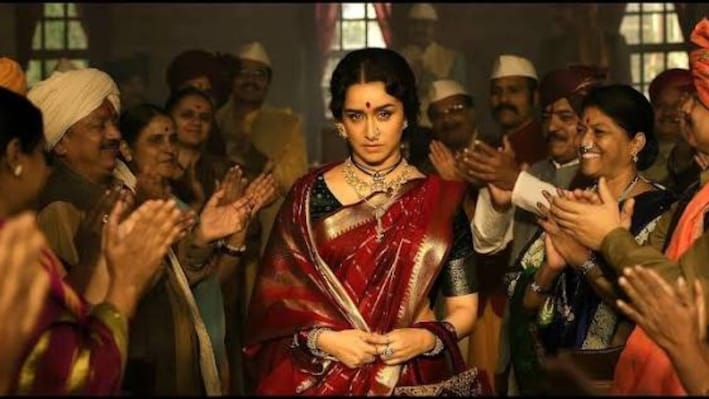
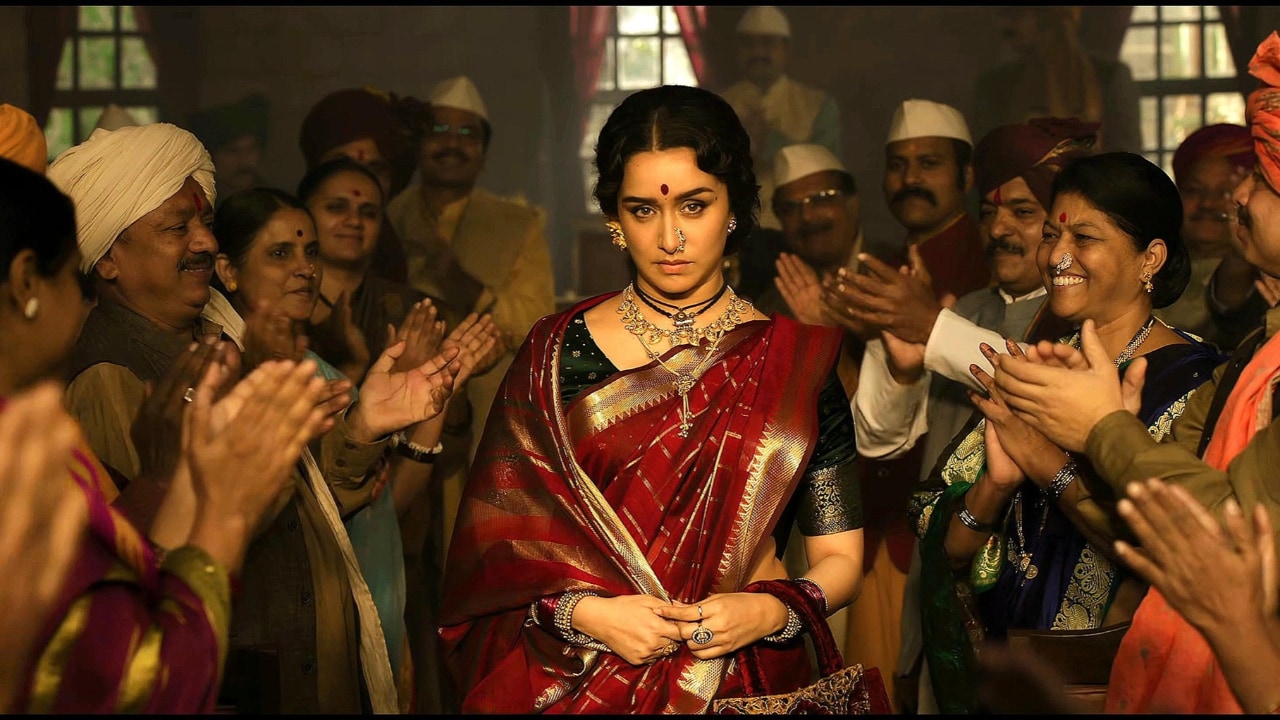
Shraddha Kapoor is all set to bring the extraordinary life of legendary Maharashtrian Lavani and Tamasha artiste Vithabai Bhau Mang Narayangaonkar to the big screen in her upcoming biographical musical drama, 'Eetha'. Directed by Laxman Utekar, among the most striking moments teased from the film is a real-life scene that sounds like dramatic fiction: a heavily pregnant Vithabai walking off stage mid-performance, giving birth backstage, cutting the umbilical cord with a stone, and preparing to return before the audience. While it seems almost unbelievable, it remains one of the most celebrated chapters in the history of Maharashtra’s folk theatre.
While Vithabai’s extraordinary life forms the emotional backbone of the film, director Laxman Utekar recently offered an important clarification regarding how her story has been adapted.
During the media interaction at the trailer launch, when asked if the makers planned to host a special screening for Vithabai’s family, Utekar clarified that Eetha is not a direct tribute to the legendary performer, but rather draws inspiration from specific incidents chronicled in a book based on her life.
“Eetha doesn’t honour Vithabai. It’s inspired by a few events from the book based on Vithabai titled Tamasha: Vithabaichya Aayushyacha,” he noted.
Who is Vithabai Bhau Mang Narayangaonkar?
Born on July 1, 1935, in Pandharpur in Maharashtra’s Solapur district, Vithabai grew up in a family where live performance was a way of life. Her grandfather, Narayan Khude, had founded a travelling Tamasha troupe, while her father, Bhau Bapu Narayangaonkar, and other relatives carried the legacy forward. From early childhood, Vithabai was immersed in Lavani, Gavlan, and traditional folk theatre forms.
She never took formal acting lessons. Instead, she honed her craft on the road, travelling with her family’s troupe from village to village and performing before live crowds. Her effortless command over the stage quickly made her one of the most recognisable and beloved performers in Maharashtra’s folk theatre circuit.
Playwright who spotted her spark
A major turning point arrived when renowned Marathi playwright Mama Varerkar watched Vithabai perform. Impressed by her magnetic stage presence, he invited her to join his troupe. Though she lacked formal training, working under Varerkar deepened her understanding of theatrical technique and sharpened her artistry.
Over the years, Vithabai emerged as a towering figure in Tamasha, earning admiration not only from rural audiences but also from urban theatre enthusiasts and cultural icons across the state.
The backstage childbirth that became legend
Among the countless stories surrounding Vithabai, none is as iconic as the moment recreated in 'Eetha'.
According to biographical accounts, Vithabai was nine months pregnant when she went into labour mid-performance. Determined not to abandon her show, she stepped backstage, delivered her baby, cut the umbilical cord using a stone, and began preparing to return to the stage. When word of what had happened reached the audience, the crowd immediately halted the performance and insisted that she rest. The incident became an enduring symbol of her unmatched dedication to her art.
As her fame soared, offers began pouring in from outside the folk circuit. According to theatre director Shantanu Ghule, who created the acclaimed Marathi play 'Vitha' based on her life, Vithabai was approached with multiple film offers, including one from legendary filmmaker Raj Kapoor.
However, she turned them all down. Ghule noted that Vithabai believed leaving Tamasha for cinema would cause her troupe to collapse, threatening the livelihoods of dozens of artistes and their families. By choosing her community over mainstream stardom, she cemented a lifelong bond with her audience, who affectionately crowned her “Tamasha Samradni” (The Empress of Tamasha).
Personal struggles and national honours
Behind the applause, Vithabai endured a turbulent personal life. As depicted in Ghule’s play, her marriage to Maruti Sawant was marked by financial control and abuse, casting a long shadow over her years in the spotlight.
Despite personal hardships, her artistic contributions earned widespread national acclaim. She was honoured with Presidential awards for her contribution to Tamasha in 1957 and again in 1990. During the 1962 Sino-Indian War, she also travelled near the North-East Frontier Agency (NEFA) region to perform special morale-boosting shows for Indian soldiers. Beyond the stage, she actively campaigned for the welfare and financial security of struggling folk artistes.
Her final years and lasting legacy
In a tragic twist of fate, the woman who spent decades entertaining thousands faced severe financial distress in her final years. Following a paralytic stroke, Vithabai passed away on January 15, 2002. Reports at the time noted that her family struggled to afford her hospital bills and transport her body home for the final rites, prompting admirers, cultural bodies, and well-wishers to step in and help.
In 2006, the Maharashtra government established the Vithabai Narayangaonkar Lifetime Achievement Award to honour senior Tamasha artistes for preserving the art form she championed all her life.
Directed by Laxman Utekar, 'Eetha' is slated to hit theatres on December 4, 2026, bringing Vithabai Narayangaonkar’s unforgettable story of resilience, sacrifice, and artistic passion to a new generation of audiences.
Stay informed on all the latest news, real-time breaking news updates, and follow all the important headlines in india news and world news on Zee News English.