• हिन्दीEnglishमराठीবাংলাதமிழ்മലയാളംગુજરાતીతెలుగుಕನ್ನಡଓଡ଼ିଶାZ BharatPHHBusinessWION
  • facebookyoutubetwitterwhatsapp
Zee News English
  • news
  • Live Blog
  • photos
Add Zee Business As A Preferred Source
App
  • Live TV
  • Latest News
  • India
  • World
  • Entertainment
  • Sports
  • Business
  • Lifestyle
  • Astrology
  • Auto
  • Education
  • Technology
  • News
  • /World
  • /Trump, Putin and Xi's 'Nuclear Summit': Is a new world order taking shape?

Trump, Putin and Xi's 'Nuclear Summit': Is a new world order taking shape?

The 90-minute meeting at the Kylin Villa Resort in Shenzhen focused on cooperation to prevent nuclear threats and proliferation, increase petroleum supplies and strengthen global security.

Written ByZee Media Bureau
Published: Nov 19, 2026, 23:33 IST|Updated: Nov 19, 2026, 23:36 IST
joinshare
Trump, Putin and Xi's 'Nuclear Summit': Is a new world order taking shape?

About the Author

    Zee Media Bureau

    Zee Media Bureau

    Zee Media Bureau is the editorial news desk of Zee Media Corporation, one of India’s leading news networks.The bureau represents a collective of experienced journalists, editors, and correspondents who work across television, digital, and social platforms to deliver timely, accurate, and wide-ranging news coverage. Zee Media Bureau's coverage spans politics, business, economy, technology, health, entertainment, and global affairs. The bureau follows a collaborative newsroom model, where stories are researched, verified, and published by a team. This ensures speed, editorial consistency, and adherence to journalistic standards, particularly for breaking news and developing stories.
    Read More

    Trending

    • News
    • Photos
    Trump, Putin and Xi's 'Nuclear Summit': Is a new world order taking shape?

    Trump, Putin and Xi's 'Nuclear Summit': Is a new world order taking shape?

    2

    PM Modi rebukes corporates over jobs, salaries despite government tax relief

    3

    EXCLUSIVE: Indian Golfer Diksha Dagar opens up on India's historic Asian Games 2026 silver, calls it a 'lifetime opportunity'

    4

    Govt proposes up to 3-year PUC validity for new BS-VI vehicles, 6 months for older ones

    5

    Opinion | The real test of power is in the streets of Uttar Pradesh

    logo
    • contact us
    • privacy policy
    • legal
    • investor info
    • advertise with us
    © 1998-2026 Indiadotcom Digital Private Limited, All Rights Reserved.

    The meeting between US President Donald Trump, Russian President Vladimir Putin and Chinese President Xi Jinping in China's Shenzhen has raised questions about the future of global power politics, nuclear arms control and international security. Described as 'New Yalta' or 'Yalta 2.0', the trilateral summit brought together the leaders of three major powers for discussions on nuclear threats, energy supplies, global security, the Ukraine war and the Iran crisis.

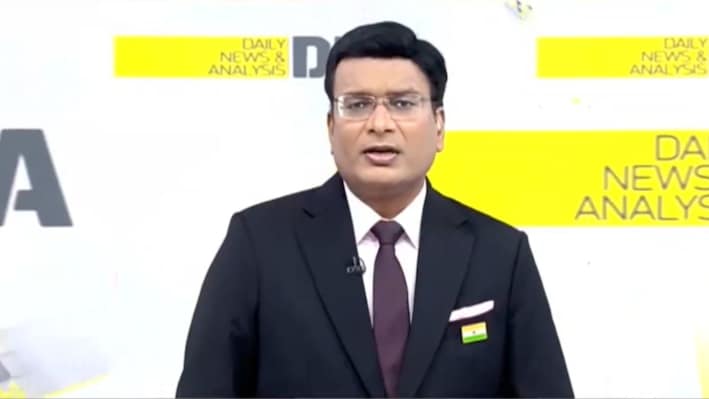
    In today’s episode of DNA, Rahul Sinha, Managing Editor of Zee News, conducted a detailed analysis of the summit, examining its possible impact on the global balance of power and India's strategic interests.

    The 90-minute meeting at the Kylin Villa Resort in Shenzhen focused on cooperation to prevent nuclear threats and proliferation, increase petroleum supplies and strengthen global security. The three leaders reportedly agreed on a declaration outlining their willingness to work together on these issues.

    However, the understanding on nuclear weapons remains at a preliminary stage. No formal treaty to reduce nuclear arsenals has been signed, nor has a concrete timeline been announced. The discussions come after the expiry of the New START treaty between the US and Russia in February, removing the last legally binding limits on the nuclear arsenals of the world's two largest nuclear powers.

    The New START treaty, which came into force in 2011, had placed restrictions on the strategic nuclear weapons held by Washington and Moscow. Trump wanted a new nuclear disarmament agreement involving China as well, given its rapidly expanding arsenal.

    According to the figures discussed in the DNA analysis, Russia has around 5,420 nuclear weapons, followed by the US with 5,042 and China with 620. Russia and the US have reduced their stockpiles over the years, partly by dismantling older weapons. China, meanwhile, has expanded its arsenal significantly, with its nuclear stockpile rising from 320 weapons in January 2020 to around 620 by January 2026. If the expansion continues at the current pace, China could have more than 1,000 nuclear weapons by 2030.

    The meeting also carried significance for global energy markets. Cooperation to increase petroleum supplies could help stabilise oil availability and fuel prices, potentially easing inflationary pressures. The understanding could also reduce obstacles to the international sale of Russian oil, a development that may benefit India.

    Another striking aspect of the summit was the presence of Putin's nuclear briefcase, known as the 'Cheget'. A Russian Navy officer carrying the briefcase was seen speaking to reporters, an unusual occurrence given the strict security protocols surrounding the device. The briefcase is a symbol of Russia's nuclear command system and is generally carried alongside the Russian President during foreign visits. The US President also travels with a nuclear football.

    The DNA analysis highlighted how such symbols and gestures carry diplomatic significance, particularly during sensitive negotiations on nuclear weapons. The presence of the briefcase was seen as a possible message that Moscow was participating in the discussions from a position of strength.

    The summit has also drawn comparisons with the 1945 Yalta Conference, which brought together US President Franklin D. Roosevelt, Soviet leader Joseph Stalin and British Prime Minister Winston Churchill. The leaders discussed the post-war global order, including Germany's division, the elimination of Nazism and the establishment of the United Nations. Their decisions also shaped the division of Europe into competing spheres of influence, eventually contributing to the Cold War.

    The Shenzhen meeting has prompted comparisons with that historic gathering because of the involvement of three major powers in discussions that could influence the international order. Putin reportedly agreed when asked whether the summit could be described as Yalta 2.0. However, expectations of progress on the Ukraine war and the Iran crisis remain uncertain, as no concrete resolution has been announced.

    Trump's meeting with Xi Jinping also reflected the economic and strategic interests driving US-China relations. The trade truce between the two countries is due to expire in January 2027, and Washington is keen to avoid higher tariffs that could increase prices for American consumers and disrupt supplies of rare earth minerals.

    China's cooperation is also important for the US in addressing the Ukraine and Iran crises, given Beijing's close relations with Moscow and Tehran. Trump is also seeking greater Chinese purchases of American agricultural products, including soybeans, to support US farmers.

    Artificial intelligence and semiconductor technology featured in the discussions as well. Shenzhen, one of China's major technology hubs, provided the setting for talks on AI safety, reporting mechanisms for potential AI-related incidents and trade. Trump made it clear that he did not support international restrictions on AI development, reflecting Washington's desire to keep American technology companies ahead of China. At the same time, the US has tightened restrictions on China's access to advanced AI chips.

    The meeting has also raised questions about the future of global alliances. The growing engagement between Washington, Beijing and Moscow could weaken Europe's influence in international decision-making and challenge the traditional role of institutions such as NATO and the United Nations.

    For India, the developments present both opportunities and challenges. Any understanding between Trump and Putin on the Ukraine war and sanctions could reduce American pressure on New Delhi over its purchases of Russian oil and defence equipment. However, Trump's growing engagement with Xi Jinping could also affect Washington's strategy in the Indo-Pacific and the relevance of the Quad.

    The DNA analysis concluded that the meeting could signal a shift towards a new global power arrangement involving the US, Russia and China. However, all three countries have their own strategic interests, and it remains too early to assess whether their discussions will translate into lasting agreements.

    For India, the changing equation among the three superpowers makes it important to remain vigilant and strengthen its own strategic position to maintain the balance of power in Asia.

    Stay informed on all the latest news, real-time breaking news updates, and follow all the important headlines in india news and world news on Zee News English.

    Add Zee News as a Preferred Source
    TAGS:
    Vladimir Putin
    Donald Trump