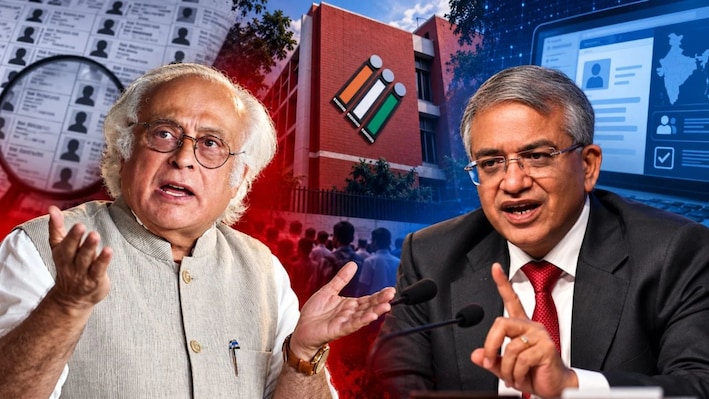
The Congress on Sunday accused the Election Commission of withholding technical details about the software used to examine voter lists during the Special Intensive Revision (SIR), alleging that the refusal was aimed at hiding manipulation of electoral rolls.
The party’s charge followed an RTI reply in which the poll body cited legal exemptions for protecting software-related information. Congress general secretary Jairam Ramesh said the Commission’s response had damaged public confidence in the revision exercise.
Jairam Ramesh, who holds the party’s communications portfolio, referred to a Hindustan Times report on a Right to Information (RTI) application filed by Telangana-based social activist MA Mujeeb Ayyub. In its reply dated October 16, the Election Commission declined to disclose the name and version of the software used to identify errors and inconsistencies in electoral rolls.
Election Commission cites trade secrets in RTI reply
The applicant had also sought to know whether artificial intelligence (AI) or other automated tools were used to check voter records, mark names for correction or deletion and protect genuine voters from incorrect warnings.
The Commission, however, invoked Section 8(1)(d) of the RTI Act, which protects commercially sensitive information, including trade secrets and intellectual property. It said the questions on AI, automatic checks and safeguards sought clarification rather than information covered under the law.
For a separate question on who reviews suspected errors, the Commission cited another exemption relating to personal safety and confidential sources. At the same time, it clarified that no new software had been developed or purchased specifically for the SIR.
The Commission maintained that the Electoral Registration Officer (ERO) in each constituency was legally responsible for deciding whether a person's name should be included in or removed from the voter list. It said such decisions were based on documents and other records.
Ramesh Questions AI Use and TCS Role in ECINET
In a post on X, Jairam Ramesh accused the Commission of using "flimsy excuses" to avoid disclosing how the ECINET system works. He alleged that the software had enabled central control over voter lists and linked this to what he called "massive, centralised manipulation" during the SIR.
"The lack of transparency around the ECINET software and the use of AI has damaged the credibility of the entire process among citizens," he wrote.
Jairam Ramesh also questioned why people had learnt about Tata Consultancy Services' alleged role in developing ECINET through the company's disclosures rather than from the Election Commission. He claimed that AI had been used during the revision.
The latest exchange comes after an investigation by The Indian Express reported that Election Commissioners Sukhbir Singh Sandhu and Vivek Joshi had recorded objections at least 14 times in 10 months to decisions linked to the revision.
According to the report, their concerns related to access to voter records, changes to voter registration forms and orders allegedly issued without the full Commission's knowledge. The two commissioners also reportedly wrote to the Cabinet Secretary about changes in officials' responsibilities.
Jairam Ramesh claimed the objections had reached the Department of Personnel and Training. The Election Commission, however, said the letters concerned the work of an officer on deputation and were not related to its IT policy.
Election Commission Defends ECINET
In a statement issued on September 26, the Commission said authorised field officers had access to ECINET according to their legal duties. It also announced a review by a committee that would include an independent expert from an IIT or IIIT.
The panel maintained that decisions on the SIR were approved by the full Commission and that differing views were part of normal internal discussions.
Stay informed on all the latest news, real-time breaking news updates, and follow all the important headlines in india news and world news on Zee News.