A major controversy has erupted in Srinagar over an improvement work tender for a Sufi shrine and graveyard situated along the approach road roughly 4 kilometers away from the ancient Shankaracharya Temple. The project has drawn sharp reactions from Kashmiri Pandit groups, political parties, the local Muslim community, and religious leaders.
Kashmiri Pandit organizations, including the Save Sharda Committee and the Dharmarth Trust, have strongly objected to the project. They claim a graveyard has “suddenly cropped up” on land belonging to the Social Forestry Department. Activists assert that frequent visitors who have traveled to the temple over the decades had never seen a Mazar (shrine) at the site.
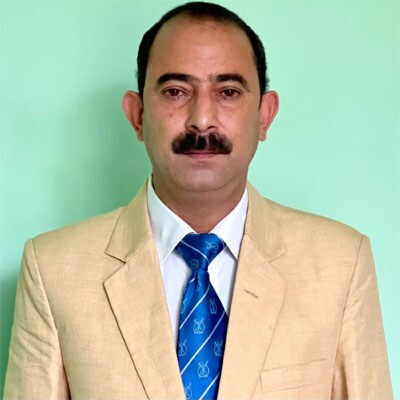
Kashmiri Pandit and Lok Janshakti Party leader Sanjay Saraf said:
“All of us know that it is Shankaracharya Hill, and nobody there even knew that there was a shrine (Mazar) somewhere. So recently, when a board appeared there, we hadn’t seen it either. Even after that, when I went, I didn’t see it because of the route we take. But this time, when the people from Dharmarth came to me, they took me along, and about eight to ten other people went with me. When we went inside—almost half a kilometer inside—we honestly saw a small shrine there, but along with that, another structure on the side.
I am myself a believer in Sufism. I visit Dastgeer Sahib’s shrine, Makhdoom Sahib’s shrine, Data Rishi Paacha’s shrine, Baba Rishi, Mata Kheer Bhawani, Tikker, Amarnath Ji Baba, Mata Hari Parbat, and Shishta Mata—we go everywhere. So the point is that we are not opposing any such thing, but one thing is very clear: if there is a proper record of it, it is up to the government to see whether they have authorized something based on that record. At least we Kashmiri people are not opposing anything without reason. Yes, we want a proper process to be followed. If there was a legitimate shrine there through a documented process, then why should we stop it? We haven't raised a controversy, nor do we oppose such things. Wherever there is a temple, a mosque, or a gurdwara, it remains sacred for all of us in Kashmir. We even pray for Christian homes here. We are the greatest believers in Sufism, where peers, fakirs, sadhus, and saints have practiced penance for thousands of years, leading to the creation we were all born into. So, we have no problem with it; it is up to the government to decide. Let the government decide. If the government feels everything is fine, why would we oppose it? I am no one; I am not an authority. But we wish that everything should be done in a peaceful and proper manner.”
The issue has rapidly turned political. The Bharatiya Janata Party (BJP) has heavily criticized the development, questioning its legality, environmental clearances, and the allocation of ₹44.37 lakh by the Roads and Buildings (R&B) Department. Party leaders have described the work as encroachment and an attempt to alter the religious character of the area surrounding the ancient Hindu heritage site.
BJP Jammu and Kashmir unit chief spokesman Altaf Thakur said:
“As far as we know, there used to be a single grave there for the last 40 years. We have no objection to that. However, we object to the way that grave was left, how additional graves were later added, how construction was carried out, and how green cloth was placed over those structures to encroach upon the land. We also object because Shankaracharya has a massive following all over the world, and devotees visit from across the globe. On what basis is this encroachment being carried out, why are you doing it, and what is the motive behind this design?”
Thakur demanded action against the officials who signed the tender. He claimed that neither the National Green Tribunal nor the Forest Department had issued a No Objection Certificate (NOC) for the forest land.
“On what basis are you allocating funds to the tune of ₹40 lakh?” Thakur questioned regarding the tender. “Whether it belongs to any religion, any man, or any individual, an encroachment is an encroachment; wrong is wrong. We can never support anything that is wrong. As for temples and mosques, everything is equal for us. We believe in ‘Sabka Saath, Sabka Vikas, Sabka Vishwas’ and equal respect for all religions; we have no objection to that. But the Bharatiya Janata Party is raising questions about the illegal manner in which this encroachment was carried out and the attempt to block the path.”
Taking the ruling National Conference (NC) to task, Thakur alleged:
“It is a very old design of the National Conference. In their manifesto, they said they would turn Shankaracharya into Sulaiman Teng. The Bharatiya Janata Party will never let that happen.”
On the other hand, members of the local Muslim community and some regional historians maintain that the shrine is centuries old. They link it to a Sufi saint who came to Kashmir during the time of Hazrat Mir Syed Ali Hamadani (Ameer-e-Kabir), the revered figure credited with spreading Islam in the Valley roughly 650 years ago.
Grand Mufti of Jammu and Kashmir, Mufti Nasir-ul-Islam, expressed strong displeasure at what he termed unwarranted interference, describing the site as an Astan-e-Aliya—a sacred shrine dedicated to an ancient Sufi saint. He stressed that while all religions must be respected, any attempt to disrupt such sites would not be tolerated.
Mufti Nasir-ul-Islam said:
“I have also been traveling along that path for 50 years. I have gone many times, and we always saw two graves there. One grave is associated with Syed Asadullah Bukhari Sahib, and the other with Syed Usman Sahib. They were contemporaries of Janab Hazrat Ameer-e-Kabir Sahib and carried his teachings forward. In reality, it has no direct connection to the Shankaracharya Temple itself; it is on forest land. An unnecessary issue is being created here. Through the Governor's administration, funds were allocated not for new construction, but for restoration to improve and preserve its historical structure as an ancient relic.
In my opinion, just as our Hindu brothers visit Muslim shrines in Satwari and Gandhi Nagar in Jammu, they should also visit here with respect and devotion in their hearts. The shrine has a history, and that history should be preserved. We should not interfere with any religious work; if anyone tamper with it, it obviously will not be tolerated.”
Caretakers of the shrine and residents of the surrounding areas have firmly rejected the encroachment charges. They identify the site as Astan-e-Aliya Syed Usman Sahib, a centuries-old cemetery containing the graves of Hazrat Syed Usman Sahib and Hazrat Syed Asadullah Sahib. They state that the current work is limited to the restoration, stabilization, and improvement of a long-standing structure that was previously hidden from the main road by dense forest cover—explaining why some passersby assumed it was new. They also noted that the annual Urs (commemorative festival) of the Sufi saint has been held at the site every year in mid-January for a week.
Following escalating tensions and requests from several socio-religious organizations, the administration has temporarily suspended construction work. The Revenue Department has been directed to examine land records, verify ownership, and determine whether any forest or environmental laws were bypassed. Further action will depend on the findings of the inquiry.
What makes the current dispute particularly sensitive is that, for the first time in Kashmir, a land steeped in Sufi-saint traditions where the distinction between a temple and a dargah was historically fluid—two communities find themselves at odds over a shared space.
Scholars and elders from both faiths remark that throughout Kashmir’s history, people of different religious backgrounds did not draw rigid boundaries around shrines. The Valley’s syncretic culture (Kashmiriyat) has long seen devotees of one community visiting and honoring the sacred spaces of another. If allowed to harden along communal lines, the current row threatens to strain that centuries-old tradition of shared reverence and mutual respect.
Stay informed on all the latest news, real-time breaking news updates, and follow all the important headlines in india news and world news on Zee News.