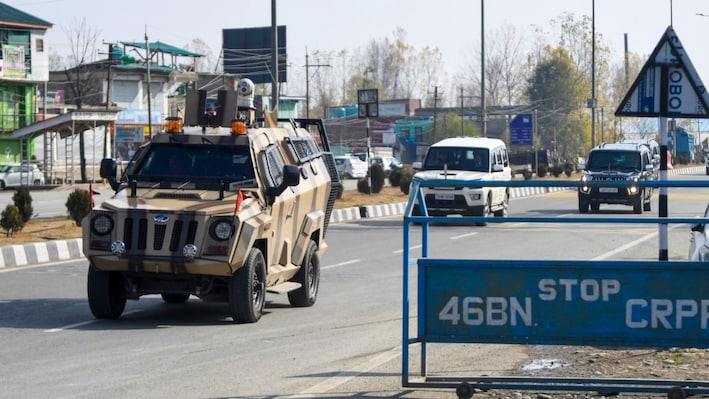
The use of highly lethal, double metallic-jacketed armour-piercing ammunition in the attack on a CRPF checkpoint in Kulgam has raised concerns among security agencies, with investigators examining evidence suggesting that the attackers used specialised rounds capable of penetrating protective armour.
Evidence recovered from the site indicates that the terrorists fired double metallic-jacketed armour-piercing bullets, which are designed to penetrate ballistic protection. According to preliminary findings, the ammunition was powerful enough to pierce the body armour worn by CRPF personnel and is also capable of penetrating bulletproof vehicles.
Preliminary forensic and ballistic analysis suggests that the attackers used AK-47 rifles. Around 45 rounds were reportedly fired in just 15 seconds from a distance of approximately 50 metres. The close range is believed to have increased the impact of the specialised ammunition.
Ammunition allegedly supplied from across the border
According to intelligence sources, double metallic-jacketed armour-piercing rounds are supplied to terrorists from across the border in limited quantities. They are reportedly transported into the Jammu region using drones and used in attacks intended to inflict maximum damage.
Reports suggest that Pakistan procures these expensive cartridges from China and reserves them for operations in which the objective is to cause extensive damage rather than carry out a routine attack.
Security agencies are examining the use of this ammunition as a possible indication of a deliberate attempt to overcome the protective equipment worn by security personnel.
How the Kulgam attack differs from the 2018 Lethpora incident
Investigators have drawn comparisons between the Kulgam attack and the 2018 attack on the CRPF camp in Lethpora, in which terrorists belonging to Lashkar-e-Taiba (LeT) allegedly used similar metal-jacketed ammunition.
However, the rounds used in the Lethpora attack were reportedly single metallic-jacketed bullets and were fired from a considerably greater distance, reducing their penetrative impact.
In Kulgam, investigators are examining the use of double-jacketed, armour-piercing rounds fired from close range, a combination that is believed to have made the attack more damaging.
The National Investigation Agency (NIA), along with state investigative agencies, has inspected the scene and recovered cartridges and other evidence.
Meanwhile, the search for the attackers is continuing. Investigators are also looking into whether the Kulgam attack is connected to earlier incidents in the area.
What is armour-piercing ammunition?
Armour-piercing (AP) ammunition is designed to penetrate ballistic armour, vehicle protection and other hardened materials. Such projectiles generally contain a hard core, often made of hardened steel, tungsten or tungsten carbide, enclosed within a metal jacket of copper or cupro-nickel.
The jacket helps the cartridge engage with the rifling inside a gun barrel, supports smooth loading from the magazine into the chamber and keeps the projectile intact during flight.
On striking a hard surface, the jacket may peel away or disintegrate, allowing the denser core to continue towards the target and penetrate the protective material.
These rounds can resemble conventional full-metal-jacket (FMJ), or ball, ammunition in appearance. This is a standard construction used in rifle-calibre armour-piercing cartridges.
According to sources, the ammunition recovered in connection with the Kulgam attack was of 5.56×45mm calibre.
The use of such specialised ammunition has added a new dimension to the investigation, with agencies examining both the source of the cartridges and the possibility of links with previous attacks.
Stay informed on all the latest news, real-time breaking news updates, and follow all the important headlines in india news and world news on Zee News English.