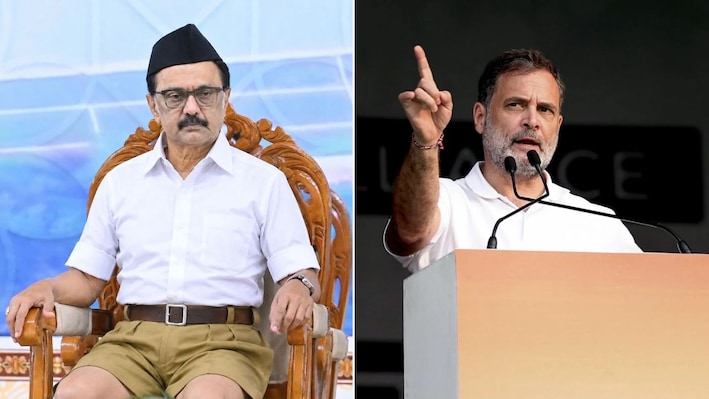

Tamil Nadu Leader of the Opposition Udhayanidhi Stalin said DMK president M.K. Stalin would take the final decision on the delimitation Bill. His remarks came after Congress leader Rahul Gandhi said he and INDIA bloc leaders would travel to Chennai to meet Stalin and request that he oppose the bill.
"Our leader will take the final decision on it," Udhayanidhi told reporters when asked about Gandhi's announcement that senior Opposition leaders would meet the DMK president.
Chennai: On Rahul Gandhi's tweet that Senior leaders of the INDIA bloc and he are going to Chennai to meet DMK Chief MK Stalin and request him to oppose the proposed delimitation bill, Tamil Nadu LoP Udhayanidhi Stalin says, "Our leader will take the final decision on it." https://t.co/w5XYAbc2TP
— ANI (@ANI) November 29, 2026
He emphasised that the party leadership would make a decision that protects the interests and rights of Tamil Nadu. He also recalled that the DMK was among the first political parties to oppose the Centre’s previous delimitation proposal.
The meeting in Chennai is expected to be attended by several leaders, including Congress president Mallikarjun Kharge, Sonia Gandhi, and Trinamool Congress chief Mamata Banerjee.
In a post on X, Rahul Gandhi argued that increasing the maximum strength of the Lok Sabha to 850 would allow the BJP and the RSS to redraw parliamentary constituencies to their political advantage.
The Congress leader urged Stalin to join other opposition parties in voting against the proposed constitutional amendment.
Responding to Rahul Gandhi, Stalin stated that the DMK has always made decisions with the interests of Tamil Nadu and its people in mind. He indicated that the party is not prepared to compromise on its stance.
On Saturday, the DMK announced its support for the revised proposal after the central government accepted two of its demands regarding the allocation of parliamentary seats among the states.
The party sought to ensure that Tamil Nadu’s current 7.18 per cent share of Lok Sabha seats remains unchanged.
Additionally, it demanded that the 1971 census continue to serve as the basis for the allocation of seats among states for the next 25 years.
South Indian states have previously expressed concern that if parliamentary seats were to be reallocated based on recent population data, their representation (share) could diminish compared to states with higher population growth.
Kanimozhi, leader of the DMK parliamentary party, met with Union Home Minister Amit Shah in New Delhi on Saturday and informed him of the party's decision to support the bill.
The revised proposal includes a provision to increase the number of Lok Sabha seats allocated to each state and union territory by 50 per cent. Furthermore, it proposes raising the constitutional limit on the total number of members in the Lower House (Lok Sabha) to 850.
The government has proposed maintaining the existing ratio of parliamentary representation among states until 2051. This delimitation process is also linked to the implementation of a 33 per cent reservation for women in the Lok Sabha and state legislative assemblies.
Previously, a constitutional amendment bill related to delimitation failed to secure the requisite two-thirds majority in the Lok Sabha this past April.
The DMK has 22 members in the Lok Sabha and 8 members in the Rajya Sabha. Ahead of the special session of Parliament beginning on November 30, a delegation from the Congress party is also expected to meet with NCP (SP) chief Sharad Pawar in Mumbai on Sunday.
Stay informed on all the latest news, real-time breaking news updates, and follow all the important headlines in india news and world news on Zee News English.