Rahul Gandhi's remarks describing India's economic situation as heading towards a disaster during his interaction with students at Columbia University in New York have triggered a political controversy, with the BJP questioning his assessment of the country's economy. The Congress leader had argued that young Indians could not see a future for themselves because of the state of the economy.
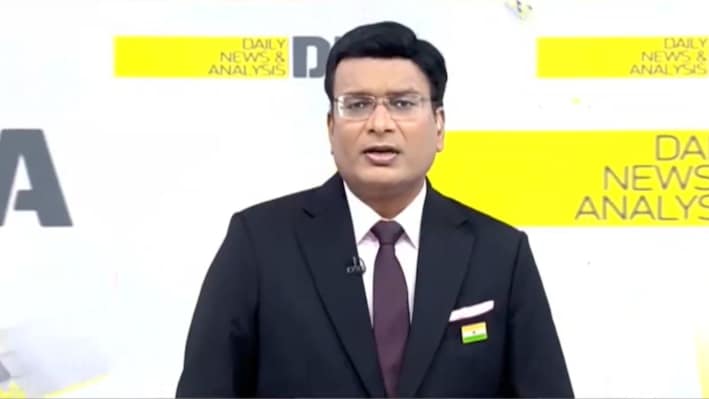
In today’s episode of DNA, Rahul Sinha, Managing Editor of Zee News, conducted a detailed analysis of Rahul Gandhi's remarks, examining India's economic performance through key indicators such as GDP growth, inflation, unemployment, poverty and credit ratings, while also comparing the country's economic position with that of the United States.
During his interaction at Columbia University, Rahul Gandhi criticised the government's economic policies and warned of an impending economic disaster in India. His use of the word 'disaster' drew a sharp reaction from the BJP, with party president Nitin Nabin questioning his approach to discussing India's economy on foreign soil.
While the Opposition has the right to question the government's economic policies, the debate has also raised questions about the country's actual economic performance. GDP growth remains one of the key indicators of economic health, and India has recorded growth of more than 7 per cent for three consecutive years. Its GDP growth came close to 8 per cent last year, making it the fastest-growing major economy among countries such as the US, China, Japan, Germany and France.
Several international institutions have also projected continued growth for India in the financial year 2026-27. According to the Finance Ministry, the economy is expected to grow by 7.3 per cent, while the Reserve Bank of India (RBI) and the World Bank have projected growth of 7.1 per cent. The International Monetary Fund (IMF), Moody's and Standard & Poor's have estimated growth at 7 per cent, while Fitch Ratings has projected 6.9 per cent.
These estimates have been revised upwards following India's 7.8 per cent GDP growth in the April-June quarter and its relative stability amid the ongoing conflict. With global economic growth projected at around 3.1 per cent, India is expected to retain its position as the world's fastest-growing major economy.
India has also made progress on the credit rating front. Standard & Poor's upgraded the country's credit rating in 2025, after an 18-year gap. In September this year, the Japan Credit Rating Agency also upgraded India's rating, bringing it back into the A-grade category after 35 years. No major global rating agency has downgraded India's credit rating over the past year.
However, strong GDP growth and improved credit ratings do not mean the economy is free from challenges. Inflation and unemployment remain areas of concern. Wholesale inflation crossed 12 per cent in October, while retail inflation rose above 6 per cent, exceeding the RBI's target limit. Food inflation also approached 9 per cent, its highest level in two years.
Rising prices have increased the financial burden on households and raised concerns about possible interest rate hikes, which could make home and car loans more expensive by pushing up EMIs.
Unemployment is another major concern, particularly among young people. While the overall unemployment rate is around 5 per cent, the rate among those aged 15 to 29 is close to 15 per cent. The figures point to a gap between the country's economic growth and the availability of employment opportunities for its younger population.
On the poverty front, a World Bank assessment found that nearly 500 million people were lifted out of poverty in India between 2011 and 2023. The poverty rate declined from 57.7 per cent to 16.1 per cent during this period.
The analysis also examined the economic challenges facing the United States, where Rahul Gandhi made his remarks about India. According to the IMF, the US economy is expected to grow by 2.3 per cent in 2026. Although this is lower than India's projected growth rate, the larger size of the American economy means that its absolute economic expansion remains considerably higher.
The US is also dealing with rising inflation, mounting public debt and a slowdown in the housing sector. Inflation has remained around 4 per cent, twice the US Federal Reserve's 2 per cent target. Rising living costs have also emerged as a major political concern for the Donald Trump administration.
Meanwhile, America's total debt has crossed 40 trillion dollars, exceeding 125 per cent of its GDP. This means the country's debt is greater than its entire annual economic output.
The comparison comes against the backdrop of Trump's own remarks about India. Last year, the US President described the Indian economy as 'dead', a statement that Rahul Gandhi had also supported at the time. However, Trump changed his position a year later, saying that India's economy was doing well.
The ongoing conflict in the Middle East has added to economic uncertainty across the world, affecting the US, Gulf countries and India. Rising fuel prices and disruptions linked to the conflict have contributed to inflationary pressures. The impact has also affected India's economic outlook, with the analysis arguing that inflation would have been lower and growth projections potentially higher in the absence of the war.
While India's economy faces genuine concerns over inflation and youth unemployment, the figures do not indicate an economic collapse. Questioning government policies and highlighting shortcomings are important parts of democratic debate. However, there is a difference between pointing out economic weaknesses and describing the entire economy as heading towards a disaster.
Despite the challenges, India's economic indicators continue to show growth and resilience, suggesting that the country's economic situation is more complex than Rahul Gandhi's description.
Stay informed on all the latest news, real-time breaking news updates, and follow all the important headlines in india news and world news on Zee News English.