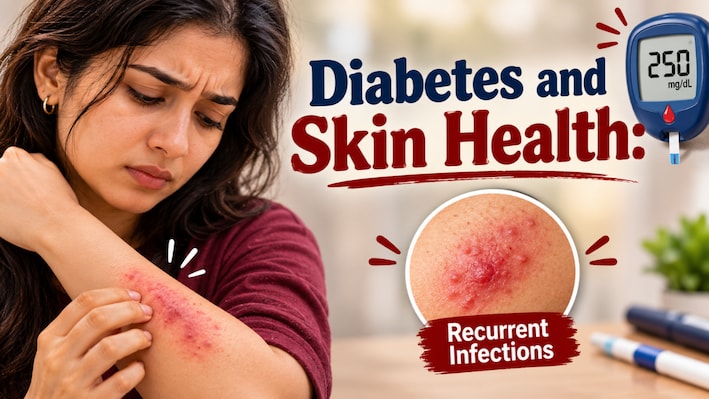
Most people associate diabetes strictly with numbers on a blood test, dietary restrictions, or fatigue. Yet one of the body’s largest and most visible organs, the skin, often bears the brunt of fluctuating blood sugar levels long before internal complications become obvious. From stubborn rashes and unexplained dark patches to minor cuts that linger for weeks, dermatological symptoms frequently serve as the earliest physical clues of an underlying metabolic imbalance.
To unpack why high blood sugar disrupts the body’s natural barrier and what warning signs should never be brushed aside, leading endocrinologists, general medicine specialists, and dermatologists share key insights into how diabetes quietly affects skin health.
How high blood sugar weakens the skin’s defences
Dr Rahul Parashar, Consultant Endocrinologist, Kailash Hospital, Noida, says, "Diabetes can have an effect beyond just blood sugar levels and can have a very real impact on the skin. People with diabetes are at increased risk of recurrent skin infections, dry skin, itching and poor wound healing (particularly if their blood sugar is not well controlled). High blood glucose levels can affect blood flow, impair the body's ability to fight off infection and interfere with the body's natural healing processes."
Echoing how these changes often go unnoticed until they escalate, Dr Gaurav Palikhe, Associate Director - Endocrinology, Paras Health, Panchkula says, "Skin problems can be an often overlooked sign of an underlying blood sugar imbalance. Diabetes can have an effect on the skin in a number of ways through its impact on circulation, nerve function and the body's defence mechanisms. People with diabetes are therefore more likely to suffer from a range of skin problems including recurrent fungal and bacterial infections, itching, dryness and poor wound healing."
Explaining the clinical prevalence behind these symptoms, Dr Ranjeet Singh, HoD, Department of General Medicine, Noida International Institute of Medical Sciences (NIIMS) College & Hospital, Greater Noida, says, "There is strong interplay between the functioning of skin and diabetes. Chronic high blood glucose levels have a negative influence on the immune activities of the skin, as well as the skin’s ability to repair itself. Researchers indicate that about 30% of diabetic people have experienced skin issues that sometimes may be warning signs of metabolic disorders that are happening in the body."
Dr Nishant Raizada, HOD, Endocrinology and Diabetes, Amrita Hospital, Faridabad, says, "Diabetes is typically thought of as a disease of blood sugar. Less well recognised is its quiet ability to undermine the body's first line of defence, the skin. High blood glucose all the time means the consequences go way beyond metabolism. Immune cells are less able to fight infections. Small blood vessels are damaged. The skin’s ability to repair itself starts to break down ."
Why fungal and bacterial infections keep coming back
Dr Kaushal Kumar Verma, HOD (Dermatology), Rama Hospital & Research Center, Noida, says, "Individuals with diabetes are at higher risk of developing bacterial or fungal skin infections if their blood sugars are poorly controlled. Infections, fungal skin disease, boils, red spots on the skin, and itching may be more common. Elevated glucose levels can encourage the growth of microbes, while decreased immune function can make it harder for the body to fight infections."
Dr Singh adds, "It should be noted that recurrent infections of microbes are a serious clinical issue. Having elevated blood glucose and inefficient functioning of the immune system, especially neutrophils, prevents the body from fighting infections. Among fungal infections, there is a high prevalence of Candida infections, especially yeast infections. People with uncontrolled diabetes may suffer from recurrent bacterial infections like furuncles and cellulitis."
Dr Parashar adds, "This can make people more susceptible to bacterial and fungal skin infections and can mean that even minor cuts, blisters or wounds take a long time to heal."
Visible clues on the neck and underarms
Beyond infections, subtle changes in skin texture and pigmentation can act as early metabolic red flags. Dr Raizada adds, "It might lead to a disturbing pattern of recurrent fungal and bacterial infections, persistent itching and wounds that heal unusually slowly. Some changes are especially telling. Acanthosis nigricans, which are dark, velvety patches around your neck or armpits, can be a signal that you have insulin resistance, sometimes even before you are diagnosed with diabetes."
Dr Parashar says, "Some people may also notice the skin becoming dark and thickened in the neck area, in the underarms and in other skin folds."
Dr Palikhe adds, "In some instances, people will develop areas of skin that are darkened and thickened, particularly in the neck and underarms."
Dr Verma adds, "Diabetes can also contribute to skin changes like dryness, extreme itching, abnormal light patches of skin around the neck or armpits and rough skin in the affected areas. These indicators should always be checked out by a health care professional to determine their cause."
Danger of slow-healing wounds and nerve damage
When circulation slows down and nerve sensitivity drops, even an everyday shoe bite can turn serious. Dr Raizada says, "The wound is hardly visible. A small nick on the foot, maybe a blister from a bad-fitting shoe. Weeks go by, and the skin won't heal. It might be a small problem, but it can be an indication of a much larger issue simmering beneath the surface."
Dr Singh says, "Delayed healing of wounds is a serious complication. Persistent elevated glucose levels in the blood bring oxidative stress and lesions in the small blood vessels. They make it difficult to deliver oxygen and nutrients to the tissues that have been injured. Besides, diabetic neuropathy decreases the sensation, therefore making patients unaware of cuts and blisters. As a result, they later get ulcers. According to statistics, 15-25% of diabetics get foot ulcers during their lives."
Dr Verma says, "A wound that would normally take a few days to heal might take twice as long or longer in a diabetic. Circulatory deficiency, neuropathy and a lack of immune response mean that even minor trauma such as a blister, abrasion or cut may require extra time to recover, especially if it occurs on the foot."
Dr Raizada adds, "But the greatest danger often comes from something the patient cannot feel. Over time, diabetes can damage peripheral nerves, causing loss of sensation in the feet. Sometimes a blister forms, without pain. An injury may be overlooked. When poor circulation and impaired immune responses make healing difficult, what seems to be a harmless wound can develop into a serious infection, sometimes even threatening the limb itself."
Dr Palikhe says, "High blood sugar can also impair the body's ability to repair damaged tissue so it's important to be vigilant even with respect to minor cuts, insect bites or blisters."
Daily skincare habits and when to see a doctor
Preventing minor skin irritations from turning into serious complications comes down to consistent blood sugar management and daily vigilance. Dr Parashar says, "Good blood sugar control, a regular skincare regime, and keeping the skin clean and well moisturised will go a long way to minimising these risks. It is important not to ignore persistent itching, redness, swelling or a wound that won't heal. You should always seek medical advice if you have any of these symptoms and get any wounds looked at as soon as possible to prevent further problems and to promote better skin health."
Dr Palikhe adds, "Good control of diabetes is key to good skin health. Regular blood glucose monitoring, good hydration, gentle skincare and a daily check of the feet are all important in terms of identifying early warning signs. If you have any recurring infections, any unusual skin changes or wounds that aren't healing, then you should seek medical advice. Early assessment and appropriate treatment can go a long way to preventing a minor skin problem from becoming a more serious one."
Dr Singh adds, "It is essential to conduct a blood glucose test and measure HbA1c when recurrent skin infections occur. Besides, patients should regularly have foot examinations for loss of protective sensation, calluses, fungal infections, and unnoticed injuries. Any wound that shows redness, swelling, or discharge should be evaluated medically immediately. Therefore, controlling diabetes is crucial in keeping infections at bay and maintaining the health of the skin."
Dr Verma says, "A wide range of skin complications have been identified as being associated with diabetes, and it is important to pay close attention to your overall skin health, as it is often neglected. Chronic high blood sugar levels may compromise the body's natural defence mechanisms and lead to more frequent skin infections and delay healing of the skin. Patients may experience recurrent problems with the skin." He further adds, "Skin is another key part of the management of diabetes. Diabetics need to be hygienic, moisturise dry skin, regularly check for cuts and blisters on their feet, and not try to treat continuing infections themselves. Keeping blood sugar within the target range is important to prevent skin complications. Finally, the link between diabetes and skin health reminds us that the key to reducing the risk of developing skin problems is a comprehensive approach to care. Regular visits to the doctor, early treatment of infections, and good blood sugar control are the cornerstones of this."
Dr Raizada says, "The key point is that not every persistent rash or slow-healing wound means diabetes. But persistent skin problems, especially when combined with unexplained tiredness, excessive thirst or frequent urination, do warrant a blood glucose test. We tend to think of diabetes as a disease detected through numbers on a lab report. But the body often sends out distress signals long before a diagnosis is made. Sometimes the warning is not hidden within the body. It is visible on its face."
(This article features expert quotes provided for informational purposes only. It is not a substitute for professional medical advice. Always consult a qualified healthcare provider regarding any medical condition.)
Stay informed on all the latest news, real-time breaking news updates, and follow all the important headlines in india news and world news on Zee News English.