• हिन्दीEnglishमराठीবাংলাதமிழ்മലയാളംગુજરાતીతెలుగుಕನ್ನಡଓଡ଼ିଶାZ BharatPHHBusinessWION
  • facebookyoutubetwitterwhatsapp
Zee News Hindi
  • news
  • Live Blog
  • photos
Add Zee Business As A Preferred Source
App
  • Live TV
  • Latest News
  • India
  • World
  • Entertainment
  • Sports
  • Business
  • Lifestyle
  • Astrology
  • Auto
  • Education
  • Technology
  • News
  • /World
  • /Hidden in toilet paper: How a bizarre OpenAI bathroom trick led to an FBI arrest

Hidden in toilet paper: How a bizarre OpenAI bathroom trick led to an FBI arrest

Prosecutors allege the devices were intended to capture confidential conversations at the AI company. If convicted, the former engineer faces up to five years in prison and a $250,000 fine.

Written ByZee Media BureauEdited ByTarique Anwar
Published: Oct 14, 2026, 08:13 PM IST|Updated: Oct 14, 2026, 08:20 PM IST
joinshare
Hidden in toilet paper: How a bizarre OpenAI bathroom trick led to an FBI arrest
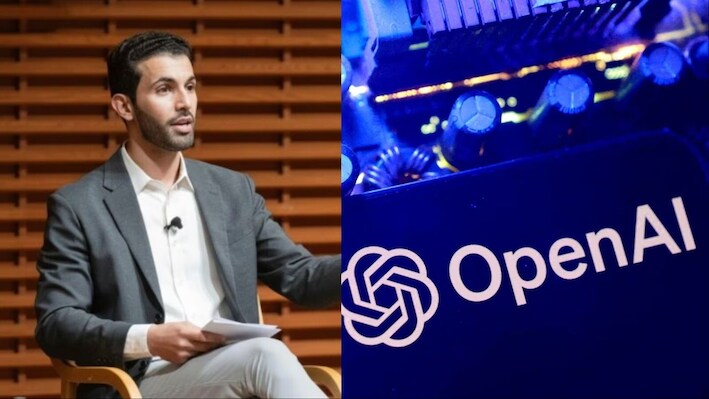
Image Credit: The 35-year-old Saudi national, who joined OpenAI as an engineer in July 2025, was arrested on October 9 and appeared in federal court on October 13.

About the Author

    Zee Media Bureau

    Zee Media Bureau

    Zee Media Bureau is the editorial news desk of Zee Media Corporation, one of India’s leading news networks.The bureau represents a collective of experienced journalists, editors, and correspondents who work across television, digital, and social platforms to deliver timely, accurate, and wide-ranging news coverage. Zee Media Bureau's coverage spans politics, business, economy, technology, health, entertainment, and global affairs. The bureau follows a collaborative newsroom model, where stories are researched, verified, and published by a team. This ensures speed, editorial consistency, and adherence to journalistic standards, particularly for breaking news and developing stories.
    Read More

    Trending

    • News
    • Photos
    'Don't know what cricket he was playing': Abhishek Sharma reacts to Yuvraj Singh's playful dig after 113-run carnage

    'Don't know what cricket he was playing': Abhishek Sharma reacts to Yuvraj Singh's playful dig after 113-run carnage

    2

    Hockey Asian Champions Trophy 2026: India make dominating start to title defence with 13-0 win over Bangladesh

    3

    Commonwealth Kabaddi Championship 2026: Indian men storm into semifinals with 48-20 win over Tanzania

    4

    AI bubble warning: Microsoft swings axe on 60,000 jobs as sector losses mount

    5

    IPL 2027: Zaheer Khan set for crucial meeting with MS Dhoni before CSK retention deadline

    logo
    • contact us
    • privacy policy
    • legal
    • investor info
    • advertise with us
    © 1998-2026 Indiadotcom Digital Private Limited, All Rights Reserved.

    New Delhi: A recording device wrapped in toilet paper and plugged into the back of a television was found in an executive conference room at OpenAI’s San Francisco office on September 30. The discovery led the company to inform the Federal Bureau of Investigation (FBI). Prosecutors have now charged a former engineer, Abdulrahman Alfozan, with allegedly attempting to record private conversations at the artificial intelligence firm.

    The 35-year-old Saudi national, who joined OpenAI as an engineer in July 2025, was arrested on October 9 and appeared in federal court on October 13. Prosecutors allege that the device was installed around September 28 and had encrypted contents. 

    A second recording device was later found in a bag allgedly containing Alfozan’s wallet and identification in another room at the company’s office. 

    The criminal complaint alleges that the conference room was used for meetings involving confidential technical research, product plans, business opportunities and strategic decisions. The charge accuses him of secretly recording private conversations. Alfozan is presumed innocent unless proven guilty in court.

    The device was hidden behind a television

    OpenAI staff discovered the first device on September 30 that was inserted into a USB port at the back of a television in an executive conference room. According to the US Department of Justice, the device had been concealed in toilet paper and appeared to have been installed two days earlier.

    The company said it used its own AI models to examine the device and trace its origin. OpenAI said the analysis helped identify an employee who had allegedly placed it in the room. The company then referred the matter to the FBI and terminated the employee.

    According to the complaint, the room was used for meetings where confidential company information was shared. Prosecutors said that the accused had no authority to enter the room or attend the meetings held there. Office CCTV footage allegedly showed him near the conference room on several occasions before the device was found. 

    OpenAI said it had found no evidence that Alfozan had improperly accessed or taken source code, model weights or customer data. OpenAI said it had found no evidence of data theft, but it has not said whether the device recorded any conversations.

    Prosecutors cite questions asked through AI tools

    Investigators allege that the accused used a productivity tool and an AI chatbot to gather information about office spaces and the installation of a covert audio recorder. According to the complaint, his queries included questions about building and modifying recording equipment, installing it, testing its functions and concealing its identity.

    The alleged prompts included questions about continuous audio recording, modifying Wi-Fi connectivity, improving sound quality and live listening, encrypting an SD card and remotely accessing a device. Prosecutors further allege that he asked about the company’s sensitive areas and ways to place recording equipment inside them.

    The complaint says the chatbot account submitted questions about the specific device, including its custom header and unique MAC address, on September 27 and 28. Those queries were made shortly before the device was allegedly installed. 

    The allegations describe the use of AI tools as part of the preparation for the suspected recording operation. They do not establish that the chatbot itself installed the device or that the tools provided all the information used to carry out the alleged act.

    CCTV footage and a second device

    The complaint says the accused returned to the executive conference room on October 5 and appeared to look behind the television where the first recorder had been installed. Investigators cited CCTV footage in support of the allegation.

    On the same day, Alfozan allegedly left a bag unattended in another room in the office. OpenAI’s security staff opened it and found his wallet, identification and a second recording device similar to the one discovered in the conference room, according to prosecutors.

    The discovery of the second device added to the evidence cited in the complaint. Prosecutors have not established in court that the devices were used to obtain confidential information, and the case is still at the allegation stage.

    What charges does he face?

    He has been charged with using or attempting to use an electronic, mechanical or other device to intercept oral communications. The US Department of Justice said he was arrested on October 9 and made his first federal court appearance on October 13. His next appearance is a detention hearing on October 19.

    If convicted, he faces a maximum sentence of five years in prison, a fine of $250,000 and up to three years of supervised release. The final punishment, if any, would be decided by the court under federal sentencing law. The Department of Justice has not said whether the accused has legal representation.

    Stay informed on all the latest news, real-time breaking news updates, and follow all the important headlines in india news and world news on Zee News.

    Add Zee News as a Preferred Source
    TAGS:
    OpenAI Spy Case
    Abdulrahman Alfozan