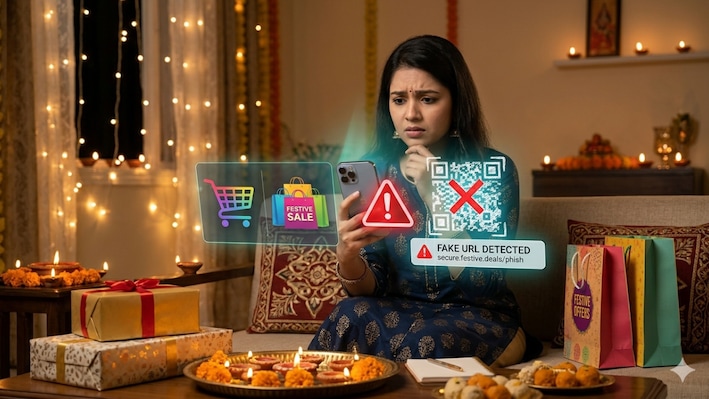
New Delhi: Amid the ongoing festive season, online shopping is in full swing. People make frequent online purchases during this time as it provides a wide variety of products and accessibility without the need to visit stores.
The prevalence of online shopping, however, gives scammers an avenue to trap consumers and commit financial fraud by stealing their personal data.
These scams may often take the form of special offers, cashbacks, discounts, and promotional messages. Scammers exploit consumers who are making purchases, awaiting orders, and giving feedback.
UPI payments involving Quick Response (QR) codes are also used by scammers to defraud people by tampering with the codes.
Fake websites, social media accounts, and impersonated or cloned apps and websites are often used as avenues for these scams, wherein consumers are lured through different techniques.
The trap is laid out using unusually lucrative offers, bargains, or cashback options, and consumers are given a sense of urgency through claims of "limited time".
Another method employed is the cloning of reputed brands through fake websites, which may steal personal details, accept payments, or deliver empty parcels.
Moreover, consumers may be asked to scan a QR code and enter their Unified Payments Interface (UPI) PIN to receive cashbacks. Thus, it is important to know that QR codes are scanned to make payments, not to receive them.
Through all of this, it can be deduced that the most important precautionary measure is to verify the seller and check website links properly to establish their authenticity. Another important point to remember is to be cautious with UPI and bank-related details, which should not be shared.
Artificial Intelligence has further aided scammers in their fraudulent attempts, as it can help them create authentic-looking websites and clone accurate logos and templates.
Moreover, people receive links through messaging apps, emails, and SMS messages claiming to offer special discounts or app downloads, which are often tactics used by scammers. When using an app or website, consumers should use the customer-care contact details mentioned on authentic websites, since scammers may impersonate customer-care agents and plant fake contact details on the internet.
They may also use social media and websites to advertise their fake apps and services and offer unusually good deals. These advertisements may trap users as they are sponsored and thus appear trustworthy. Instead of relying on such ads, it is better to visit the actual websites, compare web addresses, and check return policies and seller details.
While responsible online shopping and digital payments are crucial to avoiding scams, it is equally important for banks, cybercrime units, and websites to introduce methods that identify suspicious sellers and unusual activities to prevent theft before it happens.
Stay informed on all the latest news, real-time breaking news updates, and follow all the important headlines in india news and world news on Zee News.