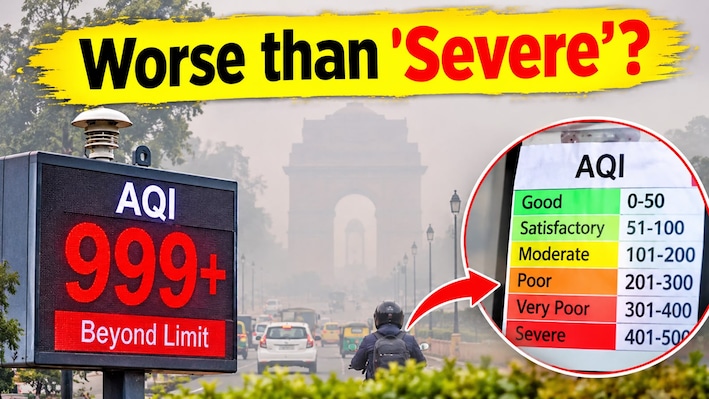
Air Quality Index (AQI) calculations will not be taking into account extreme pollution levels greater than 999 micrograms per cubic meter, according to the Central Pollution Control Board (CPCB), which admitted that the reading of such figures are not counted into the AQI provided for the public.
According to CPCB, the information gathered by the automatic validation system of the Board makes it possible for the authorities to automatically exclude those hourly pollution data that exceed the range of 0-1,000 micrograms per cubic meter. The extreme pollution events occurring above that range are considered to be data gaps.
The recent statement comes in the light of the fact that 45 out of 59 air pollution monitoring stations in Delhi resulted in missing data during the recent heavy smog phenomenon.
According to the statements made by the official representatives of the Ministry of Environment, the hardware used to monitor air pollution has been upgraded significantly in the last decade, yet no improvements have been seen in the validation software since 2015.
Marked exclusions: Despite the fact that the sensors record pollution levels beyond 999 micrograms per cubic meter, information on such levels is not taken into consideration.
As it stands, the average is skewed. In extreme conditions like spikes in air quality monitoring post-Diwali after noise pollution, the hours of data that were not picked up during the recording rule out the possibility of meeting the requirements of a minimum of 16 hours needed to work on average per day.
Internal review: Amid this, experts from the Central Pollution Control Board have been discussing internally what changes need to be introduced in the rules regarding the validation of data but no committee involving external experts has been created.
"We do have the data with us; the important point is that it cannot be used in further calculations," the official from the Ministry of Environment made it clear. "The methodology was amended in 2015; therefore, the innovation took place at the level of machines, not the methodology."
The Central Pollution Control Board sought to tackle this confusion among people regarding differences in AQI values given by the government and those provided by private messaging services, providing an 11-point guide on how AQI should be interpreted.
The National Air Quality Index (NAQI) is a measurement that uses a range from 0 to 500 and is based on international standards like those of the US EPA.
Upper limit: The NAQI index is categorised as "Severe" when it has reached a score of 500.
Health implications: The Central Pollution Control Board of India (CPCB) explained that once the score exceeds 500, there will be no change made in the guidelines and the category of health response.
Arguments regarding apps: Any discrepancies noticed between CPCB readings and those from private agencies can be attributed to differences in the types of sensors, averaging periods, and validation methods employed by the two.
How the automated NAQI sub-index operates: The automated NAQI system generates data every hour without human intervention, using the primary values of the eight main pollutants: PM2.5, PM10, carbon monoxide (CO), nitrogen dioxide (NO2), sulphur dioxide (SO2), ammonia (NH3), ozone, and lead.
The highest individual sub-index determines the headline AQI score. Except for Carbon Monoxide and Ozone, generating a valid sub-index requires at least 16 hours of continuous data over a running 24-hour window.
Stay informed on all the latest news, real-time breaking news updates, and follow all the important headlines in india news and world news on Zee News English.