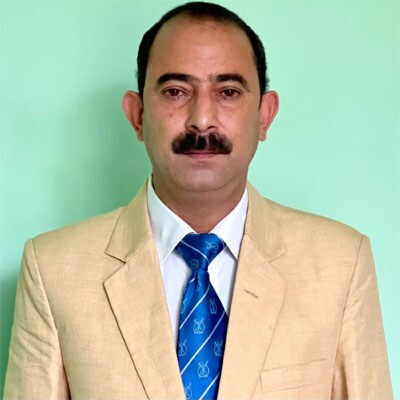
'If there’s no lake, the Shivling won’t form': Mehbooba confronts police at Chandanwari as JCB at Sheshnag triggers outrage
Mehbooba Mufti stopped by police from visiting Sheshnag Lake amid controversy over alleged excavation near the fragile glacial ecosystem, with the BRO defending the work as necessary for Amarnath Yatra track safety.
Mehbooba Mufti stopped by police from visiting Sheshnag Lake amid controversy over alleged excavation near the fragile glacial ecosystem, with the BRO defending the work as necessary for Amarnath Yatra track safety.
Former Jammu and Kashmir Chief Minister and PDP president Mehbooba Mufti was stopped by police at Chandanwari on Tuesday while attempting to reach Sheshnag Lake in south Kashmir’s Pahalgam, intensifying a fast-growing controversy over heavy excavation near the high-altitude glacial water body.
Mufti, accompanied by MLA Waheed Para, Aga Muntazir, and Shabir Mir, was prevented from proceeding further along the traditional Amarnath Yatra track. She confronted the officers on the spot, alleging that excavation was underway and that authorities were blocking access to conceal the damage.
“My worst fears were confirmed today when police stopped me from proceeding towards Sheshnag. The questions surrounding construction in this fragile glacial ecosystem are only growing louder. What is being concealed today could become a man-made disaster tomorrow. The Amarnath Cave, Yatra, and surrounding mountains must be protected as one ecological whole,” she said.
In sharper remarks to the police personnel, Mufti added, “They will not allow me [to go] because they are doing damage there. They have excavated the area. If there is no lake, the Shivling will not form. The BRO does not know anything; they will only follow orders. They have destroyed Uttarakhand, and they have not learned anything from Nepal.”
The confrontation came a day after a video showing a crawler excavator (JCB) operating close to the turquoise waters of Sheshnag Lake went viral. The footage, originally shared by an excavator operator’s social media account, depicted heavy machinery digging and dumping soil near the lake’s edge, triggering widespread alarm across Kashmir.
Sheshnag, situated at about 3,590 meters, is a key overnight halt on the classic Pahalgam–Chandanwari–Sheshnag–Panchtarni pilgrimage route. In Hindu tradition, it is the sacred landscape where Lord Shiva is believed to have left his serpents (nags) before proceeding to the Amarnath Cave. It is also listed among the 14 high-risk glacial lakes in Jammu and Kashmir monitored for glacial lake outburst flood (GLOF) vulnerability.
The alpine lake, roughly one kilometer long and 0.7 kilometers wide, sits in a delicate ecosystem of glaciers, moraines, steep slopes, and natural drainage channels feeding the Lidder river system.
PDP leader and Kashmiri Pandit Mohit Bhan called the activity “a crime against both Hindu faith and nature,” arguing that the sanctity of the pilgrimage cannot be separated from the integrity of the landscape through which it passes.
Other voices, including Mirwaiz Umar Farooq, CPI(M) leader M.Y. Tarigami, Congress leaders, and environmentalists, demanded an immediate halt, warning of irreversible damage to a fragile Himalayan catchment already under stress from climate change.
The Border Roads Organisation (BRO) pushed back, stating that the work is limited to post-Amarnath Yatra track widening and the stabilization of existing stretches. Citing requirements highlighted during previous pilgrimages, the BRO said the activity aims to ease congestion and ensure safer passage for yatris. It maintained that the works are confined to existing tracks, follow safety norms and environmental safeguards, and include measures for the safe disposal of excavated material and the protection of natural drainage, dismissing claims of “new construction” as incorrect. Officials have also referenced earlier Supreme Court directions on stabilizing the track for pilgrim safety, while clarifying that no metaled motorable road has been ordered in place of the traditional path.
Mufti had already flagged the issue on Monday, cautioning that speaking out risks being branded anti-Yatra even as trees (including chinars and old walnuts) are felled elsewhere in Kashmir and infrastructure projects push into sensitive zones. She and others drew parallels with ecological disasters in Uttarakhand following the Char Dham road expansion and recent events in Nepal.
The episode has sharpened the classic tension in the high Himalayas: the need for safer, more accessible pilgrimage routes versus the imperative to leave fragile glacial ecosystems undisturbed. As snow begins to seal the upper reaches for winter, the questions raised at Chandanwari about what exactly is being done near Sheshnag, under whose oversight, and at what long-term cost are unlikely to fade.
Stay informed on all the latest news, real-time breaking news updates, and follow all the important headlines in india news and world news on Zee News English.