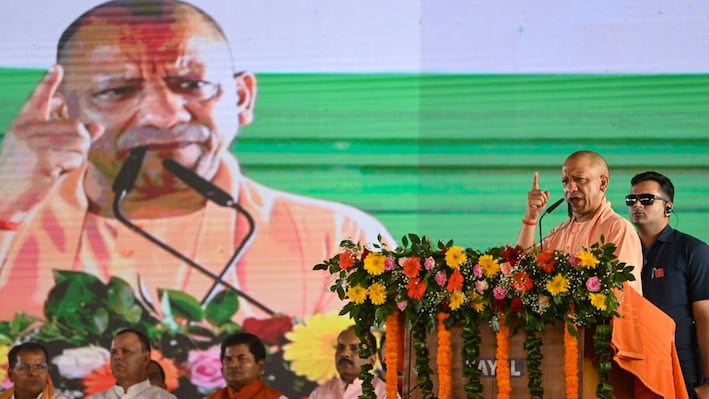
Addressing a rally in Gonda, Chief Minister Yogi Adityanath reiterated a straightforward bargain: athletes must bring home medals; the government will make them officers. The remark captures the logic of the ‘Padak Lao, Pad Pao’ initiative. International medal winners from recognised competitions, Olympics, Paralympics, Asian Games, Commonwealth Games and World Championships—are offered direct recruitment to gazetted posts. The measure treats sporting achievement as a credential that can open an administrative career rather than merely a one-time cash award or ceremonial honour. In a state where most young athletes come from modest backgrounds, the promise of a secure post changes the calculation of risk that families otherwise face when a child chooses competitive sport over conventional education or early employment.
Direct recruitment as a structured pathway, not an isolated reward
The legal basis is the International Medalist Direct Recruitment Rules, 2022. In July 2026 the Cabinet approved amendments that added 35 new posts, nine of Kreedadhikari, three of District Youth Welfare and Regional Development Team Officer, and 23 of Up-Kreedadhikari. These sit alongside posts already identified in departments ranging from Rural Development and Basic Education to Police, Panchayati Raj, Youth Welfare and Forest. Eligible athletes can be considered for roles such as Block Development Officer, Deputy Superintendent of Police, District Panchayati Raj Officer or Range Forest Officer. The expansion also extends the opportunity beyond gold medalists to silver and bronze winners, provided they meet the eligibility criteria. In December 2025 the Cabinet further decided that the time spent by such appointed athletes in national or international competitions and training camps would count as duty. The practical effect is that an athlete need not abandon the sport the moment the appointment letter arrives; competition and training remain compatible with the job.
Support that begins well before the medal
Direct recruitment is only one layer. The Uttar Pradesh Sports Policy, 2023 establishes a wider support structure for athletes who have not yet reached the international podium. Sub-junior athletes are eligible for annual financial assistance of ₹50,000, juniors for ₹75,000, developmental-category athletes for ₹2 lakh and elite athletes for ₹3 lakh, subject to performance and eligibility norms. Eligible athletes, coaches and sports-science staff can receive cashless health insurance and personal-accident cover up to ₹5 lakh, reducing the financial shock of injury. Senior-national or higher representatives of the state are provided a monthly pension; international achievements attract cash awards, and outstanding performers are considered for the Laxman and Rani Lakshmibai Awards. These instruments address the period when an athlete is still developing, when family pressure to abandon sport is highest, and when an injury can end a career before it has produced a medal.
Infrastructure and institutional depth
The same policy seeks to widen the base from which future medalists can emerge. It provides for rural sports grounds, sports nurseries, block-level mini-stadiums, district-level stadiums and divisional sports colleges. Schools can receive support for equipment, nutrition and coaches’ salaries. Priority sports are to be given Centres of Excellence, and five High-Performance Centres are planned, staffed with specialist coaches, physiotherapists, psychologists, dietitians and sports-science personnel. The establishment of the Major Dhyan Chand Sports University is intended to supply the academic and scientific backbone that a purely competitive pathway has historically lacked. Together these measures attempt to move the state from episodic recognition of winners toward a more continuous pipeline of training, care and institutional capacity.
What the combination seeks to achieve
The two tracks—broad support under the 2023 policy and targeted recruitment under the 2022 rules—serve different stages of an athletic career. The former reduces the immediate financial and logistical barriers that cause many promising athletes to exit. The latter offers those who have already demonstrated international performance a stable professional identity that does not require them to leave the sport. In both cases the underlying calculation is similar: if families can see a plausible route from village ground to either continued support or a gazetted post, more children are likely to remain in training longer. The same athletes, once settled in public roles, are expected to function as visible examples for younger participants and as administrative resources who understand the practical demands of high-performance sport.
Limits that remain visible
The two tracks under the 2023 Sports Policy and the 2022 recruitment rules address successive stages of an athletic career. One lowers the immediate barriers of cost, injury risk and family pressure that have historically truncated many careers before they could mature. The other converts demonstrated international performance into a stable professional standing that does not require the athlete to exit the sport. When families can see both continued support during the developmental years and a credible administrative pathway after a major medal, the decision to persist in training becomes less precarious. Athletes who later occupy public roles can, in turn, bring practical knowledge of high-performance demands into the institutions responsible for the next generation.
The design does not by itself determine outcomes. The number of international medalists remains limited, eligibility conditions continue to apply, and the newer institutional elements—High-Performance Centres and the Sports University—are still taking shape. What the framework does supply is a clearer sequence of incentives and protections than was previously available, together with a mechanism that treats sporting achievement as a credential for public service rather than solely as a temporary distinction. Its longer-term value will rest on the consistency with which these provisions are administered and on whether the supporting infrastructure keeps pace with the athletes it is intended to retain.
(Author is an Indian Revenue Service (IRS) officer currently serving as Joint Commissioner of Customs for the North Eastern Region (NER), Shillong. A native of Uttar Pradesh, he writes on current affairs and contemporary topics. The views expressed in this article are those of the author and do not necessarily reflect those of Zee News.)
Stay informed on all the latest news, real-time breaking news updates, and follow all the important headlines in india news and world news on Zee News.