• हिन्दीEnglishमराठीবাংলাதமிழ்മലയാളംગુજરાતીతెలుగుಕನ್ನಡଓଡ଼ିଶାZ BharatPHHBusinessWION
  • facebookyoutubetwitterwhatsapp
Zee News English
  • news
  • Live Blog
  • photos
Add Zee Business As A Preferred Source
App
  • Live TV
  • Latest News
  • India
  • World
  • Entertainment
  • Sports
  • Business
  • Lifestyle
  • Astrology
  • Auto
  • Education
  • Technology
  • News
  • /World
  • /From Iran strikes to US midterm polls: Three developments shaping global affairs

From Iran strikes to US midterm polls: Three developments shaping global affairs

The programme began with an analysis of the US strikes on Iran's Qeshm Island, which came just hours before voting began in the 2026 midterm elections.

Written ByZee Media Bureau
Published: Nov 03, 2026, 11:27 PM IST|Updated: Nov 03, 2026, 11:32 PM IST
joinshare
From Iran strikes to US midterm polls: Three developments shaping global affairs

About the Author

    Zee Media Bureau

    Zee Media Bureau

    Zee Media Bureau is the editorial news desk of Zee Media Corporation, one of India’s leading news networks.The bureau represents a collective of experienced journalists, editors, and correspondents who work across television, digital, and social platforms to deliver timely, accurate, and wide-ranging news coverage. Zee Media Bureau's coverage spans politics, business, economy, technology, health, entertainment, and global affairs. The bureau follows a collaborative newsroom model, where stories are researched, verified, and published by a team. This ensures speed, editorial consistency, and adherence to journalistic standards, particularly for breaking news and developing stories.
    Read More

    Trending

    • News
    • Photos
    From Iran strikes to US midterm polls: Three developments shaping global affairs

    From Iran strikes to US midterm polls: Three developments shaping global affairs

    2

    Our govt to give 600 more youth gift of govt jobs next week: CM Bhagwant Singh Mann

    3

    Rajkumari Lanchenbi Chanu creates history with India's first-ever Wushu medal at Youth Olympics 2026

    4

    Opinion | From sporting glory to professional opportunity: Yogi government’s push to make sports a viable career path for Uttar Pradesh’s youth

    5

    'Hopefully, I will take a lot of good memories from here': Shubman Gill ahead of New Zealand ODI series

    logo
    • contact us
    • privacy policy
    • legal
    • investor info
    • advertise with us
    © 1998-2026 Indiadotcom Digital Private Limited, All Rights Reserved.

    US President Donald Trump's decision to launch strikes on Iran ahead of the American midterm elections, the growing political influence of Indian-origin candidates and voters in the United States, and the Indian Navy's rescue of an Iranian fishing vessel from Somali pirates were among the key issues examined in the latest episode of Zee News' DNA.

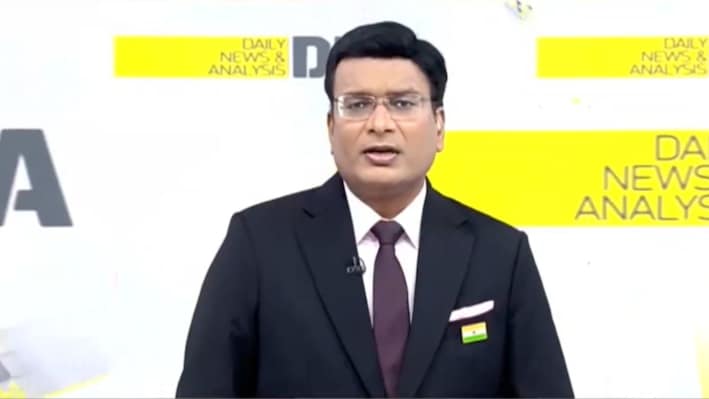
    In today’s episode of DNA, Rahul Sinha, Managing Editor of Zee News, conducted a detailed analysis of these developments, examining their political, military and diplomatic implications, including the possible impact of Trump's Iran policy on American voters and the changing role of the Indian diaspora in US politics.

    The programme began with an analysis of the US strikes on Iran's Qeshm Island, which came just hours before voting began in the 2026 midterm elections. According to the details discussed in the programme, US fighter jets targeted Iranian surface-to-air missile launchers, radar installations and air defence sites. American officials said the operation was carried out in response to Iranian missiles being fired at a US aircraft.

    Washington described the strikes as an effort to weaken Iran's ability to target commercial and military vessels passing through the strategically important Strait of Hormuz. Qeshm, the largest island in the Persian Gulf, lies at the entrance to the waterway and is believed to house underground missile systems, military installations and fast attack boats.

    The programme also examined Iran's claims of retaliation. The Islamic Revolutionary Guard Corps (IRGC) claimed that it had captured two American MQM-170 drones using electronic warfare and also shot down an MQ-9 Reaper drone.

    The strikes were particularly significant as they followed Trump's earlier remarks ruling out an attack on Iran before the midterm elections. Iran's Supreme Leader Mojtaba Khamenei had also reportedly given President Masoud Pezeshkian greater authority to pursue diplomatic talks with Washington, raising expectations of a possible negotiated settlement.

    The analysis explored whether Iran's willingness to consider diplomacy reflected growing economic pressure from American attacks and the naval blockade, as well as concerns about the cost of a prolonged conflict with the US and Israel.

    Sinha also examined the possible electoral calculations behind Trump's decision to attack Iran. With voting underway across the United States, the strikes could appeal to sections of Trump's core support base, including MAGA supporters, Republican hawks and religious groups that strongly support Israel. At the same time, the programme highlighted opposition to a prolonged war and the possibility that rising inflation and military expenditure could influence voters against the Republican Party.

    Another key issue discussed was the possibility of a further American strike on Iran after the midterm elections. Former Trump supporter Tucker Carlson claimed that the US President could consider a nuclear strike on Iran's Pickaxe Mountain, near Natanz, allegedly to destroy underground nuclear facilities. Carlson attributed the possibility to pressure from Israeli Prime Minister Benjamin Netanyahu.

    However, no confirmation of a planned nuclear strike was presented. Trump had separately spoken about the possibility of targeting Pickaxe Mountain, saying the US could carry out an attack whenever it wanted. The programme also examined the historical use of military action around American elections, referring to the Cuban naval blockade under John F. Kennedy, the Gulf of Tonkin Resolution under Lyndon B. Johnson, Bill Clinton's 1998 strikes on Afghanistan and Sudan, and Barack Obama's 2014 campaign against ISIS in Syria.

    The programme further examined reports of the US military preparing for mass casualties in a possible large-scale conflict. The US Army's III Corps and engineering units reportedly conducted an exercise involving the digging of temporary burial sites using heavy machinery. The military estimated that a single engineering company could prepare burial sites for 2,400 bodies within 24 hours. Military chaplains were also included in the exercise to train them in carrying out religious rituals and preparing burial grounds.

    The preparations were discussed in the context of the possibility of a full-scale conflict with major powers such as Russia, China or Iran, in which thousands of soldiers could potentially be killed and the transportation of bodies back to the US could become difficult.

    Indian-origin candidates and voters in US midterm elections

    The second major focus of the programme was the growing political influence of Indian-Americans in the United States.

    According to the figures discussed, 12 candidates of Indian origin are contesting for seats in the US Congress, including one Senate candidate and 11 candidates for the House of Representatives. California's 17th Congressional District and Washington's 7th District were highlighted as important contests, with both major political parties fielding Indian-origin candidates.

    The analysis also covered three prominent statewide races involving Indian-origin candidates. Vivek Ramaswamy, backed by Trump, is contesting the Ohio gubernatorial election, while Republican candidate Sarita Komatireddy is in the race for New York Attorney General. Democrat Aruna Miller is contesting for the post of Lieutenant Governor of Maryland.

    Apart from these candidates, 36 people of Indian origin are contesting elections to state legislatures across the country.

    The programme also highlighted the importance of Indian-American voters. According to AAPI Data's 2026 report, the number of Indian-origin adult American citizens eligible to vote stands at approximately 2.136 million.

    California, Texas, New Jersey, New York and Illinois have some of the largest concentrations of Indian-American voters. Their influence is particularly significant in closely contested constituencies.

    Indian-origin voters account for 18 per cent of the electorate in California-17, 11 per cent in New Jersey-6, 10 per cent in New Jersey-12, 9 per cent in Texas-3, 8 per cent in California-14, and 7 per cent each in Illinois-8 and New York-6.

    The analysis highlighted how the Indian diaspora is increasingly moving beyond traditional professional fields and becoming an important part of American electoral politics, political funding, organisation and policymaking.

    Indian Navy rescues Iranian vessel from Somali pirates

    The third major issue examined in the programme was the Indian Navy's operation to rescue an Iranian fishing vessel, AZINI, hijacked by Somali pirates in the Arabian Sea.

    The vessel was seized off the north-eastern coast of Somalia, around 3,000 kilometres from Mumbai. The pirates, reportedly numbering 12, were armed with AK-47 rifles and rocket-propelled grenades (RPGs) and were holding 20 crew members hostage.

    The Indian Navy launched a coordinated anti-hijacking operation involving both naval and aerial assets. An INS Kolkata-class warship was deployed, while a P-8I maritime patrol aircraft and Sea Guardian drones were used for aerial surveillance and tracking the vessel's movements.

    After locating and surrounding the ship, the Navy deployed its Marine Commandos, known as MARCOS, using a C-17 Globemaster aircraft.

    Following an operation lasting more than 48 hours, the pirates surrendered on November 2. The Navy took control of the vessel and rescued all 20 crew members safely.

    The Iranian Embassy subsequently thanked the Indian Navy, describing the operation as a humanitarian effort and an example of the friendship between the two countries.

    The programme also examined the wider implications of the rescue against the backdrop of the ongoing West Asia conflict and threats to commercial shipping through the Strait of Hormuz.

    According to the figures discussed, four Indian-flagged vessels had come under attack between February and October, while 74 other vessels carrying Indian sailors had also been targeted. On October 8, 2026, Vijay Kumar, Secretary of the Ministry of Ports, Shipping and Waterways, had stated that 78 vessels carrying Indian sailors had come under attack since the beginning of the West Asia conflict.

    The programme noted that 22 Indian citizens had lost their lives in incidents linked to the conflict, including 14 sailors. At least five Indian deaths were attributed to maritime incidents linked to Iranian attacks. The latest incident occurred on November 2 off the coast of Oman, where an Indian vessel was targeted and one sailor was killed.

    The analysis highlighted the contrast between the risks faced by Indian sailors amid the regional conflict and the Indian Navy's efforts to rescue Iranian citizens thousands of kilometres from India's coastline.

    Stay informed on all the latest news, real-time breaking news updates, and follow all the important headlines in india news and world news on Zee News.

    Add Zee News as a Preferred Source
    TAGS:
    Donald Trump
    US Midterm Elections