Vande Mataram row in Kashmir: Clerics offer repentance, Mufti Dawoodi seeks fatwa
The Vande Mataram row in Kashmir deepens as clerics offer Tauba after a Waqf Day event, while Mufti Dawoodi seeks a formal religious ruling.
The Vande Mataram row in Kashmir deepens as clerics offer Tauba after a Waqf Day event, while Mufti Dawoodi seeks a formal religious ruling.
The Vande Mataram controversy in Jammu and Kashmir has intensified after the song was played at a Waqf Day event in Srinagar on Monday. Several clerics who attended the programme have since offered repentance, while preacher Mufti Abdul Rashid Dawoodi has refused to apologise and called for a formal religious ruling on whether standing during the song violates Islamic beliefs.
Also Read: J&K Police attach land of five Pakistan-based terrorists in terror funding case
The event was organised by the Jammu and Kashmir Waqf Board at the Sher-e-Kashmir University of Agricultural Sciences and Technology of Kashmir (SKUAST-K) in Srinagar. Union Minority Affairs Minister Kiren Rijiju attended as the chief guest, alongside J&K Waqf Board Chairperson Dr Darakhshan Andrabi, National Conference MP Mian Altaf Ahmad Larvi and several clerics and imams from across the region.
When Vande Mataram was played at the beginning of the ceremony, those present, including clerics seated on the stage, stood up. The incident drew criticism from the Muttahida Majlis-e-Ulema (MMU), an umbrella body of religious organisations led by Mirwaiz Umar Farooq.
MMU calls on clerics to repent over Vande Mataram row
The MMU said standing for the song was contrary to Tawheed, the Islamic belief in the absolute oneness of God. In a statement, the organisation urged the participating clerics to repent, arguing that Islamic monotheism does not permit attributing divine status or worship to any creation, land or object.
The body also drew a distinction between love for one's homeland and treating it as divine. Citing the All-India Muslim Personal Law Board (AIMPLB), the MMU described the inclusion of the song at an event organised by an institution responsible for protecting waqf properties and religious interests as regrettable and unacceptable.
It also said it would seek legal advice and submit a memorandum to the administration over the inclusion of Vande Mataram at government functions and educational institutions in Muslim-majority areas of Jammu and Kashmir.
Several clerics offer Tauba after Srinagar event
Following the controversy, several clerics who attended the programme issued public apologies and said they had performed Tauba (repentance) and Istighfar (seeking forgiveness).
Among them was Maulana Mufti Farooq, who said he and other clerics, including Maulana Basharat, Maulana Ilyas, Peer Syed Aijaz and Maulana Zakir, left after the ceremony, recited the Kalima Sharif and sought forgiveness. They also reiterated their repentance through social media posts.
Maulana Farooq said they had not uttered any phrase with their hearts or tongues. He added that they had contacted their Markaz for guidance in accordance with Sharia and offered sincere Tauba before Allah for any lapse, whether committed knowingly or unknowingly.
MMU member and Darul Uloom Rahimiyyah Bandipora Vice-Chancellor Maulana Mufti Rehmatullah welcomed the clerics' repentance but questioned why they had not opposed the practice at the venue itself.
Addressing senior imams from prominent shrines, including Hazratbal and Khanyar, as well as Waqf Board Chairperson Darakhshan Andrabi, he referred to Supreme Court rulings on religious freedom and said citizens could not be forced to recite Vande Mataram against their faith. He urged those who had remained silent not to allow the issue to become a matter of ego or false prestige.
Meanwhile, the office of Jammu and Kashmir's Grand Mufti, Mufti-e-Azam Nasir-ul-Islam, said the police administration had prevented him from holding a scheduled press briefing outside the Dastagir Sahib Shrine in Srinagar, where he intended to state his position on the controversy.
Mufti Dawoodi refuses to apologise, seeks formal fatwa
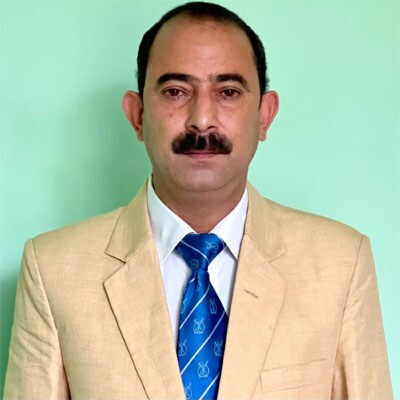
In contrast to the clerics who offered repentance, preacher Maulana Mufti Abdul Rashid Dawoodi refused to apologise. He argued that standing during an official function, without any intention of worship, was permissible as long as one's faith remained firmly centred on one God.
Dawoodi challenged Islamic scholars and institutions representing different Makatib-e-Fikr, or schools of thought, to clarify the matter through a formal fatwa. He asked whether standing during the song as part of official protocol, without devotional intent, amounted to Shirk (polytheism) or Kufr (disbelief).
He said he would offer Tauba only if an authentic religious institution ruled that his actions amounted to such a violation.
Vande Mataram controversy triggers political sparring in J&K
The religious debate has also led to a political exchange between the ruling National Conference and the Bharatiya Janata Party (BJP).
National Conference spokesperson Imran Nabi Dar said his party had never supported or voted in favour of adding six stanzas to Vande Mataram. He argued that if the verses conflicted with Islamic monotheism, they could hurt the religious beliefs of Muslims. He also maintained that religious matters should be left to Islamic scholars, without interference from the state.
J&K BJP chief spokesperson Altaf Thakur, however, defended the rendition, describing it as standard protocol at a government function honouring a patriotic song. He accused elements linked to the banned Hurriyat Conference and former militants of operating under the banner of the MMU to threaten participating clerics and create unrest.
Thakur also linked the controversy to the recent Sheshnag row and the killing of terrorist Latif, alleging that some groups were attempting to exploit the developments to create tensions in the Valley.
Stay informed on all the latest news, real-time breaking news updates, and follow all the important headlines in india news and world news on Zee News English.