
• हिन्दीEnglishमराठीবাংলাதமிழ்മലയാളംગુજરાતીతెలుగుಕನ್ನಡଓଡ଼ିଶାZ BharatPHHBusinessWION
  • facebookyoutubetwitterwhatsapp
Zee News English
  • news
  • Live Blog
  • photos
Add Zee Business As A Preferred Source
App
  • Live TV
  • Latest News
  • India
  • World
  • Entertainment
  • Sports
  • Business
  • Lifestyle
  • Astrology
  • Auto
  • Education
  • Technology
  • News
  • /India News
  • /What is the Delimitation Bill, and why has it sparked a political row? Explained

What is the Delimitation Bill, and why has it sparked a political row? Explained

The amended Bill is expected to propose a uniform 50 per cent increase in Lok Sabha seats, taking the total to 850, 815 seats for states and 35 for Union Territories.

Written ByZee Media Bureau
Published: Nov 27, 2026, 21:00 IST|Updated: Nov 27, 2026, 21:04 IST
joinshare
What is the Delimitation Bill, and why has it sparked a political row? Explained

About the Author

    Zee Media Bureau

    Zee Media Bureau

    Zee Media Bureau is the editorial news desk of Zee Media Corporation, one of India’s leading news networks.The bureau represents a collective of experienced journalists, editors, and correspondents who work across television, digital, and social platforms to deliver timely, accurate, and wide-ranging news coverage. Zee Media Bureau's coverage spans politics, business, economy, technology, health, entertainment, and global affairs. The bureau follows a collaborative newsroom model, where stories are researched, verified, and published by a team. This ensures speed, editorial consistency, and adherence to journalistic standards, particularly for breaking news and developing stories.
    Read More

    Trending

    • News
    • Photos
    Money mule accounts: RBI sets new rules for debit holds and customer explanations

    Money mule accounts: RBI sets new rules for debit holds and customer explanations

    2

    RBI revises card payment and ATM rules: Check new authentication, withdrawal limits and charges

    3

    What is the Delimitation Bill, and why has it sparked a political row? Explained

    4

    'Protecting Tamil Nadu's seat share not enough': Shashi Tharoor criticises DMK over Delimitation Bill

    5

    Jasprit Bumrah turns down Mumbai Indians' offer to serve as Rohit Sharma's deputy for IPL 2027: Report

    logo
    • contact us
    • privacy policy
    • legal
    • investor info
    • advertise with us
    © 1998-2026 Indiadotcom Digital Private Limited, All Rights Reserved.

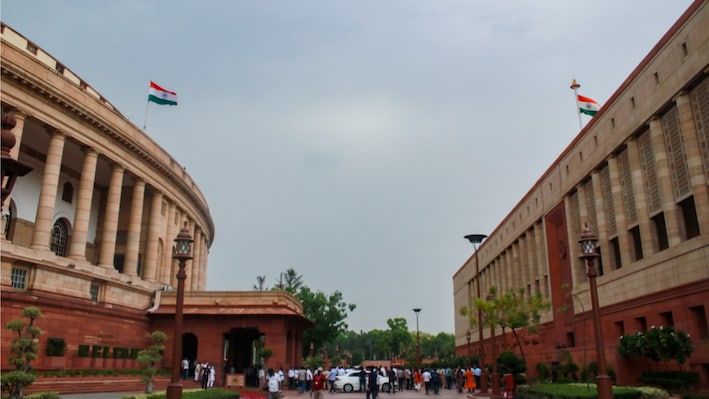
    The proposed Delimitation Bill seeks to redraw Lok Sabha constituencies and expand the strength of Parliament’s Lower House from 543 to 850 seats. It has become a major political issue ahead of the special parliamentary sitting beginning on November 30, with parties divided over how the new seats would be allocated among states.

    The amended Bill is expected to propose a uniform 50 per cent increase in Lok Sabha seats, taking the total to 850, 815 seats for states and 35 for Union Territories. It would use the 2011 Census to redraw constituencies within each state, while extending the freeze on the distribution of seats among states, based on the 1971 Census, for another 25 years.

    What is delimitation?

    Delimitation is the process of fixing the number of seats and the boundaries of territorial constituencies for the Lok Sabha and state Legislative Assemblies. The exercise is carried out by a Delimitation Commission established under an Act of Parliament.

    Earlier delimitation exercises were based on the 1951, 1961 and 1971 Censuses. The number of Lok Sabha seats was last determined on the basis of the 1971 Census. The proposed Bill would expand the House and redraw constituencies within states using the 2011 Census.

    Why is the Bill controversial?

    The main dispute is over how parliamentary representation would be distributed among states. Opposition parties have questioned whether the proposed increase would guarantee every state a uniform 50 per cent rise in its Lok Sabha seats. They have also warned that a population-based redistribution could reduce the relative representation of southern, eastern and north-eastern states compared with states that have recorded faster population growth.

    The debate also concerns the link between delimitation and women’s reservation. The earlier legislation tied implementation of the one-third reservation for women to delimitation based on the 2011 Census. Opposition parties objected to that link and criticised the pace at which the package was brought before Parliament.

    Why did the earlier Bill fail?

    The Constitution (131st Amendment) Bill failed to secure the required two-thirds majority in the Lok Sabha on April 17, 2026. Of the 528 members present and voting, 298 supported it and 230 opposed it, falling short of the 352 votes needed.

    After the constitutional amendment failed, the government shelved the companion Delimitation Bill and Union Territories Laws (Amendment) Bill, saying the measures could not be considered separately.

    What are parties demanding?

    DMK chief and former Tamil Nadu Chief Minister MK Stalin has called for safeguards to protect the state’s share of representation. He has demanded that Tamil Nadu’s existing 7.18 per cent share of Lok Sabha seats should not fall even if the House expands, and that the current proportion of representation among states, based on the 1971 Census, should remain unchanged for another 25 years.

    “The DMK stands firm on these two demands and will continue to do so. There is no change in our position, and there is no question of any compromise!” Stalin said in a post on X.

    Congress MP Karti P Chidambaram has alleged that delimitation could lead to “gerrymandering” and widen the gap in parliamentary representation between southern and northern states.

    Samajwadi Party chief Akhilesh Yadav called the reported move to introduce the Bill during the special sitting “the biggest mistake of the BJP”. He also said his party would conduct a caste census in Uttar Pradesh if it formed the government after the 2027 Assembly elections.

    The Nationalist Congress Party (Sharadchandra Pawar) has said it will support the delimitation process. Party leader Jitendra Awhad said the decision followed discussions with party supremo Sharad Pawar.

    “The discussion wasn't about our party's official stance. The general point being made was that the delimitation process is a constitutional requirement... A decision has been made to support the delimitation process, and we will indeed support it. We will support the delimitation,” Awhad told reporters.

    The YSR Congress Party is inclined to support the Bill if it protects regional balance and the interests and representation of states, particularly in southern India, party sources said. The DMK has not announced its position on the proposed legislation.

    What happens next?

    The Lok Sabha Secretariat has announced that the second part of the Eighth Session of the Eighteenth Lok Sabha will begin on November 30 and is scheduled to conclude on December 3, subject to government business. The Rajya Sabha is due to reconvene on December 2. The government has not specified which Bills will be taken up.

    The ruling alliance has around 320 MPs in the Lok Sabha. With five vacancies, the effective strength of the House is 538; a two-thirds majority would require 359 votes if all members vote. The government’s ability to secure the required numbers could depend on support from other parties and on how many MPs are present and voting.

    The Delimitation Bill is expected to be uploaded to the Parliament Secretariat portal, according to sources. Its provisions, and whether they address concerns over the distribution of seats among states, are likely to shape the debate when Parliament reconvenes.

    (With agencies' inputs)

    Stay informed on all the latest news, real-time breaking news updates, and follow all the important headlines in india news and world news on Zee News English.

    Add Zee News as a Preferred Source
    TAGS:
    Delimitation Bill
    Narendra Modi