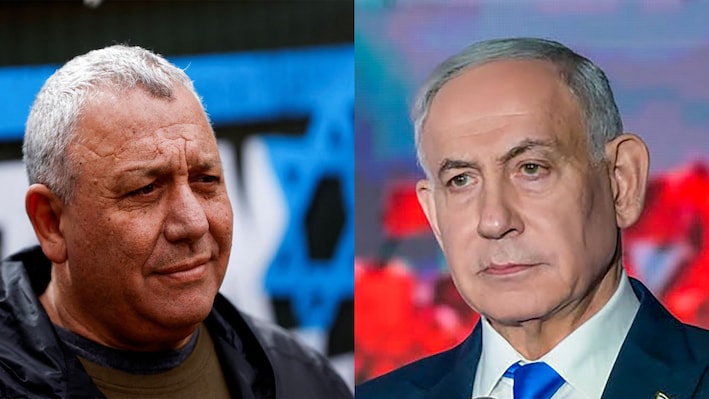
Israeli Prime Minister Benjamin Netanyahu has suffered a fresh political setback after two major Arab-led political groups backed opposition leader Gadi Eisenkot as their preferred candidate to form the country's next government. Their support has taken Eisenkot's backing to 67 lawmakers in the 120-member Knesset, Israel's parliament, putting him above the 61 seats required for a parliamentary majority.
The endorsements came during consultations held by President Isaac Herzog following the October 27 general election, which failed to give either Netanyahu's ruling alliance or the opposition a clear majority. Adding to Netanyahu's difficulties, the ultra-Orthodox United Torah Judaism party, a longtime ally of his government, declined to recommend him for another term.
The latest developments have strengthened Eisenkot's position in the race to form the next government. However, securing recommendations from lawmakers does not automatically guarantee that he can assemble a coalition capable of governing.
How Arab-led parties strengthened Eisenkot's position
The Joint List, an alliance of Arab-led political parties that won 11 seats in the election, announced that its three constituent parties had unanimously decided to recommend Eisenkot to President Herzog.
The decision followed a similar move by Ra'am, also known as the United Arab List, led by Mansour Abbas. The party secured eight seats in the election and has also backed Eisenkot during the presidential consultations.
Together, the two groups hold 19 seats in the Knesset. Their recommendations have increased Eisenkot's support from 48 to 67 lawmakers, taking him six seats above the 61 required for a majority in the 120-member parliament.
Under Israel's parliamentary system, the president consults political parties after an election and selects the lawmaker considered best placed to form a government. The chosen candidate must then secure sufficient support in the Knesset to establish a governing coalition.
Why Netanyahu's alliance is struggling to retain power
Netanyahu's Likud party emerged as the largest individual party in the October 27 election, winning 27 seats. However, its wider alliance of religious and nationalist parties secured only 53 seats, eight short of the 61 needed for a parliamentary majority.
Eisenkot's four-party, Jewish-led opposition bloc won 48 seats, while the two Arab-led groups secured the remaining 19 seats.
Netanyahu's position weakened further on Thursday after United Torah Judaism, which holds seven seats, decided not to recommend either candidate to President Herzog. The party has traditionally been an important partner in Netanyahu's governing alliance.
The disagreement comes amid tensions over military service exemptions for ultra-Orthodox Jewish men studying at religious seminaries. Netanyahu's religious allies have opposed changes to the exemption arrangements, while the issue has become a major source of political disagreement within his wider alliance.
Why Eisenkot may still struggle to form a government
Despite receiving recommendations from 67 lawmakers, Eisenkot faces a difficult challenge in bringing his potential partners together.
The Joint List has indicated that it could support a government from outside the coalition rather than formally join it. This would allow the grouping to back certain parliamentary decisions without taking ministerial positions in the government.
Ra'am, led by Abbas, has previously taken a different approach. In 2021, it joined the coalition formed by former prime ministers Naftali Bennett and Yair Lapid, becoming the first independent Arab party to participate in an Israeli governing coalition. That government collapsed in 2022.
Eisenkot, a former Israeli military chief who leads the Yashar party, has so far ruled out forming a government with the Arab-led parties. Avigdor Lieberman, whose Yisrael Beytenu party is among the groups recommending Eisenkot, has also opposed an administration that depends on their support.
What happens next in Israel's government formation process?
President Herzog began consultations with political parties after receiving the official election results. He has until November 11 to select the lawmaker he believes has the best chance of forming a government.
The president is not legally required to appoint the candidate who receives the highest number of recommendations. Instead, he must consider which lawmaker is most likely to secure the necessary support in parliament.
Once appointed, the candidate will have 28 days to negotiate with political parties and put together a governing coalition. Herzog can grant a further extension of up to 14 days if required.
If the first candidate fails, another lawmaker may get an opportunity to form a government under Israel's parliamentary rules.
Meanwhile, Netanyahu will continue serving as caretaker prime minister until a new government is sworn in.
Stay informed on all the latest news, real-time breaking news updates, and follow all the important headlines in india news and world news on Zee News English.