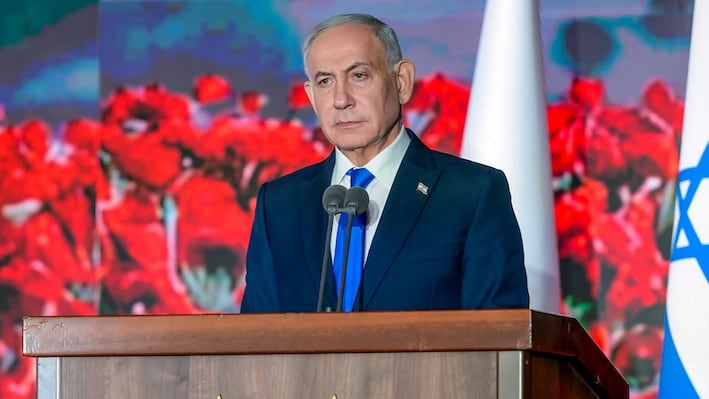
Israel’s Central Election Commission has found no evidence of fraud or irregularities in last week’s general election, dealing a setback to Prime Minister Benjamin Netanyahu’s attempts to challenge the outcome.
The findings come after Netanyahu and his supporters repeatedly alleged that Arab-led political parties had "stolen" the election, potentially with foreign backing in the October 27 voting.
The election results showed a setback for Netanyahu’s religious-nationalist bloc, which lost its parliamentary majority, while Arab-led parties registered significant gains.
In a statement issued on Wednesday, the commission said its review had found no evidence of irregularities that could have compromised the integrity of the election or influenced the final outcome, according to an Associated Press report.
Dean Livne, the acting director of the elections committee, said the authorities had examined every complaint individually and thoroughly. However, the investigation found no grounds to support claims that the results were invalid.
The results are scheduled to receive formal certification on Wednesday.
Meanwhile, a separate investigation by Israel’s domestic intelligence agency, Shin Bet, into allegations of possible foreign interference in the election remains underway, an elections committee spokesperson said.
With the election results set to be formally certified, President Isaac Herzog is scheduled to begin consultations with all parties elected to parliament on Wednesday.
Following two days of discussions, Herzog will select the candidate he believes has the strongest prospects of forming the next coalition government.
The likely contenders are Netanyahu and his principal political rival, opposition leader, Yashar party chairman Gadi Eisenkot.
The decision will set the stage for weeks of negotiations as neither Netanyahu’s bloc nor Eisenkot’s alliance has secured the parliamentary majority required to form a government.
The lack of a clear majority has left several political possibilities open. These include a potential alliance between Netanyahu and Eisenkot, or an arrangement under which Eisenkot forms a coalition with some of the Arab-led parties.
If neither leader succeeds in assembling a government, Israel could head for another general election early next year.
The election commission’s findings come amid continuing political tensions over the results, particularly Netanyahu’s allegations against Arab-led parties, which made substantial gains in last week’s vote.
Stay informed on all the latest news, real-time breaking news updates, and follow all the important headlines in india news and world news on Zee News English.