Israel's Mossad intelligence agency has reportedly joined the Shin Bet security service in investigating suspected foreign interference in the country's recent national election, with authorities examining allegations of attempts to influence Arab voter turnout through payments.
Citing an unverified report by Channel 12, The Times of Israel reported that investigators suspect the alleged interference may involve countries beyond Qatar. The inquiry centres on claims that Arab voters were offered money to encourage them to turn out at polling stations.
However, Israel's Central Elections Committee (CEC) has stressed that the investigation is limited in scope and does not call the overall election results into question.
Shin Bet Says Probe Based On Internal Intelligence
On Thursday, Shin Bet said the information about alleged voter fraud originated entirely from internal intelligence concerning foreign influence campaigns, rather than from "any political party or political actor on either side of the political map".
According to The Times of Israel, the agency said access to the intelligence had remained strictly restricted to internal security personnel and CEC chair Justice Noam Sohlberg until voting ended.
The Shin Bet also stressed that it was operating within its legal mandate, with all measures being carried out by professional staff and internal legal counsel.
Addressing allegations of substantial Qatari funding intended to influence Arab voter turnout, which reached a high level during Tuesday's vote, the agency said its inquiry was "focused and limited in scope, and does not cast aspersions on or accuse an entire sector that went out to vote democratically and legally."
"Only those who acted in violation of the law will be dealt with," the agency said, as reported by The Times of Israel.
Shin Bet Briefs Netanyahu, Opposition Leaders
Shin Bet chief David Zini held high-level briefings over the past day with Prime Minister Benjamin Netanyahu, Yashar party leader Gadi Eisenkot and opposition leader Yair Lapid to outline the main suspicions under investigation.
The agency said the briefings were held with the authorisation and at the explicit request of Sohlberg.
The investigation remains ongoing, and the Shin Bet cautioned that "any statements concerning the content or nature of the suspicions do not reflect the agency's position".
Once the inquiry is complete, the agency will submit its findings directly to Sohlberg, whom it described as the authorised decision-maker in the matter.
Netanyahu Calls Controversy An 'Earthquake'
The allegations have triggered a political row in Israel, with calls for an investigation into suspected electoral irregularities and foreign interference.
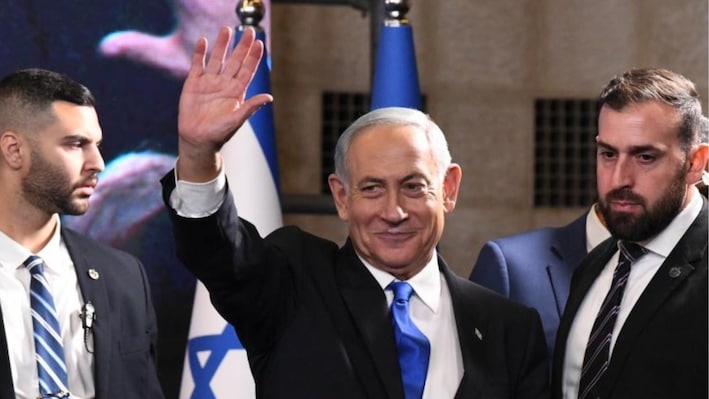
Netanyahu described the controversy as an "earthquake", alleging that foreign entities had interfered in the election in favour of Arab parties. He also urged Zionist parties to reject cooperation with Ra'am and the Joint List.
National Security Minister and Otzma Yehudit chairman Itamar Ben Gvir called for the arrest of Arab party leaders and alleged that Qatari money was involved.
Qatar has strongly denied interfering in Israel's election, accusing "certain Israeli politicians" of using its name to advance domestic political interests and deflect attention from their own failures.
In a statement posted on X, Qatari Foreign Ministry spokesman Majed Al Ansari rejected allegations that Doha had funded activities to influence the vote. He warned that Qatar would not remain silent while being drawn into Israel's internal political affairs.
Arab political parties in Israel have also rejected allegations linking them to suspected foreign funding or interference in Tuesday's election.
Netanyahu's Bloc Falls Short Of Majority
The controversy comes as Israel's Central Elections Committee has published the final results of the national election, confirming the distribution of seats in the 26th Knesset, which is scheduled to be sworn in on November 10.
According to The Times of Israel, Netanyahu's Likud party emerged as the largest party with 27 seats, followed by Yashar with 21.
B'Yachad secured 12 seats, while the Joint List won 11. The Democrats and Ra'am secured eight seats each. Yisrael Beytenu, United Torah Judaism and Otzma Yehudit won seven seats apiece, while Shas and Religious Zionism secured six seats each.
The results leave the pro-Netanyahu bloc with 53 seats, short of a majority in the 120-member Knesset. The anti-Netanyahu bloc secured 48 seats, while Arab factions won 19.
Final voter turnout stood at 77.9 per cent, with 5,716,665 votes cast.
The Reservists, which received 2.7 per cent of the vote, People of Israel with 1.7 per cent and Charedi Public with 0.2 per cent failed to cross the 3.25 per cent electoral threshold.
The final official results are due to be submitted to Israeli President Isaac Herzog on November 4, following checks for possible errors and the examination of related inquiries. The newly elected Knesset is scheduled to be sworn in on November 10.
Stay informed on all the latest news, real-time breaking news updates, and follow all the important headlines in india news and world news on Zee News.