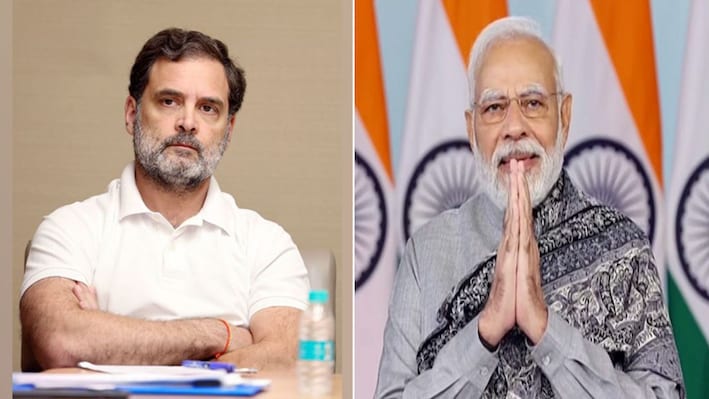
At least 371 members of the Lok Sabha could support the Modi government’s delimitation bill when it is introduced in Parliament, News18 reported, citing unnamed sources. The report comes as Congress leaders met DMK chief MK Stalin in Chennai to persuade his party to reconsider its decision to back the proposed constitutional amendment.
The reported numbers suggest that the BJP-led National Democratic Alliance (NDA) could secure the majority required to pass the constitutional amendment in the Lok Sabha. The actual strength of support, however, will be known when MPs vote on the legislation.
Proceedings in the Lok Sabha are set to resume on Monday, while the Rajya Sabha is scheduled to meet on December 2. The government plans to introduce three bills concerning delimitation, parliamentary representation, and reservations for women.
How many votes are required to pass the delimitation bill?
Under Article 368 of the Constitution, any constitutional amendment requires the support of a majority of the total membership of each House, as well as a majority of at least two-thirds of the members present and voting in that House.
If all 543 members of the Lok Sabha participate in the voting, the government would require 362 votes. This constitutional amendment would also need to be approved separately by the Rajya Sabha. Additionally, it would require the consent of at least half of the state legislative assemblies.
Why the DMK's support matters to the Modi government
The DMK, which has 22 members in the Lok Sabha and 8 in the Rajya Sabha, announced on Saturday that it would support the revised delimitation proposal.
Stalin stated that the government has accepted his party’s demands, which ensure that the current number of Lok Sabha seats for Tamil Nadu will be preserved and the existing ratio of parliamentary representation among the states will be maintained for the next 25 years.
The Nationalist Congress Party (NCP) led by Sharad Pawar, which has 8 members in the Lok Sabha, has also indicated that it would support a uniform increase in the number of parliamentary seats across all states.
Congress President Mallikarjun Kharge, Sonia Gandhi, Rahul Gandhi, and other leaders of the 'INDIA' alliance are attempting to persuade both these parties to oppose this legislation.
What is the Delimitation Bill 2026?
Delimitation is the process of redrawing the boundaries of electoral constituencies and adjusting the number of seats. Currently, the distribution of Lok Sabha seats among states is still largely based on the 1971 census.
The revised Constitution (132nd Amendment) Bill, 2026, proposes increasing the maximum strength of the Lok Sabha to 850 and raising the number of parliamentary seats in all states by 50 per cent. Furthermore, it includes provisions to safeguard the proportional representation of states until 2051.
This proposed process is also linked to the implementation of a 33 per cent reservation for women in the Lok Sabha and state legislative assemblies.
The Congress has demanded that a quota for women be implemented without increasing the current number of parliamentary seats.
The Modi government's previous delimitation bill was rejected in April
This is the central government's second attempt this year to secure parliamentary approval for its delimitation proposals.
On April 17, the Constitution (131st Amendment) Bill failed to secure the required majority in the Lok Sabha; 298 MPs voted in its favour, while 230 MPs voted against it.
Subsequently, the government amended its proposal to address concerns raised by southern states regarding their share of parliamentary representation.
Stay informed on all the latest news, real-time breaking news updates, and follow all the important headlines in india news and world news on Zee News English.