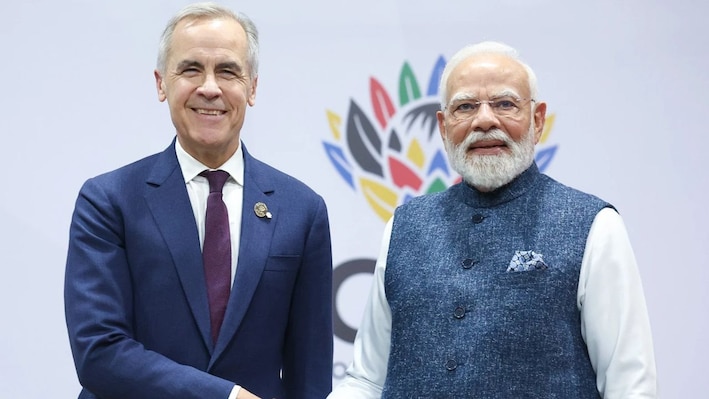

Prime Minister Narendra Modi is expected to visit Toronto and Ottawa in Canada on December 11–12, as negotiators are making efforts to finalise a Comprehensive Economic Partnership Agreement (CEPA) between the two countries. The proposed agreement is broader in scope than a conventional free-trade pact, according to a report.
Global Affairs Canada said the agreement would cover trade in goods and services, investment, agriculture, digital trade, mobility and sustainable development. According to the One World Outlook report, officials are negotiating 16 policy areas, with three chapters on services already finalised and another round of talks scheduled for December.
Bilateral trade in goods and services between India and Canada reached $21.3 billion in 2025. Both countries aim to more than double this figure to approximately $49 billion by 2030.
The push to strengthen bilateral ties is driven by strategic considerations as much as economic interests. According to Statistics Canada, the United States accounted for 71.7 per cent of Canada's merchandise exports in 2025, down from 75.9 per cent in the previous year. Canadian Prime Minister Mark Carney has made reducing this dependence a key policy priority. Meanwhile, India, the world's fastest-growing major economy, is seeking reliable supplies of fuel, food and minerals from a stable partner, the report by Olivia Marie Gagnon said.
"The fit is unusually good. Canada has uranium, natural gas, potash, pulses, minerals and deep pools of pension capital. India has 1.4 billion consumers, a vast engineering workforce, a world-class generic drug industry and a diaspora of 1.8 million Canadians of Indian origin," the report stated.
Efforts to strengthen bilateral relations gained momentum after Prime Ministers Narendra Modi and Mark Carney met on the sidelines of the G7 summit in Kananaskis.
Carney's visit to India from February 27 to March 2 marked the first visit by a Canadian Prime Minister to the country in eight years and focused on achieving concrete outcomes. During meetings in Mumbai and New Delhi, Carney and Modi signed the terms of reference for the proposed CEPA, launched a strategic energy partnership and welcomed memoranda of understanding covering critical minerals, renewable energy and education.
During the visit, Cameco also signed a uranium supply agreement worth $1.8 billion, while Canadian officials reported more than 10 commercial agreements valued at approximately $3.9 billion.
The momentum continued in October, when Trade Minister Maninder Sidhu led a delegation of nearly 300 businesses to New Delhi, Bengaluru and Mumbai, resulting in 34 commercial agreements worth nearly $210 million. Sidhu and his Indian counterpart, Piyush Goyal, have held 10 meetings since May 2025, the report stated.
With agency inputs....
Stay informed on all the latest news, real-time breaking news updates, and follow all the important headlines in india news and world news on Zee News English.