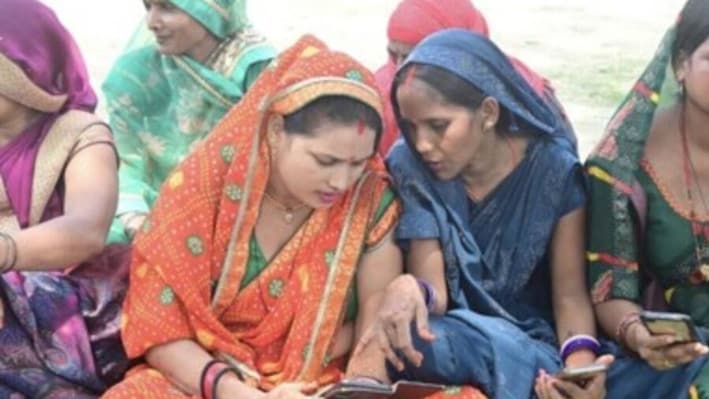
According to IFMR and SEWA data from 2022, less than 9% of India's women entrepreneurs have access to formal credit..While walking by any Indian bazaar, one can see the presence of such businesses everywhere: a tailor sewing local school uniforms, a woman selling fried snacks from a handcart, and an artisan operating a loom inside her home. They generate income, employ neighbours, and create ecosystem economies, but they barely exist on paper for a bank.
A Class 12 student at Greenwood High School in Bangalore, Aditya Singh, has spent the past two years attempting to even the differences district-wise. In collaboration with Jagriti Foundation, he created Unseen CEOs, a youth-led pipeline that locates women entrepreneurs, examines their pricing, borrowing, and reinvestment habits, and converts that into thorough business plans lenders can actually act on.
The scale has real-life significance, rather than just being a metaphorSingh's team sourced and filtered through a database of 150 women-run micro-businesses, shortlisted 10 for full intervention, and fully developed business plans for each, covering revenue modeling, customer segmentation, financial literacy training and credit readiness. To find out where formal credit systems were failing these women, Singh personally interviewed over 30 women micro-entrepreneurs in partner districts.
"Most of these women are not failing at business. They are having trouble with paperwork, with pricing, with being visible to a system that was never designed to see them," Singh says. That observation shaped a verification framework he is currently working on to flag a problem that went unnoticed: businesses registered in the name of women but run by a male relative, a pattern that undermines the entire premise of women-focused lending.
Singh's research has moved beyond fieldwork towards publication and tangible outputs. His econometric study, published in the Online Journal of Social Sciences, analyzes microcredit access across 36 Indian states and exposes targeting gaps in the Pradhan Mantri Mudra Yojana scheme that affect more than 20 million women. The research paper provides theoretical validation to what his interviews were already demonstrating on the ground.
To supply capital to initiatives, Singh has built an online matching platform connecting micro-entrepreneurs directly with lenders. Currently, he is designing a layered funding pathway which aims to attract VC and microfinance capital for two to three of the strongest ventures in his pipeline. Rather than a temporary one-off grant, the goal is to create a replication toolkit that lets the model run independently in new districts without needing him to be present. This ensures that the pipeline lasts longer than any singular cohort.
A working alliance of financial and advisory partners has been assembled for this project, including Women’s World Bank India on gender-inclusive credit access, Finnable, LendingKart and FlexiLoans on lending and credit-access design, and Protiviti on loan verification and risk advisory.
Unseen CEOs, circumventing school hours and college applications, is still a teen’s initiative. However, the distance it seeks to cover – a $60 billion credit gap for women-owned businesses in India according to some industry estimates, is everything but a school project. The next 10 businesses will not even need Singh to build their plan if the replication toolkit works the way he wants it to. His system just needs to recognise that they exist.
Stay informed on all the latest news, real-time breaking news updates, and follow all the important headlines in india news and world news on Zee News English.